

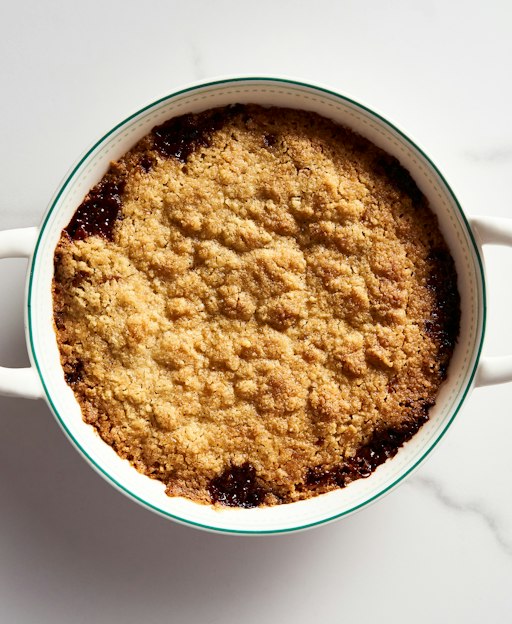
Walk into an Irish kitchen in October and you will often smell it: butter, sugar and baked apples. The autumn crumble is one of the simplest puddings you can make, and for many families it marked the weekend. Here is how it fits into Irish food, which apples to use, and how to bake a good one at home.
Why autumn means apples in Ireland
Apples ripen across Ireland from late August through October. Many older homes had an apple tree in the garden, and neighbours often swapped bags of windfalls over the wall. When a tree gave more fruit than a family could eat, the cooks got busy. Apples went into tarts, cakes, jam, sauces and, of course, crumbles.
County Armagh in Northern Ireland is known as the Orchard County. Orchards have grown there for centuries, and the Armagh Bramley apple has Protected Geographical Indication status, which means the name can only be used for fruit grown in the county. Armagh blossom time in spring draws visitors, and the harvest brings farm shops and apple stalls to the roadsides in autumn.
The Bramley is the classic cooking apple across Ireland and Britain. It is large, sharp and green. When it bakes, it turns soft and fluffy and holds a bold flavour that stands up to a sweet topping. That balance of tart fruit and sugary crumb is what makes the dish work.
A short history of the crumble
☘️ Join 64,000+ Ireland Lovers
Every weekday morning, get Ireland’s hidden gems, local secrets, and travel inspiration — the kind you won’t find in any guidebook.
Subscribe free — enter your email:
Already subscribed? Download your free Ireland guide (PDF)
📲 Know someone who’d love this? Share on WhatsApp →
Free forever · Unsubscribe anytime
The crumble is a fairly modern pudding. It is usually said to have become popular in Britain during the Second World War, when pastry was costly to make because flour, butter and sugar were rationed. A crumble uses less fat than pastry and needs no rolling out, so it was a practical way to stretch the ingredients.
In Ireland, the apple tart was the older favourite, often made with a plain shortcrust and baked in a deep enamel plate. The crumble joined it in the decades that followed and, for many households, became the quicker option for a busy weekday or a Sunday dinner. It is easy to see why. You do not need any special skills, and almost every kitchen already has the ingredients.
What you need for a classic apple crumble
This recipe serves six. It uses ordinary store-cupboard items.
For the fruit
- 900g Bramley apples (about three large ones)
- 50 to 75g caster sugar, depending on how sharp your apples are
- 1 tablespoon of water
- A pinch of cinnamon or a few cloves, if you like
For the topping
- 175g plain flour
- 100g cold butter, cut into small cubes
- 75g soft brown or caster sugar
- A pinch of salt
- A handful of porridge oats, if you want extra crunch
How to make it, step by step
- Heat the oven. Set it to 190°C (170°C fan, gas mark 5).
- Prepare the apples. Peel, core and cut the fruit into chunks about the size of a walnut. Pieces that are too small turn to mush.
- Start the fruit. Put the apples in a pan with the sugar and water. Cook on a low heat for five minutes, until just starting to soften. Tip them into a deep ovenproof dish.
- Rub in the butter. Mix the flour and salt in a bowl, add the cold butter and rub it in with your fingertips until the mixture looks like coarse breadcrumbs. Stir in the sugar and the oats, if using.
- Add the topping. Scatter it over the apples. Do not press it down, as a loose topping bakes crisper.
- Bake. Cook for 35 to 40 minutes, until the top is golden and the juices bubble up at the edges.
- Rest. Leave it for ten minutes before serving. The fruit will be very hot.
Blackberries, raspberries and other fruit to add
Many cooks stretch a few apples by adding berries. Blackberries are the natural partner, since they grow wild in hedgerows all over Ireland from late summer. Picking them was a family outing for many children, who came home with stained fingers and a full container.
There is a well-known piece of folklore about the fruit. Tradition says you should stop picking blackberries by the end of October or the start of November, because the púca, a mischievous spirit in Irish stories, is said to spoil them. In practical terms, late berries do tend to be watery and may carry mould, so the old advice is sensible.
To add berries to your crumble, use about 150g with the 900g of apples. If you are using fresh blackberries, wash them gently and pat them dry. Raspberries are softer and break up quickly, so stir them in at the end rather than cooking them with the apples. Frozen berries also work well, and you can use them straight from the freezer. Add an extra teaspoon of flour to the fruit to soak up the extra juice.
Other fruit that works well includes rhubarb, which is common in Irish gardens in spring and early summer, as well as plums and pears. Rhubarb needs a little more sugar than apples. For a blackberry-forward version with a full step-by-step recipe card, see our Irish Apple and Blackberry Crumble recipe.
Tips for a better topping
- Keep the butter cold. Warm butter makes a greasy, flat topping. If your kitchen is warm, chill the bowl first.
- Do not overmix. Stop as soon as you have a crumbly texture, with a few larger lumps.
- Add texture. Oats, chopped hazelnuts or a spoonful of ground almonds all add crunch.
- Pre-cook the apples. Briefly cooking the fruit helps it finish at the same time as the topping, so you avoid a hard, undercooked centre.
- Use a deep dish. A wide, shallow dish gives you more topping and less fruit. A deeper dish gives a juicier result.
What to serve with it
The traditional Irish choice is a jug of warm custard, and many families keep a tin of custard powder in the cupboard for exactly this. Others prefer pouring cream, which is rich and cool against the hot fruit. Vanilla ice cream is a popular modern option. In some homes, a slice of mild cheddar on the side is a nod to the old pairing of apple and cheese.
Leftovers keep in the fridge for up to three days. Reheat individual portions in a medium oven for about ten minutes, which keeps the topping crisp. A microwave is quicker, but it will soften the crumb.
Where to try apple dishes in Ireland
If you would rather eat a crumble than bake one, you will find versions on the dessert menu of many Irish pubs, cafés and country house hotels, especially in autumn. Look for places that mention local fruit.
- County Armagh: Visit in autumn to see the orchards and buy fresh fruit, juice and cider from farm shops.
- Farmers’ markets: Many towns hold weekly markets in autumn where growers sell cooking apples by the bag.
- Country house hotels and tearooms: Many serve a seasonal crumble or tart with cream.
Opening times and seasonal menus change, so check before you travel.
Planning a trip to Ireland? Join our newsletter for practical tips on food, places and traditions.
Apples and Halloween in Ireland
Apples also have a place in Ireland’s autumn festivals. Halloween has its roots in Samhain, the old Celtic festival that marked the end of the harvest. Games such as apple bobbing, where children try to catch a floating apple with their teeth, were part of the fun at many Irish Halloween parties. Barmbrack, the fruit loaf with a ring baked inside, is the other well-known treat of the season.
A crumble fits well into this time of year. It is warming, uses seasonal fruit and feeds a crowd. Many families make one on the weekend closest to Halloween, when the apples are at their best.
Who made the crumble in your house?
In many homes, one person was the family crumble maker. It might have been a mother, a grandmother, an aunt or a father who only cooked this one dish. Perhaps there was a particular dish that came out every autumn, with a topping that was always a little burnt at the edges. Those small details are what make a family recipe.
Whether you grew up with a crumble every Sunday or you are trying one for the first time, it is a gentle way to bring a piece of Irish autumn into your kitchen. Pick up some Bramleys, rub together a simple topping and share it with someone who will appreciate it.
Tours & experiences you might love


Powered by Viator. Some links are affiliate links — we may earn a small commission at no extra cost to you.
Secure Your Dream Irish Experience Before It’s Gone!
Planning a trip to Ireland? Don’t let sold-out tours or packed attractions spoil your journey. Iconic experiences like visiting the Cliffs of Moher, exploring the Rock of Cashel, or enjoying a guided walk through Ireland’s ancient past often sell out quickly—especially during peak travel seasons.

Booking in advance guarantees your place and ensures you can fully immerse yourself in the rich culture and breathtaking scenery without stress or disappointment. You’ll also free up time to explore Ireland’s hidden gems and savour those authentic moments that make your trip truly special.
Make the most of your journey—start planning today and secure those must-do experiences before they’re gone!