

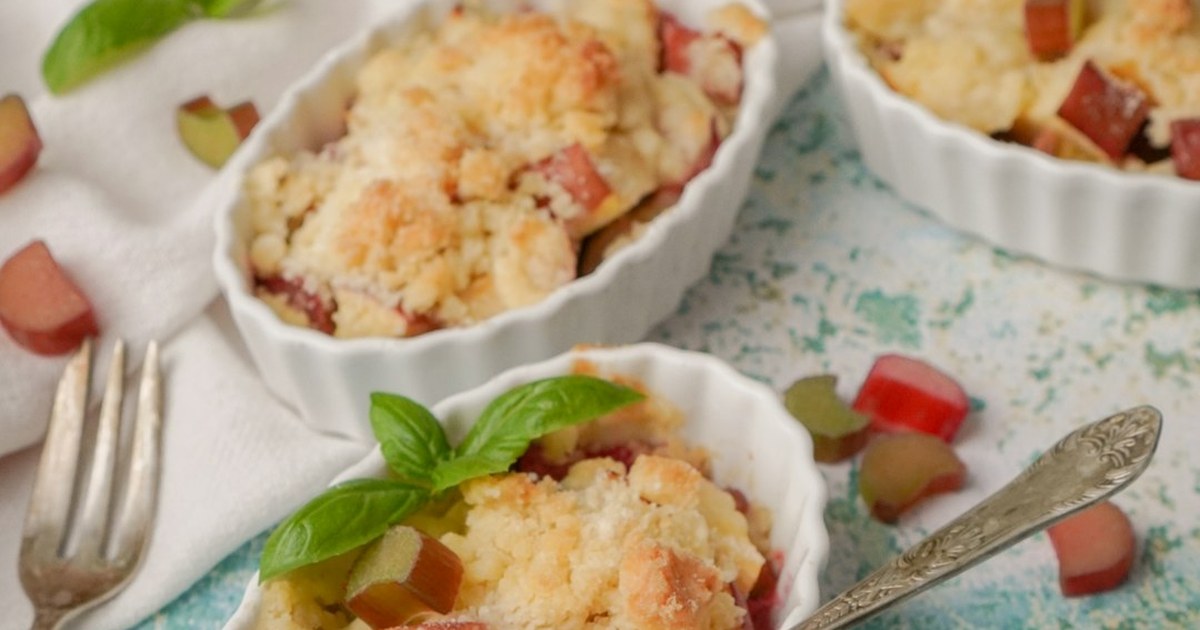
Rhubarb Crumble with Custard Recipe: A Taste of the Irish Kitchen Garden
There are few puddings more deeply rooted in the rhythms of Irish domestic life than a rhubarb crumble. Every spring, as the garden woke from its winter sleep, the rhubarb crowns were among the first things to push through the cold soil — those vivid crimson stalks arriving almost defiantly, long before the soft fruits or summer vegetables had even stirred. For generations of Irish families, the appearance of rhubarb in the kitchen was a genuine seasonal event, a signal that the year had turned and that something good was coming. Mothers and grandmothers would harvest those first sharp stalks and set them bubbling on the range, filling the kitchen with a scent that was tart and sweet in equal measure.
The crumble itself became a staple of Irish home cooking in the mid-twentieth century, a simpler and more forgiving alternative to pastry that suited the busy household perfectly. Unlike a tart or a pie, a crumble asks very little of the cook — no blind baking, no rolling, no anxious pastry work — yet it delivers something genuinely wonderful: a golden, buttery topping that shatters at the spoon to reveal the soft, jammy fruit beneath. Served in a deep earthenware dish and paired with proper warm vanilla custard, it is the kind of pudding that belongs on a farmhouse table on a cold April evening, feeding a family that has spent the day outdoors.
The custard is not optional. In the Irish tradition, a rhubarb crumble without custard is considered a rather cheerless thing. The silky, vanilla-scented pour of it softening into the crumble and the sharp fruit beneath is what transforms the dish from a simple bake into something genuinely comforting. Some households kept a jug of custard permanently on the go through the spring months. This recipe honours that tradition faithfully.
Ingredients
- For the filling:
- 700g (1 lb 9 oz) fresh rhubarb, trimmed and cut into 3cm (roughly 1-inch) pieces
- 100g (3½ oz) caster sugar
- 1 teaspoon vanilla extract
- For the crumble topping:
- 200g (7 oz) plain flour
- 100g (3½ oz) cold unsalted butter, cut into small cubes
- 80g (2¾ oz) demerara sugar
- 50g (1¾ oz) rolled oats
- A pinch of fine salt
- For the vanilla custard:
- 500ml (18 fl oz) whole milk
- 4 large egg yolks
- 50g (1¾ oz) caster sugar
- 2 tablespoons cornflour
- 1 teaspoon vanilla extract or ½ a vanilla pod, seeds scraped
Method
- Preheat your oven to 190°C (170°C fan) / 375°F / Gas Mark 5.
- Place the rhubarb pieces in a deep ovenproof dish — a standard 28cm (11-inch) oval dish works well. Scatter over the caster sugar and the vanilla extract, and toss everything together gently so the rhubarb is evenly coated. Set aside while you make the topping.
- To make the crumble, place the flour, cold butter, and salt into a large mixing bowl. Rub the butter into the flour using your fingertips, lifting and crumbling as you go, until the mixture resembles coarse, uneven breadcrumbs. You want some larger lumps to remain — this gives the topping its character.
- Stir in the demerara sugar and rolled oats until evenly combined. Do not overwork the mixture.
- Scatter the crumble topping evenly over the rhubarb, covering the fruit fully but without pressing it down firmly. A light hand here keeps the topping airy and crunchy.
- Bake on the middle shelf of the oven for 35–40 minutes, until the topping is a deep golden brown and you can see the rhubarb juices beginning to bubble up around the edges.
- While the crumble is in the oven, make the custard. Whisk the egg yolks, caster sugar, and cornflour together in a heatproof bowl until smooth and pale.
- Gently heat the milk with the vanilla in a medium saucepan over a low-to-medium heat until it is just steaming and beginning to come to the verge of a simmer — do not allow it to boil.
- Pour the warm milk slowly over the egg mixture in a thin, steady stream, whisking constantly as you pour to prevent the eggs from scrambling.
- Return the mixture to the saucepan and cook over a gentle heat, stirring continuously with a wooden spoon or silicone spatula, until the custard thickens enough to coat the back of the spoon — approximately 5–8 minutes. Do not rush this with high heat.
- Remove the crumble from the oven and allow it to rest for five minutes before serving. Pour the warm custard from a jug at the table.
Tips
- Early-season rhubarb (often called forced rhubarb) is pinker, more tender, and sweeter; outdoor rhubarb harvested later in the year will be more tart and may benefit from an extra tablespoon of sugar.
- Keep your butter genuinely cold when making the crumble — warm butter creates a dense, greasy topping rather than a light, crisp one.
- If your custard develops a skin while resting, press a sheet of clingfilm directly onto the surface to prevent it forming.
- Leftover crumble reheats well in the oven at 170°C (150°C fan) for 15 minutes, and cold crumble with cold custard the following morning is considered by many to be its finest form.
- A small handful of flaked almonds scattered over the crumble topping before baking adds a pleasing nutty depth without departing from tradition.
This is the kind of pudding that needs no occasion to justify itself — just a decent bunch of rhubarb, a willing oven, and a table worth gathering around. The sharpness of the fruit, the crunch of the golden topping, and the gentle warmth of the custard work together in the way that only the most honest, time-tested recipes do. It is Ireland in a dish: unfussy, generous, and quietly brilliant.
Tours & experiences you might love


Powered by Viator. Some links are affiliate links — we may earn a small commission at no extra cost to you.
Secure Your Dream Irish Experience Before It’s Gone!
Planning a trip to Ireland? Don’t let sold-out tours or packed attractions spoil your journey. Iconic experiences like visiting the Cliffs of Moher, exploring the Rock of Cashel, or enjoying a guided walk through Ireland’s ancient past often sell out quickly—especially during peak travel seasons.

Booking in advance guarantees your place and ensures you can fully immerse yourself in the rich culture and breathtaking scenery without stress or disappointment. You’ll also free up time to explore Ireland’s hidden gems and savour those authentic moments that make your trip truly special.
Make the most of your journey—start planning today and secure those must-do experiences before they’re gone!