

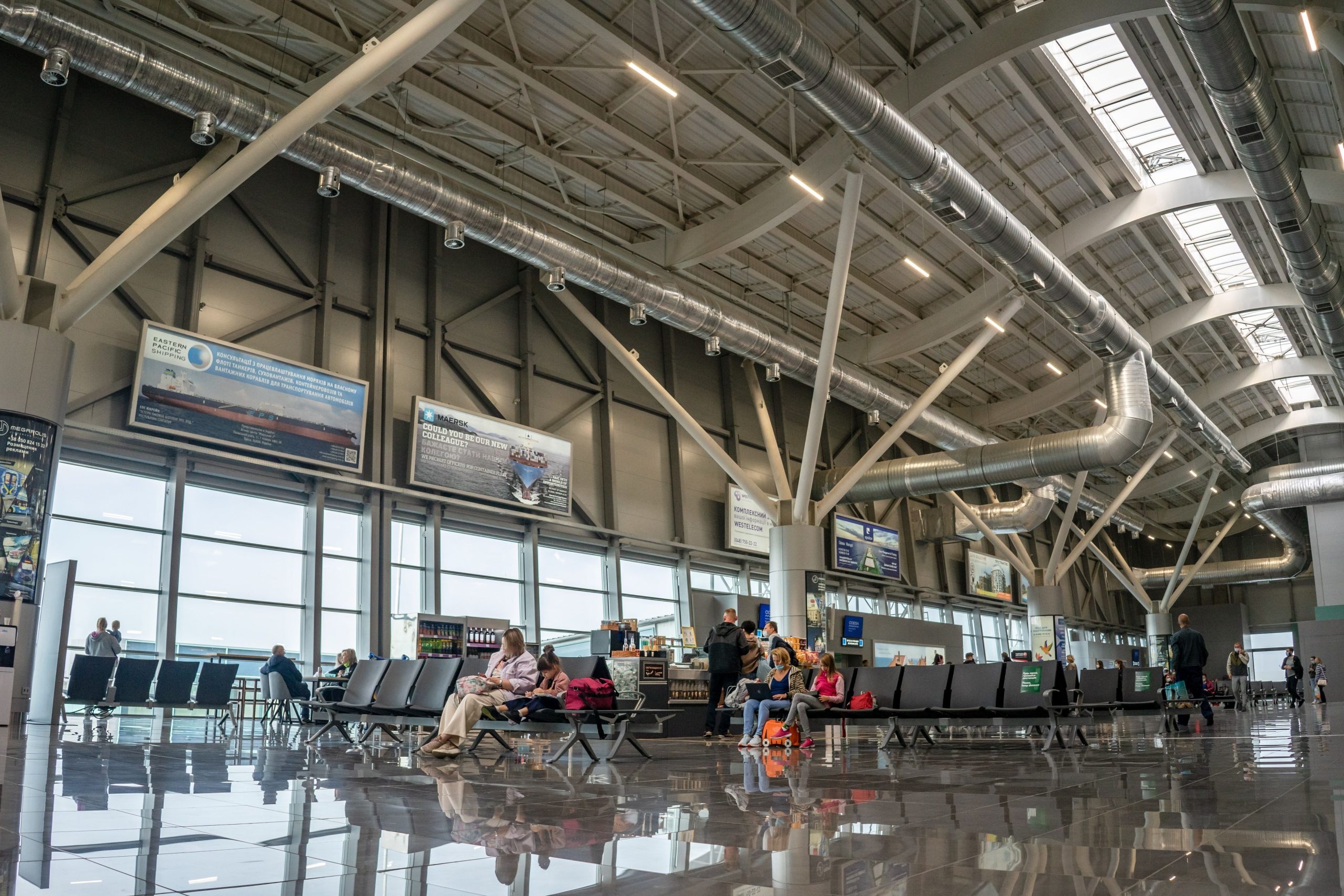
Shannon Airport invented duty-free and the world’s first free trade zone — here’s how it happened
Every time you hand over money for a bottle of whiskey, a tube of hand cream, or a box of chocolates in an airport shop, you are participating in a system invented in County Clare in 1947. That alone would make Shannon Airport one of the more consequential places in modern commerce. But the duty-free shop was only the first idea. The second one changed the economic architecture of the developing world.
Both innovations came from the same person, in the same building, within about a decade of each other — and both were born out of something closer to panic than inspiration.
The Airport That Had No Choice
Shannon sits at the western edge of Europe in a way that, in the era of propeller aircraft, made it genuinely important. The piston-engined planes crossing the North Atlantic in the 1940s could not do it in one hop. They needed a refueling stop, and Shannon — jutting out into the Atlantic on the Clare coast — was the natural last landfall before the ocean and the first after it. From the end of the Second World War, almost every commercial transatlantic flight in the world passed through Shannon. American passengers disembarking from a Pan Am flying boat saw, as their first sight of Europe, the flat green fields of Clare and a transit lounge on the Shannon estuary.
In charge of feeding them was a young Tipperary man named Brendan O’Regan.
O’Regan had been appointed as Catering Controller at Shannon during the war years, and he ran the airport’s hospitality operations with a restless energy that seemed out of proportion to a transit lounge in the west of Ireland. He noticed something about the passengers passing through: they had money and time. They were in a liminal zone between countries, free from the usual obligations of wherever they had come from or wherever they were going. And they were, in the main, frustrated.
The shops at Shannon sold goods at standard Irish retail prices, with customs duties attached. For American passengers in particular — people landing from a country where consumer goods were abundant and cheap — the economics made no sense. Why buy anything? O’Regan thought there was a better question: what if they could buy things that were cheaper here than anywhere else on their journey?
The Act That Started Everything
☘️ Join 64,000+ Ireland Lovers
Every weekday morning, get Ireland’s hidden gems, local secrets, and travel inspiration — the kind you won’t find in any guidebook.
Subscribe free — enter your email:
Already subscribed? Download your free Ireland guide (PDF)
📲 Know someone who’d love this? Share on WhatsApp →
Love more? Join 43,000 Scotland lovers → · Join 29,000 Italy lovers → · Join 7,000 France lovers →
Free forever · Unsubscribe anytime
O’Regan lobbied the Irish government for a specific piece of legislation. The Customs Free Airport Act was passed on 18 March 1947, and it did something that had never been done at an airport anywhere in the world: it allowed goods to be sold at Shannon without import or customs duties attached. The transatlantic passenger, technically in transit between countries, could buy alcohol, tobacco, and luxury goods in a tax-free zone — and carry them onto their plane.
A small kiosk opened. It was not glamorous. But it worked. The concept was so novel that it took a full decade before any other airport followed suit — Amsterdam’s Schiphol airport opened its own duty-free shop in 1957, becoming the second in the world.
The Shannon shop grew. The range expanded. The revenues climbed. And O’Regan, characteristically, did not stop there. He had demonstrated that the legal concept of a customs-free zone at an airport could generate serious commerce. The question was how far that logic could be stretched.
The Threat That Changed Everything
In the late 1950s, the answer became urgent. Jet aircraft were entering commercial service, and they had a range that piston engines never approached. The Boeing 707, which entered transatlantic service in 1958, could cross the Atlantic without a refueling stop. What had made Shannon indispensable — its geography, its position at the edge of the continent — was about to become irrelevant. The planes that had kept Shannon’s economy alive would simply fly over it.
For the mid-west of Ireland, this was not an abstract aviation problem. Shannon was the economic engine of Clare and Limerick, and its importance had drawn associated jobs, investment, and infrastructure to a region that had little else drawing capital in. The prospect of transatlantic flights bypassing Shannon was, in the language of the era, an existential threat to the region.
O’Regan’s response was to take the duty-free logic and push it somewhere new.
He submitted a proposal to the Irish government to create a distinct manufacturing zone adjacent to the airport, operating under a special regime of tax incentives. The underlying idea was an extension of the same legal principle he had already proven with the shop: if you exempt a defined geographic area from the normal tax and customs framework, you can attract economic activity that would otherwise go elsewhere. His duty-free shop had done this for retail. His new idea would do it for industry.
The First Industrial Free Zone in the World
The Shannon Free Zone became operational in 1959. The Shannon Free Airport Development Company — SFADCo — was the institutional vehicle created to run it. Foreign manufacturers were offered a package of incentives to establish operations within the zone: customs-free import of materials, tax advantages, and proximity to an international airport. In return, they would create jobs in a region that badly needed them.
The academic literature on special economic zones is precise about what Shannon represented. As the economic historian Patrick Neveling documented in a peer-reviewed paper on the global spread of export processing zones, the airport duty-free regime that had been established for retail “was extended to manufacturing” — the Shannon Free Zone becoming, in Neveling’s framing, the world’s first industrial free zone. The distinction matters: there were older free trade ports (Hamburg’s free port had existed since the nineteenth century, and the Colón Free Trade Zone in Panama dated to 1948), but these were logistics and re-export operations. Shannon was the first purpose-built zone designed to attract manufacturing investment, staffed by workers, producing goods for export — the template for what the world would come to call the special economic zone.
Companies arrived. Electronics firms, light manufacturing, precision engineering. The zone worked well enough that it became an object of study — and then of imitation.
The retail side of O’Regan’s first idea has its own remarkable afterlife — from that single kiosk to a multibillion-dollar global industry, including the Irish-built duty-free empire that took root in Dubai. That story is told in full in our guide to Shannon’s duty-free legacy.
Shannon Goes Global
From 1972, the United Nations Industrial Development Organization — UNIDO — hosted training courses at Shannon. Delegations from governments across Asia, Africa, and Latin America came to study how the free zone model functioned in practice: how the tax incentives were structured, how the zone was physically organized, how the relationship between the zone authority and incoming investors was managed. Shannon’s model moved through these channels into the policy frameworks of governments on several continents.
The Shannon-to-Shenzhen line is the most famous of these connections, though it is also the most contested. Jiang Zemin — later General Secretary of the Chinese Communist Party — visited Shannon in 1980, as part of a delegation studying economic models from the West. China subsequently established four Special Economic Zones including Shenzhen, which became one of the fastest-growing cities in human history. Whether the Shannon visit directly shaped China’s thinking or was one input among many is genuinely debated: academic researchers have noted that China’s zone planning predated the Shannon visit, and the causal link should not be overstated. What is not contested is that the visit happened, that Shannon was by then the established reference point for industrial free zone design, and that Chinese officials were there to learn from it.
The broader picture is less contested. The Wikipedia article on special economic zones estimates that between four thousand and five thousand such zones now exist worldwide. They employ tens of millions of people. They are, in many developing economies, the primary mechanism through which foreign direct investment enters the country and manufacturing jobs are created. The underlying structure — a geographically defined zone with a distinct legal and tax framework designed to attract outside capital — traces directly to the model O’Regan prototyped beside a runway in County Clare in 1959.
What Shannon Looks Like Now
Shannon Airport still operates. It handles transatlantic routes — still, as it happens — along with European connections, and it was the first airport outside the Americas to offer US Customs and Border Protection pre-clearance, starting with immigration-only clearance in 1986 and expanding to full customs, immigration, and agriculture pre-clearance in 2009 — letting passengers clear US entry requirements before they board rather than on arrival, a status Shannon still holds today alongside a small handful of other pre-clearance airports worldwide, including Dublin. The Shannon Free Zone, now called the Shannon Free Zone and managed by Shannon Commercial Properties, continues to host international companies on a site adjacent to the airport.
O’Regan did not stop with the duty-free shop and the free zone. He went on to found the Irish Peace Institute and the Co-operation North organisation, which worked on cross-border reconciliation during some of the most difficult years of the Troubles. He was awarded an honorary doctorate. He died in 2008. Shannon Airport Group has since unveiled a lasting tribute to him at the airport — recognition, perhaps overdue, that the person who ran the catering operation had quietly done more to reshape global commerce than most governments manage in a generation.
Two Ideas from One Airport
The duty-free shop and the industrial free zone look, on the surface, like very different things. One is about selling perfume to people with a few hours to kill. The other is about restructuring the relationship between capital, labour, and national tax policy across the developing world. But they came from the same insight, applied twice.
O’Regan had understood that geography is not destiny — that a place can be made competitive by changing the rules that apply to it. Shannon’s geography threatened to make it a dead stop on a map of routes that no longer needed it. His response was to make Shannon itself an offer: a place where the normal friction of doing business — the duties, the taxes, the customs formalities — was deliberately reduced to draw in activity that would otherwise pass right over it.
The first time he did this, he sold whiskey. The second time, he helped invent the economic model that built Shenzhen.
Not bad for a transit lounge in Clare.
Shannon sits at the mouth of the Shannon estuary in a part of Ireland where the Atlantic makes itself felt — wide skies, fast-changing weather, the kind of landscape that gives you the impression that something significant happens here. In this case, something actually did. Next time you lift a bottle of Jameson from an airport shelf anywhere in the world and notice the tax-free price, you are holding a small piece of 1947 County Clare in your hands.
Tours & experiences you might love


Powered by Viator. Some links are affiliate links — we may earn a small commission at no extra cost to you.
Secure Your Dream Irish Experience Before It’s Gone!
Planning a trip to Ireland? Don’t let sold-out tours or packed attractions spoil your journey. Iconic experiences like visiting the Cliffs of Moher, exploring the Rock of Cashel, or enjoying a guided walk through Ireland’s ancient past often sell out quickly—especially during peak travel seasons.

Booking in advance guarantees your place and ensures you can fully immerse yourself in the rich culture and breathtaking scenery without stress or disappointment. You’ll also free up time to explore Ireland’s hidden gems and savour those authentic moments that make your trip truly special.
Make the most of your journey—start planning today and secure those must-do experiences before they’re gone!