

Long before libraries existed, long before schools or books or universities, there was a fish. Just one fish. And whoever tasted it would know everything — every truth, every secret, every word of every language ever spoken.
The River That Held All the World’s Wisdom
The story begins on the River Boyne, winding through County Meath in the heart of Ireland. Along its banks grew nine sacred hazel trees, and into the pool beneath them their nuts fell year after year.
A single salmon swam in that pool. Over long centuries, it fed on the hazel nuts — and in doing so, absorbed every ounce of wisdom that existed in the world.
The hazel was regarded as the most sacred tree in ancient Ireland, believed to carry the knowledge of the gods themselves. The salmon, therefore, became the most extraordinary creature alive: An Bradán Feasa — the Salmon of Knowledge.
The Seven-Year Wait
An elderly druid-poet named Finnegas had heard the prophecy. Whoever was the first to taste that salmon would receive all its wisdom. He believed this destiny was meant for him.
He camped on the banks of the Boyne and waited. And waited. Seven full years passed.
One day, a quiet, sharp-minded young boy arrived seeking to learn from him. His name was Deimne. Finnegas took him on as an apprentice, and together they studied the ancient ways and kept watch over the pool.
The Burnt Thumb That Changed Everything
On the morning it finally happened, Finnegas pulled the salmon from the water with trembling hands. He handed it to Deimne to cook, with one strict instruction: taste nothing.
Deimne turned the fish carefully over the fire. At one point, he pressed his thumb against the skin to test if it was cooked through — and a blister burned so sharply that he instinctively stuck his thumb into his mouth.
In that single, accidental moment, all the wisdom of the world flooded through him.
The Boy Who Became Fionn Mac Cumhaill
Finnegas looked into the boy’s eyes when he returned and knew immediately what had happened. He felt no rage. He sat down quietly and said: it was never meant for me.
He gave the boy the rest of the salmon and asked him his name. The boy said Deimne. Finnegas shook his head slowly. Your name, he said, is Fionn.
That boy — Fionn Mac Cumhaill (often written Finn McCool in English) — went on to lead the Fianna, the legendary band of warriors who protected the High King of Ireland. He was celebrated not only for his physical strength but for his extraordinary wisdom, his gift for poetry, and his calm counsel in times of war.
The Thumb He Never Forgot
Throughout his life, whenever Fionn needed to access deep wisdom, he would press his thumb against his teeth — the same thumb that had once brushed the sacred salmon’s skin. The knowledge would return to him immediately.
This detail alone says something important about how the ancient Irish understood wisdom. It was not stored in a book. It was physical, instinctive, carried in the body itself.
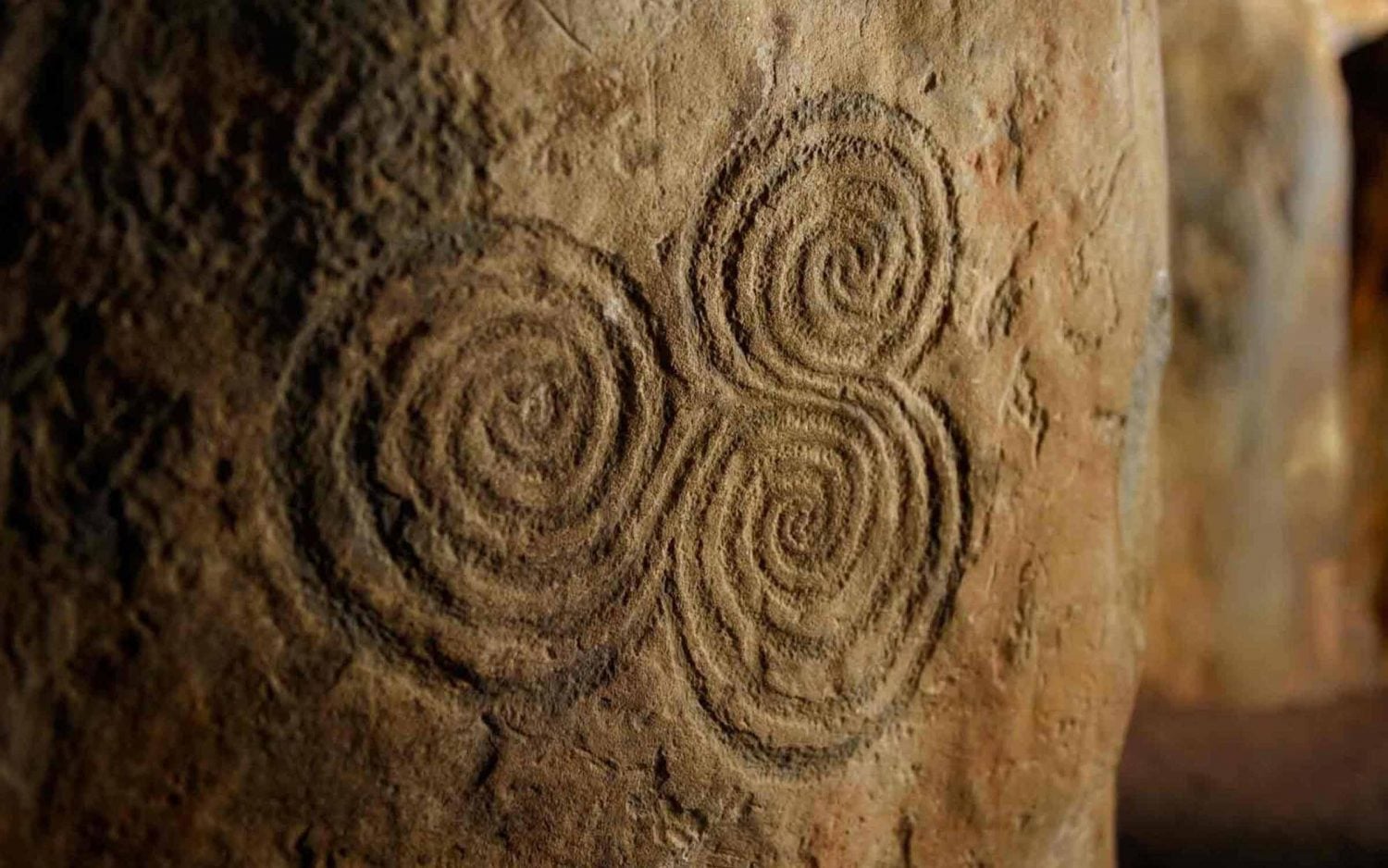
Today, the Boyne Valley remains one of the most rewarding landscapes in Ireland. Newgrange, built before the Egyptian pyramids, stands just a few kilometres from where Finnegas once kept his vigil. The valley holds a weight of mythology that no other region in Ireland quite matches — and it rewards every visitor who takes the time to explore it. Start planning your journey through ancient Ireland before your trip.
Why This Story Still Matters
Scholars have long noted that the Salmon of Knowledge is not really a story about magic. It is a story about how wisdom passes between generations — often to the person we least expect, and rarely to the one who spent longest waiting for it.
Finnegas prepared for seven years. The wisdom found Deimne in an instant. And both were necessary.
In ancient Ireland, knowledge was not a possession. It was a living thing — wild, fluid, moving always toward whoever was ready to receive it. The oldest manuscripts in Irish history preserve this understanding in every page, every illuminated curve and spiral.
The Sacred Hazel Tree
The nine hazel trees of the story were not incidental detail. In Irish tradition, hazel was used for divining rods to find water underground. Druid wands were cut from hazel branches. In the Ogham alphabet — the earliest form of Irish writing, carved into standing stones — hazel had its own sacred symbol, called Coll.
When you walk through an Irish woodland and come upon a hazel tree, you are standing beside something ancient people considered deeply holy. The best knowledge, they believed, grows quietly at the water’s edge, patient and unhurried, waiting for exactly the right moment.
The River Boyne still flows through County Meath. The hazel trees still grow on its banks. And somewhere in the deep water, some say, the salmon is still swimming.
Love Ireland? So do 65,000 of us.
Join the Love Ireland newsletter — free stories of Irish heritage, hidden gems, and the magic of the Emerald Isle delivered to your inbox.
☘️ Want More Hidden Ireland?
Join 64,000+ subscribers who discover Ireland’s best-kept secrets every week.
Subscribe Free — Join the Community →
Free forever · Unsubscribe anytime · No spam
📥 Free Download: Ireland Travel Planning Guide
Our most popular resource — itineraries, insider tips, and the 50 places you must not miss.
Tours & experiences you might love


Powered by Viator. Some links are affiliate links — we may earn a small commission at no extra cost to you.
Secure Your Dream Irish Experience Before It’s Gone!
Planning a trip to Ireland? Don’t let sold-out tours or packed attractions spoil your journey. Iconic experiences like visiting the Cliffs of Moher, exploring the Rock of Cashel, or enjoying a guided walk through Ireland’s ancient past often sell out quickly—especially during peak travel seasons.

Booking in advance guarantees your place and ensures you can fully immerse yourself in the rich culture and breathtaking scenery without stress or disappointment. You’ll also free up time to explore Ireland’s hidden gems and savour those authentic moments that make your trip truly special.
Make the most of your journey—start planning today and secure those must-do experiences before they’re gone!