

It sits behind glass in the heart of Dublin, and people queue for hours just to see two pages. Most walk away feeling they have witnessed something extraordinary — but without quite knowing why. The Book of Kells is not simply a beautiful old book. It is one of the most deliberately intricate, deliberately layered pieces of human creation in existence, and scholars are still discovering things inside it today.
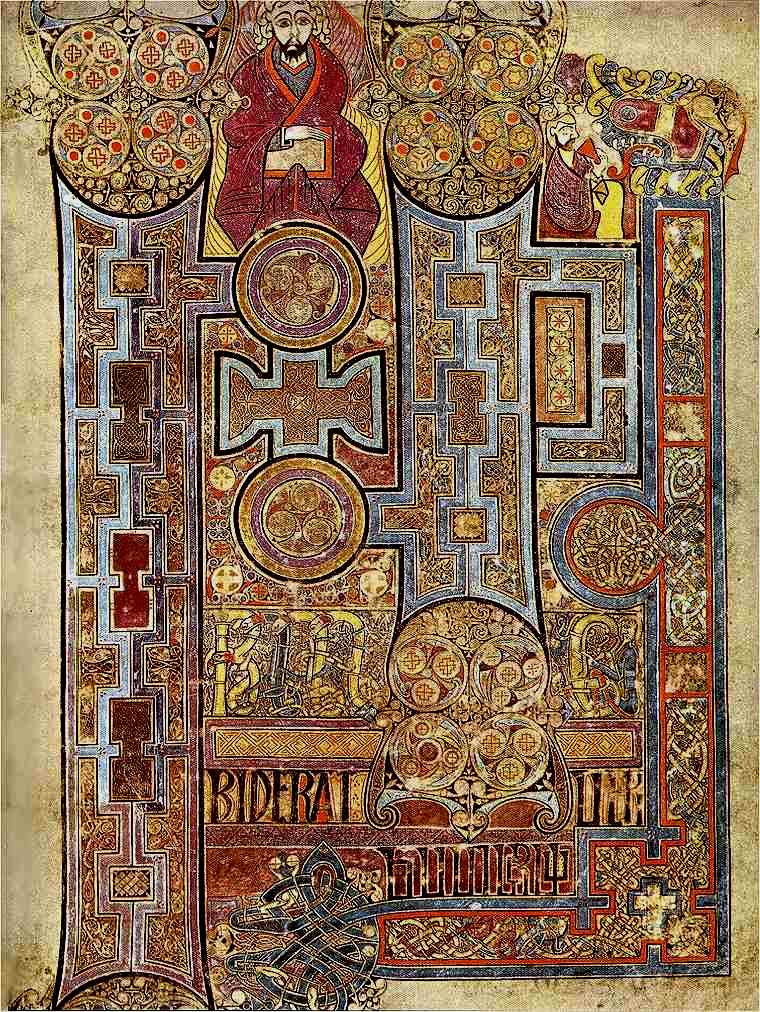
Book of Kells: Quick Facts
- Created by Celtic monks around 800 AD — over 1,200 years old
- 340 vellum leaves (680 pages), made from roughly 185 calfskins
- Considered the finest surviving example of Insular art
- Stolen in 1007, found buried in the ground weeks later, stripped of its jewelled cover
- On permanent display at Trinity College Dublin, seen by close to 1 million visitors a year
What Is the Book of Kells?
Created by Celtic monks around 800 AD, the Book of Kells is an illuminated manuscript of the four Gospels — 680 pages of text surrounded by decorative interlaced designs so detailed that a magnifying glass reveals imagery invisible to the naked eye.
It is widely regarded as the finest example of Insular art in the world. But that description barely scratches the surface of what the monks actually built inside those pages.
The Mystery of Where It Was Made
Nobody knows exactly where the book was created, and that uncertainty has fuelled scholarly debate for generations. The two most likely candidates are the monastery of Iona, off the west coast of Scotland, and the monastery at Kells in County Meath.
The current theory is that monks began the manuscript on Iona, then carried it to Ireland after a devastating Viking raid in 806 killed 68 members of their community. The book may quite literally have been smuggled to safety across the Irish Sea.
It arrived in Kells as a refugee. It has never really left Ireland since.
What the Monks Hid Inside the Pages
This is where the Book of Kells becomes truly astonishing. Hidden within the decorative spirals are tiny mice, cats, and otters — some no larger than a fingernail. On the Chi Rho page, considered the most complex single page of any medieval manuscript, there are more than 2,000 interlacing segments, each one entirely deliberate.
In the 20th century, a scholar used photography to enlarge a single decorative panel and found, buried deep within the knotwork, a tiny portrait of a human face that no unaided eye could ever see.
Why hide things that no living person could see? The monks believed that God could see everything. These invisible details were a private offering — beauty made not for an audience, but for the divine.
The Theft Nobody Talks About
In 1007, the Book of Kells was stolen from the monastery at Kells. The Irish annals record that it was “wickedly stolen in the night” — its bejewelled cover ripped away — and found buried in the ground several weeks later, stripped of its binding and damaged.
It survived that theft. It survived the Reformation, centuries of neglect, and a civil war. It arrived at Trinity College Dublin in the 1650s. The gold cover was gone forever. The book was not. Read the full story of the 1007 theft — the buried manuscript, the missing cover, and what nobody can fully explain.
What Visiting the Book of Kells Actually Feels Like
Two pages are on display at any given time — one showing text, one showing decoration. They are turned regularly so that different sections are visible across the year. No single visit shows you the whole book.
The Long Room of Trinity College, where the book is housed, is itself an experience — a cathedral of timber and old vellum, lined with marble busts and the faint smell of centuries of paper. If you are planning a trip to Ireland, the Book of Kells is not a tourist checkbox. It is one of those rare moments where you stand in front of something made by human hands and feel the full weight of what humans are capable of.
The Secrets Still Being Found
In 2000, a complete digital facsimile was created, allowing scholars to study every page without handling the original. Since then, discoveries have continued to emerge — hidden text beneath painted panels, corrections made by the original scribes, and evidence that at least four distinct artists worked on different sections of the manuscript.
A book completed more than 1,200 years ago is still giving up its secrets. For those drawn to Ireland’s ancient written heritage, the Ogham alphabet carved into standing stones offers another window into how the Irish preserved meaning before printing ever existed. And the mysterious round towers built beside those same monasteries in the same era will stop you just as completely.
The Book of Kells was made in a world without printing presses, without electric light, without any of the tools we take for granted. A small group of monks on the edge of the known world decided to make something so meticulous, so beautiful, so layered with hidden meaning that even God would be satisfied.
Parts of it were hidden from human view entirely. Intentionally. Permanently.
That act of faith — made in a cold scriptorium on a remote island, over decades, by people whose names we will never know — is still here. Still in Ireland. Still quietly overwhelming visitors every single day.
☘️ You Might Also Love
☘️ Want More Hidden Ireland?
Join 64,000+ subscribers who discover Ireland’s best-kept secrets every week.
Subscribe Free — Join the Community →
Free forever · Unsubscribe anytime · No spam
📥 Free Download: Ireland Travel Planning Guide
Our most popular resource — itineraries, insider tips, and the 50 places you must not miss.
Tours & experiences you might love


Powered by Viator. Some links are affiliate links — we may earn a small commission at no extra cost to you.
Secure Your Dream Irish Experience Before It’s Gone!
Planning a trip to Ireland? Don’t let sold-out tours or packed attractions spoil your journey. Iconic experiences like visiting the Cliffs of Moher, exploring the Rock of Cashel, or enjoying a guided walk through Ireland’s ancient past often sell out quickly—especially during peak travel seasons.

Booking in advance guarantees your place and ensures you can fully immerse yourself in the rich culture and breathtaking scenery without stress or disappointment. You’ll also free up time to explore Ireland’s hidden gems and savour those authentic moments that make your trip truly special.
Make the most of your journey—start planning today and secure those must-do experiences before they’re gone!