

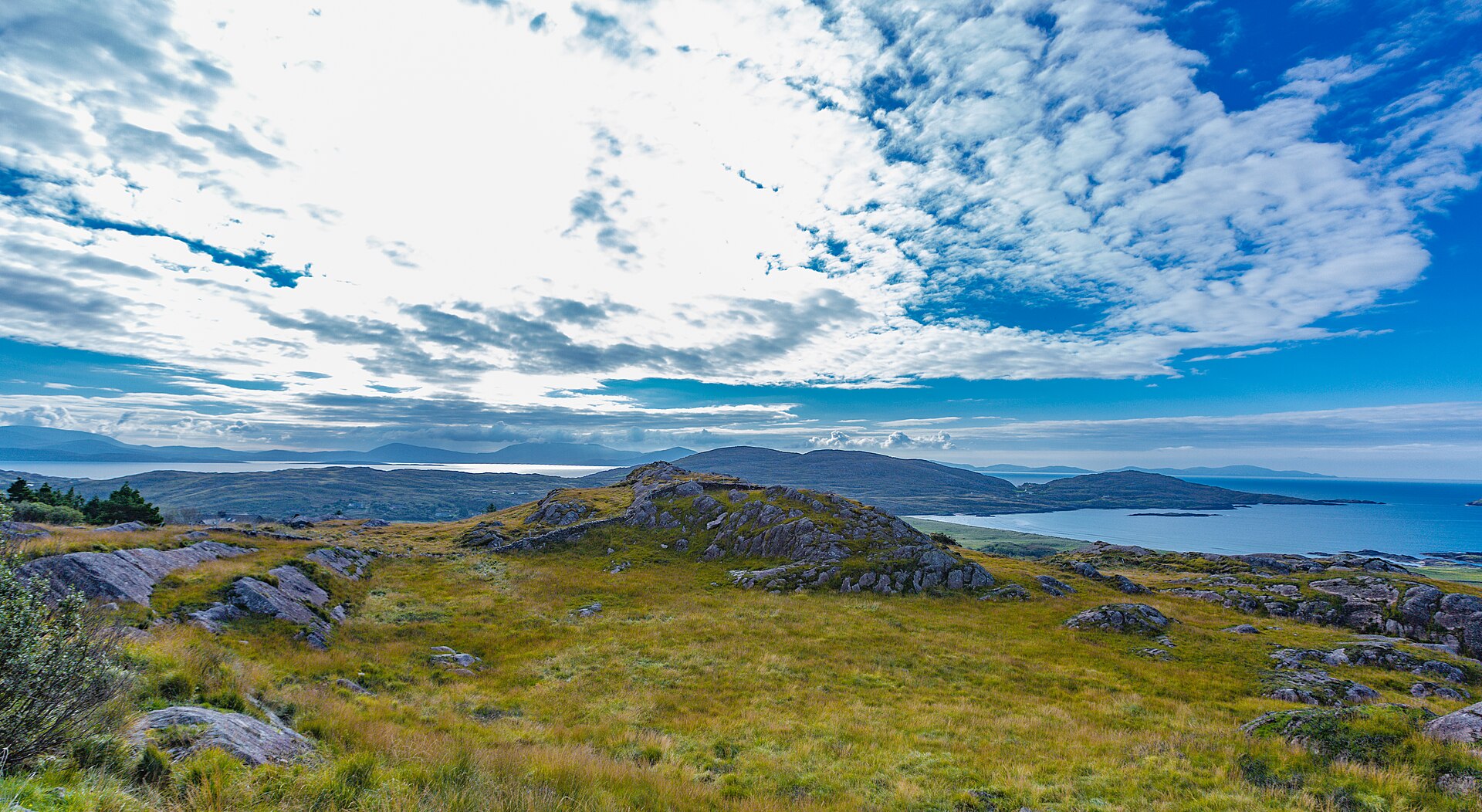
Drive the back roads of Clare, Meath or Donegal and you will pass circular rings of raised earth or stone sitting in the middle of otherwise ordinary fields — ploughed around, never through. Farmers who would level anything else leave these alone, and many tens of thousands survive across the island. Nobody built them for fairies, yet the name has stuck in the countryside for generations. This is Guide № 012 in The Love Ireland Guide series.
What a Fairy Fort Actually Is
A “fairy fort” is the folk name for a ringfort — in Irish a ráth, lios, caiseal, cathair or dún, words that survive in thousands of place names like Rathmines, Lismore and Cahir. Most are early medieval enclosed farmsteads, built roughly between 500 and 1000 AD, consisting of a circular bank and outer ditch that ringed a house, outbuildings and livestock pens. Earthen examples are usually called raths; those built of dry-stone walling are cashels. The National Monuments Service maintains the public Historic Environment Viewer that maps the recorded sites, so you can look up the ring in your local field by name and classification.
Many ringforts also conceal a souterrain — an underground stone-lined passage used for cold storage and as a bolt-hole in times of raiding. It is these dark, echoing tunnels, half-collapsed and opening unexpectedly underfoot, that did a great deal to earn these sites their otherworldly reputation.
Forts You Can Actually Walk
Several of Ireland’s finest stone ringforts are managed as visitor sites. Caherconnell Stone Fort in the Burren, County Clare, is a remarkably intact cashel with an on-site archaeology display and sheepdog demonstrations, and is excavated each summer by the Caherconnell Archaeological Field School. On the largest Aran Island, Dún Aonghasa is a spectacular stone promontory fort perched on a sea cliff, cared for by the Office of Public Works alongside other national monuments.
Why Nobody Dares Touch Them
In folk tradition, ringforts are the dwelling places of the aos sí — “the good people,” a name used precisely because it is thought unwise to call the fairies anything blunt. Interfering with a fort, ploughing it, grazing it carelessly, or above all cutting the lone hawthorn (whitethorn, sceach gheal) that often grows on or beside it, was believed to invite ruin, illness or worse. Stories of this kind are preserved in enormous number in the National Folklore Collection, including the 1930s Schools’ Collection in which children across the country wrote down what their neighbours believed about the forts near home.
The belief still carries real-world weight. Transport Infrastructure Ireland routinely commissions archaeological assessment before major road projects — work that, folklore aside, is a legal requirement rather than a superstition.
The Law Behind the Legend
The reason you genuinely should not take a digger to a fairy fort has nothing to do with curses. Ringforts are protected archaeological monuments under the National Monuments Acts, and damaging or interfering with one is a criminal offence. Finds turned up during any legitimate excavation — brooches, querns, bone pins, early iron tools — are the property of the State and are curated by the National Museum of Ireland. In other words, the farmer’s instinct to plough around the ring and the archaeologist’s legal duty to leave it undisturbed happen to point in exactly the same direction.
Reading a Fort in the Field
Once you know the signs, ringforts are easy to spot. Look for a near-perfect circle, often tens of metres across, defined by a raised bank with a ditch outside it, usually with a single gap for an entrance. A solitary, wind-bent hawthorn standing apart in a field is often the giveaway for a levelled or low fort. For a guided introduction to the wider archaeological landscape — and to check what is protected before you explore — the Heritage Ireland network of OPW sites is the best place to start.
Myths Worth Retiring
Myth: Fairies built the fairy forts. They were built by ordinary farming families more than a thousand years ago as everyday homesteads. The supernatural associations attached themselves long after the sites fell out of use and became grassy rings of unknown origin.
Myth: It’s “illegal to touch a fairy fort because of the fairies.” It is illegal, but because ringforts are protected national monuments — the legal protection is archaeological, and it predates no curse.
Myth: Every circular bump in a field is a fairy fort. Some are, but ploughed-out enclosures, modern stock rings and natural mounds are often mistaken for them. The recorded monument maps exist precisely so the real sites can be told apart from the lookalikes.
Frequently Asked Questions
Can I visit a fairy fort?
Yes — managed sites such as Caherconnell and Dún Aonghasa are open to the public, and many unmanaged forts sit on common or roadside land. For forts on private farmland, always ask the landowner’s permission first and keep to field edges.
Is it really bad luck to cut a lone hawthorn?
That is the traditional belief, and it is taken seriously enough that solitary thorns are frequently left standing in otherwise cleared fields. Whatever you make of the folklore, leaving old trees and monuments undisturbed is both good manners and, for the monuments, the law.
How old are ringforts?
Most date from the early medieval period, roughly 500 to 1000 AD, when they served as defended farmsteads. Some sites show earlier or later activity, but the great age of ringfort building in Ireland was firmly in the first millennium.
More The Love Ireland Guides
The Love Ireland Guide is a numbered series — one tightly focused subject at a time, each with its own downloadable collectible edition. Guide № 001 is Irish Soda Bread, Guide № 002 is St. Patrick’s Day, Guide № 003 is The Claddagh Ring, Guide № 004 is Guinness — The Pour, The Pint, The Ritual, Guide № 005 is Irish Pub Etiquette, Guide № 006 is Irish Slang & Hiberno-English, Guide № 007 is The Irish Wake, Guide № 008 is Irish Whiskey, Guide № 009 is The Irish Trad Session, Guide № 010 is St. Brigid’s Cross, Guide № 011 is The Aran Sweater, This is Guide № 012. More editions are on the way.
☘️ Join 64,000+ Ireland Lovers
Every week, get hidden stories, local secrets, and travel inspiration from people who live and love it.
Subscribe free — enter your email:
Tours & experiences you might love


Powered by Viator. Some links are affiliate links — we may earn a small commission at no extra cost to you.
Secure Your Dream Irish Experience Before It’s Gone!
Planning a trip to Ireland? Don’t let sold-out tours or packed attractions spoil your journey. Iconic experiences like visiting the Cliffs of Moher, exploring the Rock of Cashel, or enjoying a guided walk through Ireland’s ancient past often sell out quickly—especially during peak travel seasons.

Booking in advance guarantees your place and ensures you can fully immerse yourself in the rich culture and breathtaking scenery without stress or disappointment. You’ll also free up time to explore Ireland’s hidden gems and savour those authentic moments that make your trip truly special.
Make the most of your journey—start planning today and secure those must-do experiences before they’re gone!