

On Easter Saturday in 433 AD, a fire appeared on a hillside in County Meath. Across the valley, the court of the High King of Ireland could see it from the Hill of Tara.
No one was supposed to light a fire before the king.
The druids saw it. And they said something that has echoed across 1,500 years of Irish memory.
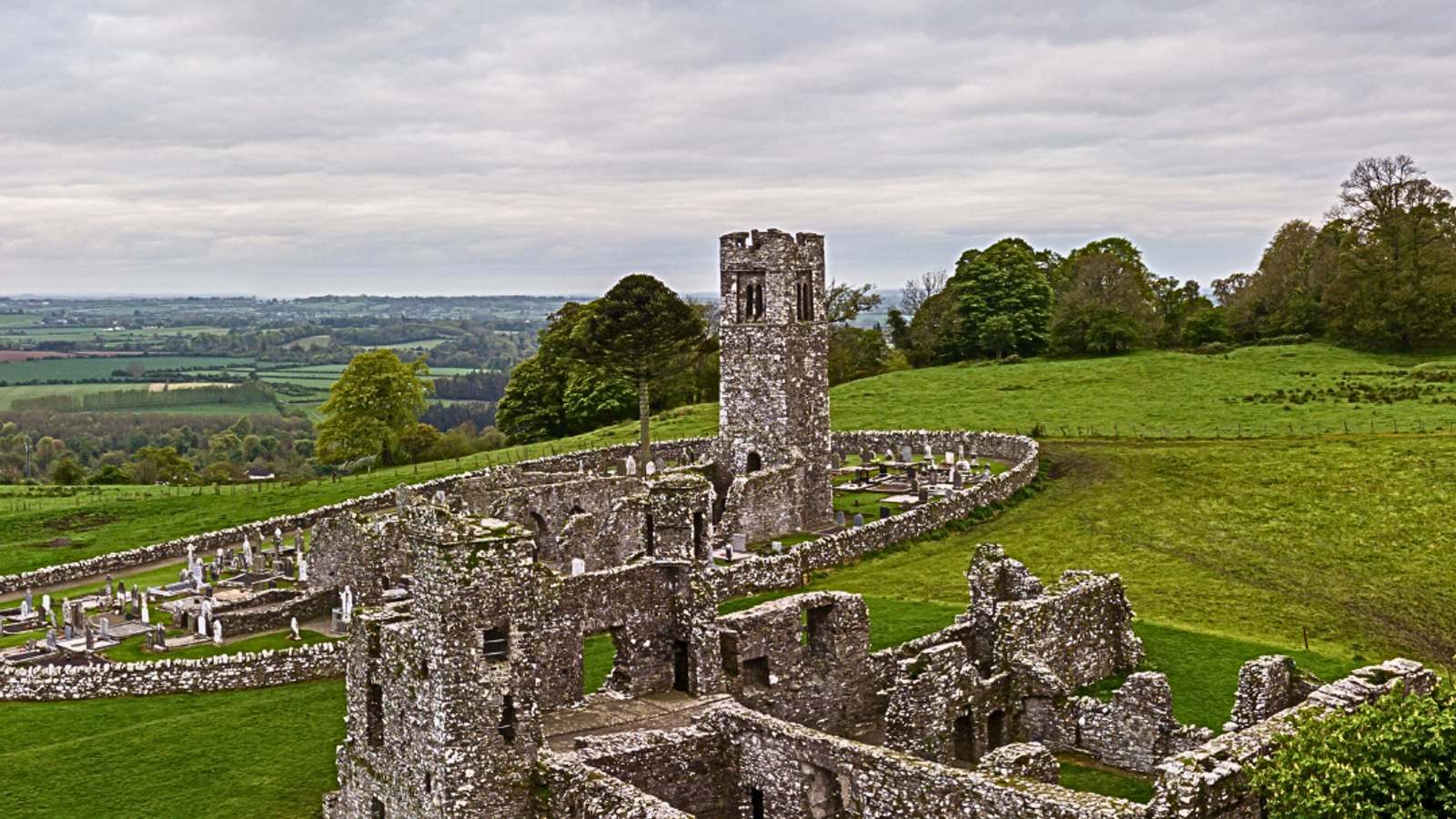
This is the Hill of Slane — the ancient monastic site, not to be confused with nearby Slane Castle, the 18th-century stately home a short walk away.
The Law No One Dared to Break
Every spring, the High King of Ireland lit the first fire of the new season from the Hill of Tara. It was not just ceremony. It was law.
No hearth fire, no forge, no torch could burn anywhere in Ireland until the royal flame was kindled. To break this rule was to challenge the authority of the king himself — and the power of the druids who surrounded him.
The ritual was a way of ordering the world. The king’s fire came first. Everything else followed.
The Monk Who Climbed the Hill
That Easter Saturday, a man named Patrick — the same Patrick venerated today as Saint Patrick, Ireland’s patron saint — chose the Hill of Slane, a few miles north of the Boyne. He lit his Paschal fire — the Christian celebration of Easter — and it blazed out across the dark Meath landscape.
Patrick had been in Ireland before. Brought as a slave as a boy, kept for six years tending sheep on an Irish hillside, he had escaped and come back as a missionary. He knew exactly what lighting that fire would mean.
From the Hill of Tara, nine miles to the south, the court of King Lóegaire mac Néill saw the flame.
The druids turned to the king. Their words, recorded in accounts written centuries later, carry the weight of something that felt inevitable even as it was spoken: “If this fire is not extinguished tonight, it will never be extinguished.”
What Happened on the Hill That Night
The king sent warriors to Slane. What they found there — and what happened — has been retold in Irish monasteries, schoolrooms, and firesides ever since.
In the older accounts, Patrick’s monks were transformed into a herd of deer and escaped into the night. In later versions, Patrick met the king directly and the two men spoke at dawn on the hillside.
The fire was not extinguished.
Patrick went on to meet the High King at Tara itself. That encounter — missionary and druid facing each other across one of Ireland’s most sacred hills — is one of the founding moments of a country that still carries both traditions in its bloodstream. You can read more about the remarkable ancient monuments of the Boyne Valley, which sit just a few miles from Slane.
☘️ Enjoying this? 64,000+ Ireland lovers get stories like this every week. Subscribe free →
The Oldest Record of That Night
The story of Slane was written down in the Book of Armagh, one of Ireland’s most important surviving manuscripts. Compiled in the early 9th century, it is among the earliest accounts of Patrick’s life on Irish soil.
In an age when history lived mostly in memory, being written down was a form of permanence that stone rarely matched. The scribes of Armagh wanted this story remembered. They succeeded.
Historians debate the exact date. The year 433 AD may be more tradition than fact. But the hill is real, the ruins are real, and the Boyne Valley around it is one of the most ancient landscapes in Europe.
Standing on the Hill Today
The summit of the Hill of Slane holds the ruins of a 16th-century Franciscan friary. Its stone walls, open to the Meath sky, stand quietly beside a small college built on the site where Patrick is said to have established his first church in this region.
The hill is not a tourist attraction in the conventional sense. There is no ticket booth. No audio guide. You drive through the village of Slane, follow the road up, and arrive somewhere that has been significant for over 1,500 years — without fuss.
The view from the top stretches across the Boyne Valley floor. Nine miles south, the Hill of Tara rises above the flat farmland. On a clear day, you can trace the old story with your eyes. If you are planning a trip to this part of Ireland, the Ireland travel planning guide has everything you need.
The Fire That Kept Burning
The druid’s warning was not wrong. Whether you take it literally or not, what started on that hill spread across Ireland.
Patrick went on to ordain priests and establish churches across the country. Within a century, Ireland had become one of the most literate societies in Europe. Its monks copied manuscripts that kept ancient learning alive when much of the continent had gone dark. They did it because someone once convinced them that knowledge was worth protecting — even at great cost.
Ireland has always had a particular relationship with fire — as symbol, as ritual, as defiance. The Hill of Slane sits near the very beginning of that story.
Some places hold their stories lightly. The Hill of Slane holds its with both hands.
☘️ You Might Also Love
☘️ Join 64,000+ Ireland Lovers
Every Friday, get Ireland’s hidden gems, local secrets, and travel inspiration — the kind you won’t find in any guidebook.
Free forever · · Unsubscribe anytime
Tours & experiences you might love


Powered by Viator. Some links are affiliate links — we may earn a small commission at no extra cost to you.
Secure Your Dream Irish Experience Before It’s Gone!
Planning a trip to Ireland? Don’t let sold-out tours or packed attractions spoil your journey. Iconic experiences like visiting the Cliffs of Moher, exploring the Rock of Cashel, or enjoying a guided walk through Ireland’s ancient past often sell out quickly—especially during peak travel seasons.

Booking in advance guarantees your place and ensures you can fully immerse yourself in the rich culture and breathtaking scenery without stress or disappointment. You’ll also free up time to explore Ireland’s hidden gems and savour those authentic moments that make your trip truly special.
Make the most of your journey—start planning today and secure those must-do experiences before they’re gone!