

Every St Patrick’s Day, millions of people around the world pin a small three-leafed plant to their lapel and call it a shamrock. The Irish government presents a crystal bowl of them to the US President every year. Yet ask a botanist — or even an Irish farmer — exactly which plant you’re looking at, and things get complicated fast.
The Plant That Became a Nation’s Symbol
The word “shamrock” comes from the Irish seamróg — a diminutive of seamair, meaning trefoil or clover. The name tells you something important: the Irish didn’t choose an eagle or a lion. They chose a common three-leafed plant that grows in every damp field, along every roadside, and between every stone wall on the island.
It was humble. It was everywhere. And that was entirely the point.
The tradition of wearing a shamrock on St Patrick’s Day is recorded as far back as the 17th century. Travellers noted it. Poets wrote about it. What nobody put in writing was exactly which plant they meant. That omission would cause more than three centuries of botanical confusion.
The Survey That Opened a Can of Worms
In 1893, Dublin botanist Nathaniel Colgan decided to settle the question once and for all. He placed notices across Ireland asking people to send him the shamrock they wore on St Patrick’s Day — the actual plant, pressed and posted.
The results were not what he expected. Colgan received dozens of different specimens. Some were white clover. Others were lesser trefoil. Several were wood sorrel, with its distinctive heart-shaped leaves. A few were black medick. People from different counties sent entirely different plants — and most were convinced they had the genuine article.
He published his findings in the Irish Naturalist journal. No single plant won. The survey had not resolved the question. It had simply proved how deep the disagreement ran.
The Four Plants That Still Compete for the Title
More than a century later, four plants still claim the shamrock throne.
Lesser trefoil (Trifolium dubium) is the current frontrunner in most botanical surveys. It grows low to the ground in lawns and meadows across Ireland and has the small, three-leaflet shape most people associate with the shamrock. Modern surveys consistently find it is the plant most Irish people identify as the real one.
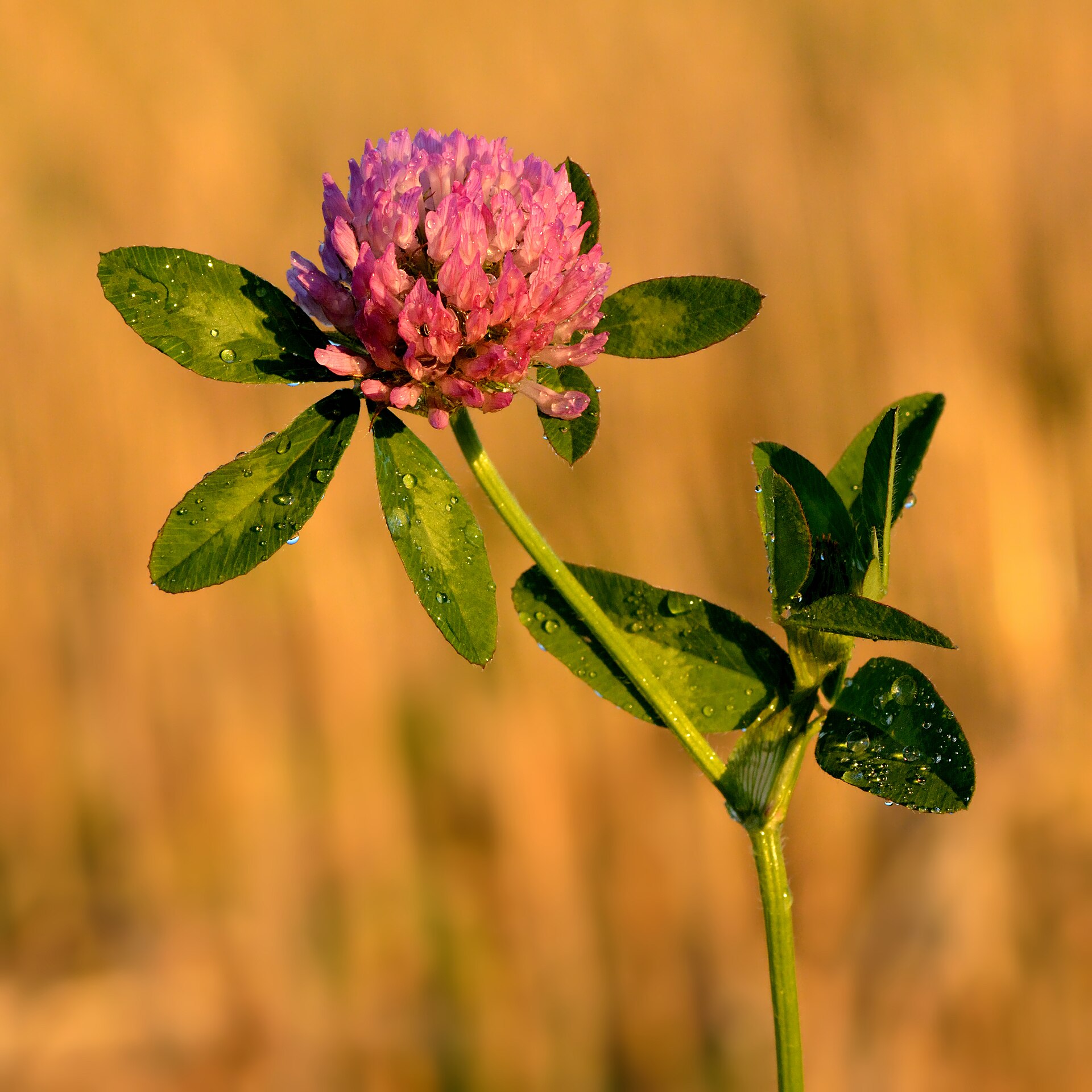
White clover (Trifolium repens) is the larger, more familiar clover found in most Irish gardens. It’s what most non-Irish people picture when they hear “shamrock,” and it has appeared on Irish coins, crockery, and embroidery for centuries. Some older rural communities use nothing else.
Wood sorrel (Oxalis acetosella) has a particularly strong historical case. It flowers around St Patrick’s Day in mid-March, while most clovers don’t bloom until later in spring. Some botanists argue this seasonally accurate plant was the original seamróg, used long before modern horticultural varieties became widely available. Its heart-shaped leaflets mark it out from the clover family entirely.
Black medick (Medicago lupulina) remains a minority view — but a persistent one in parts of Connacht, where some communities have used it for generations without question.
☘️ Enjoying this? 64,000+ Ireland lovers get stories like this every week. Subscribe free →
What the Irish Government Actually Sends to America
Every St Patrick’s Day, the Taoiseach presents a crystal bowl of shamrocks to the US President at the White House. It is one of the most photographed moments in Irish diplomatic life.
The plant in that bowl? White clover, grown commercially for the occasion. Whether it’s the “correct” shamrock depends entirely on who you ask.
The Irish government has never issued an official declaration about which plant is the shamrock. There is no botanical statute, no legal definition, no Protected Designation of Origin. The word “shamrock” has been trademarked by businesses in various countries — but in Ireland itself, the symbol remains wonderfully unclaimed by anyone.
For those planning a visit to Ireland, you’ll encounter the shamrock on everything from pub signs to tea towels. If you want to understand what it actually means to the Irish, start with Ireland’s own story — the plant is just one thread in a much longer weave.
Why the Ambiguity Is Very Irish
There’s something fitting about the fact that Ireland’s national plant has never had a definitive identity. The Gaelic tradition was oral, not written. Boundaries were loose. Things meant what communities agreed they meant — and communities didn’t always agree.
The shamrock grew in every county, looked slightly different in every field, and was called by slightly different names. Some historians suggest the specific species was never the point. What mattered was the act of wearing something green, something local, something that had grown from Irish soil that morning.
The message wasn’t botanical. It was belonging.
The shamrock shares that quality of quiet stubbornness with other Irish symbols that outlasted empires — things that survived not because they were declared official, but because people kept holding on to them.
If you look down at any Irish field on a wet morning in March — and March mornings in Ireland are usually wet — you’ll find dozens of plants that could pass for a shamrock. That might, in the end, be the answer. The shamrock was never one plant. It was all of them.
Ireland’s most recognised symbol has survived centuries of diaspora, change, and globalisation. It sits on aircraft tails and beer glasses and rugby shirts from New Zealand to New York. Yet in a damp Irish field, it still grows quietly, unpatented and undeclared — exactly as it always has. And perhaps that’s what makes it so perfectly, stubbornly Irish.
☘️ You Might Also Love
Free forever · · Unsubscribe anytime
Tours & experiences you might love


Powered by Viator. Some links are affiliate links — we may earn a small commission at no extra cost to you.
Secure Your Dream Irish Experience Before It’s Gone!
Planning a trip to Ireland? Don’t let sold-out tours or packed attractions spoil your journey. Iconic experiences like visiting the Cliffs of Moher, exploring the Rock of Cashel, or enjoying a guided walk through Ireland’s ancient past often sell out quickly—especially during peak travel seasons.

Booking in advance guarantees your place and ensures you can fully immerse yourself in the rich culture and breathtaking scenery without stress or disappointment. You’ll also free up time to explore Ireland’s hidden gems and savour those authentic moments that make your trip truly special.
Make the most of your journey—start planning today and secure those must-do experiences before they’re gone!
Subscribe Free