

For over a century, Irish children learned to read by crouching in ditches, under hawthorn bushes, and behind dry-stone walls — while a lookout watched the road for approaching soldiers. These were hedge schools: the most defiant classrooms in history, hidden in plain sight across every county in Ireland.
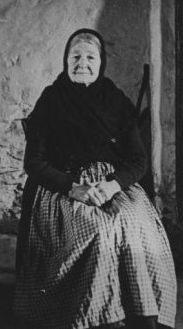
When Education Became a Crime
In the early 1700s, the British Penal Laws made it illegal for Catholics to run schools, attend them, or teach in them. The penalty for a schoolmaster caught in the act was transportation or imprisonment.
The intent was explicit: strip the Irish of their language, their faith, and their intellectual life. Deny the next generation access to learning entirely.
It didn’t work.
What a Hedge School Actually Was
The name is slightly misleading. Hedge schools were not always held beside actual hedges — though many were. They met in sheltered ditches, behind furze bushes, inside sympathetic farmhouses, or in the cover of a south-facing stone wall.
The “hedge” was metaphorical. This was education conducted in the margins, in whatever shelter the land could offer, by teachers who risked everything for the right to pass on knowledge.
The schoolmaster was typically a man of remarkable learning — a displaced scholar, a priest who could no longer practise openly, or someone who had studied on the Continent in France or Spain. He charged what the family could afford: a few pence, a bag of potatoes, a cut of turf for the winter.
A Curriculum That Would Surprise You
Hedge schools were not basic. Their curriculum often included Latin, Greek, mathematics, history, geography, and philosophy — alongside reading and writing in both Irish and English.
This was not remedial education delivered in a field. It was serious scholarship, conducted under hawthorn branches, by teachers who believed that the life of the mind was worth protecting at any cost.
Children memorised vast passages by chanting aloud in unison — a technique that turned the oral tradition already deep in Irish culture into an academic tool. When paper was scarce, memory became the page.
The Lookout on the Hill
Every hedge school had a child posted as sentinel on the nearest rise. Their job: watch for soldiers or informers moving along the road below. At a signal — a whistle, a particular bird call — books vanished, slates were turned face-down, and the class became a group of children sitting innocently in a field.
This was not drama. It was a Tuesday morning.
The hedge school masters shared something with the wandering Irish storytellers of earlier centuries — a tradition of carrying knowledge lightly, ready to move, impossible to silence. Both understood that culture cannot be confiscated if it lives inside a person.
What the Schools Left Behind
By the 1820s, Ireland had one of the highest rates of classical literacy among rural populations in Europe — almost entirely because of hedge schools. Greek and Latin were not unusual subjects in thatched farmhouses across Munster and Connacht.
When Daniel O’Connell launched his campaign for Catholic Emancipation, he could rely on an educated, literate rural population that the Penal Laws had been specifically designed to prevent. The hedge schools had quietly kept the flame burning.
You can feel that same stubborn insistence on learning in the Irish language itself — a tongue that survived centuries of suppression and still appears on every road sign in the country today.
Finding the Memory Today
Very few physical traces remain. By their nature, hedge schools left no buildings, no plaques, no ruins. But their legacy is everywhere in Irish life.
It shows up in the unusual literary richness of small Irish villages. In the deep respect that rural communities still hold for teachers. In the old phrase fear léinn — a man of learning — spoken with genuine reverence. And in the outsized contribution the Irish have made to world literature, law, and politics across every generation since.
If you walk the back roads of Clare, Kerry, or Wicklow and come across a sheltered south-facing ditch with a large flat stone at its back, you may be looking at a former classroom. Ireland’s greatest teachers left no monuments. They didn’t need to. The minds they shaped were monument enough.
For more of Ireland’s hidden history — the unwritten traditions, the resilient characters, and the stories most visitors never discover — the Love Ireland newsletter brings more of it to your inbox each week.
You Might Also Enjoy
The 6 Best Ireland Newsletters to Subscribe to in 2026 — Our guide to the best free newsletters for anyone who loves Ireland.
A Legacy in Every Townland
Some nations preserve their culture in great institutions. Ireland preserved its culture in memory — passed from teacher to pupil, whispered across a stone wall, in a language that wasn’t supposed to exist anymore.
That stubbornness is still here, in every corner of the island. You can feel it when you travel through Ireland — in the way a local will quote a poem, recite a proverb, or stop mid-sentence to tell you something about the ground beneath your feet that you hadn’t thought to ask.
The hedge schools never truly closed. They just moved indoors.
☘️ You Might Also Love
☘️ Want More Hidden Ireland?
Join 64,000+ subscribers who discover Ireland’s best-kept secrets every week.
Subscribe Free — Join the Community →
Free forever · Unsubscribe anytime · No spam
📥 Free Download: Ireland Travel Planning Guide
Our most popular resource — itineraries, insider tips, and the 50 places you must not miss.
Tours & experiences you might love


Powered by Viator. Some links are affiliate links — we may earn a small commission at no extra cost to you.
Secure Your Dream Irish Experience Before It’s Gone!
Planning a trip to Ireland? Don’t let sold-out tours or packed attractions spoil your journey. Iconic experiences like visiting the Cliffs of Moher, exploring the Rock of Cashel, or enjoying a guided walk through Ireland’s ancient past often sell out quickly—especially during peak travel seasons.

Booking in advance guarantees your place and ensures you can fully immerse yourself in the rich culture and breathtaking scenery without stress or disappointment. You’ll also free up time to explore Ireland’s hidden gems and savour those authentic moments that make your trip truly special.
Make the most of your journey—start planning today and secure those must-do experiences before they’re gone!