

Walk into almost any medieval Irish castle and climb towards the upper floors. The staircase will curl upward in a clockwise direction — tight enough to brush your shoulders, lit only by arrow slits — and most visitors never think to ask why.
It was not decoration. It was a death trap.
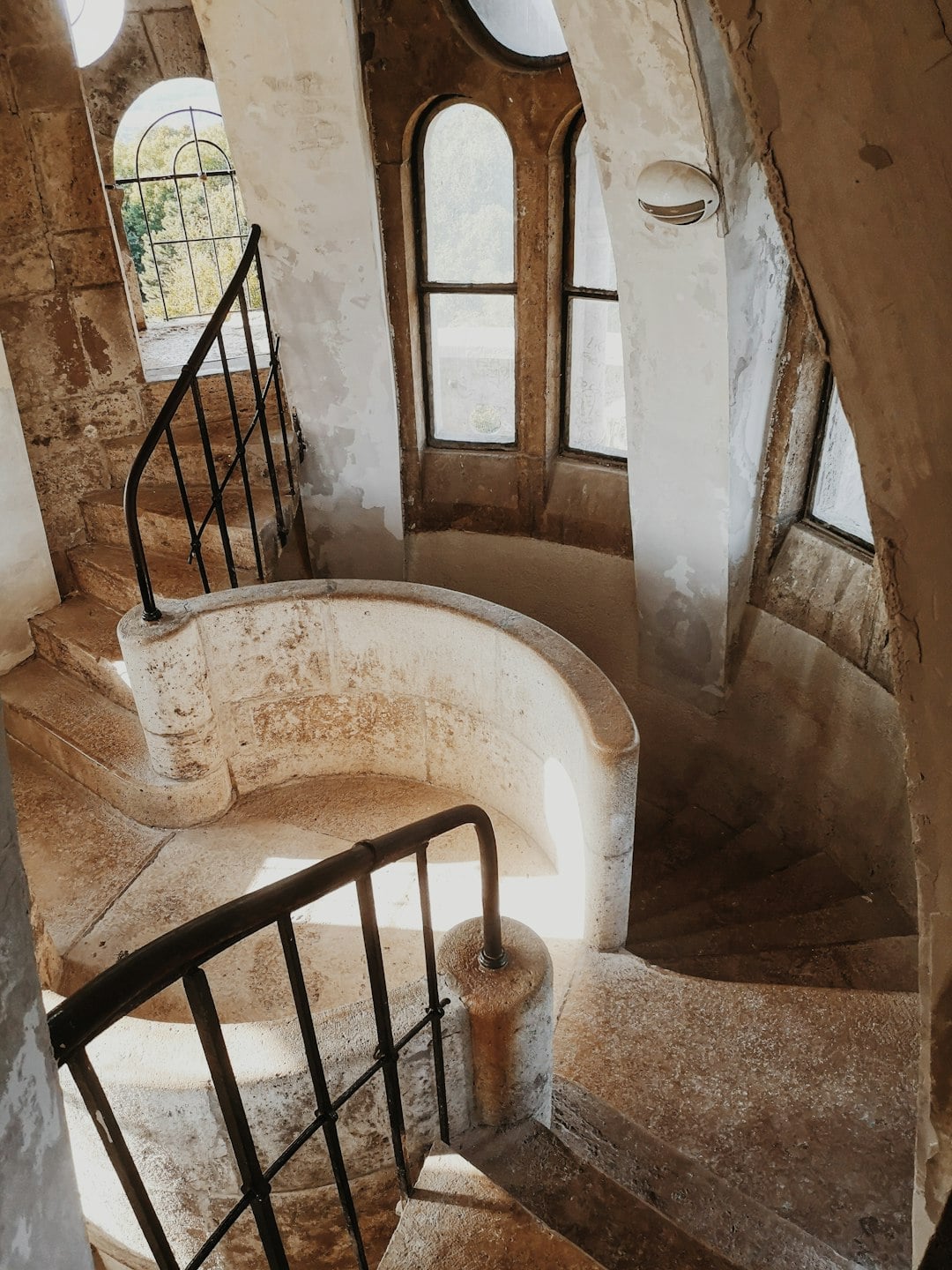
The Right-Hand Advantage
Every spiral staircase in an Irish tower house was deliberately built to ascend clockwise. The reason is as simple as it is ruthless: most warriors were right-handed.
A defender retreating upward had the central stone column — the newel — on their left, leaving their sword arm completely free. An attacker climbing toward them had that same column pressed against their sword arm, trapping it against the curve.
One architectural decision turned every staircase into a kill zone.
Built to Disorient the Enemy
The trap went deeper than sword placement. The tight spiral meant an attacker could only ever see two or three steps ahead — no visibility, no momentum, and no room to bring a shield to bear properly.
The defender above could strike downward with full force, then step back onto a wider landing. The attacker, still climbing blind into a curve, had nowhere to dodge.
Some historians note that the steps themselves were engineered with the same intent. The outer edge of each step is wide and comfortable. The inner edge, closest to the newel, narrows to almost nothing. Defenders who knew the stairs by heart could run upward placing their feet on the outer edge by memory alone. Strangers rushing in poor light stumbled.
This staircase design worked in perfect concert with the hidden rooms and murder holes built into Irish tower houses — every element of the castle was a single, integrated weapon.
The Exception That Proves the Rule
There is a celebrated anomaly in castle architecture that reveals just how deliberate the clockwise rule really was.
A small number of castles — including Ferniehirst Castle in Scotland and a handful of tower houses associated with particular Irish clans — were constructed with anticlockwise staircases. The tradition holds that these belonged to left-handed chieftains, who commissioned a staircase built around their dominant hand.
An anticlockwise staircase was staggeringly expensive. It required specially trained masons willing to break every convention of their trade. Building one was less a practical decision than a declaration: We are powerful enough to rewrite the rules.
In the hierarchy of medieval status symbols, a left-handed staircase ranked alongside banners, seals, and fortified walls.
Reading the Castle Differently
Knowing this changes everything about how you visit an Irish castle.
The low doorways force you to bend your head — and your sword arm drops. The narrow corridors ensure attackers must come in single file. The blind corners are always positioned so the defender has the sightline, never the attacker.
These places were not built for grandeur. They were built to be held by a small group of people against a much larger one, for as long as it took. Every inch of their design served that single purpose.
Ireland’s great medieval castles still carry all of this in their stone — if you know how to look.
What You Feel When You Climb One
The next time you climb a spiral staircase in an Irish castle, press your right hand lightly against the outer wall and notice what happens to your arm.
Feel how the curve pulls your forearm inward. That slight restriction, that small loss of freedom — that is exactly what every attacker felt. Above you, in your imagination, is a defender with none of that restriction. Room to move, time to breathe, and every advantage the building could give them.
The people who cut these stairs from limestone and sandstone expected to fight on them. They left nothing to chance.
Extraordinary examples survive at Kilkenny Castle, Blarney Castle, and the tower houses scattered across the Burren in County Clare. Many remain open to visitors, with their original staircases still intact — still turning clockwise, still waiting.
The Love Ireland travel planning hub has everything you need to explore Ireland’s medieval heritage, from the Norman fortresses of Leinster to the windswept tower houses of the west. And if stories like this are what you love, the Love Ireland newsletter delivers them straight to your inbox.
☘️ You Might Also Love
64,000 Ireland lovers can’t be wrong.
Every week, our free newsletter delivers hidden gems, seasonal guides, local stories, and practical travel tips — straight to your inbox. Join the community that loves Ireland as much as you do.
☘️ Join 64,000+ Ireland Lovers
Every Friday, get Ireland’s hidden gems, local secrets, and travel inspiration — the kind you won’t find in any guidebook.
Subscribe free — enter your email:
📲 Know someone who’d love this? Share on WhatsApp →
Free forever · · Unsubscribe anytime
📥 Free Download: Ireland Travel Planning Guide
Our most popular resource — itineraries, insider tips, and the 50 places you must not miss.
Tours & experiences you might love


Powered by Viator. Some links are affiliate links — we may earn a small commission at no extra cost to you.
Secure Your Dream Irish Experience Before It’s Gone!
Planning a trip to Ireland? Don’t let sold-out tours or packed attractions spoil your journey. Iconic experiences like visiting the Cliffs of Moher, exploring the Rock of Cashel, or enjoying a guided walk through Ireland’s ancient past often sell out quickly—especially during peak travel seasons.

Booking in advance guarantees your place and ensures you can fully immerse yourself in the rich culture and breathtaking scenery without stress or disappointment. You’ll also free up time to explore Ireland’s hidden gems and savour those authentic moments that make your trip truly special.
Make the most of your journey—start planning today and secure those must-do experiences before they’re gone!