

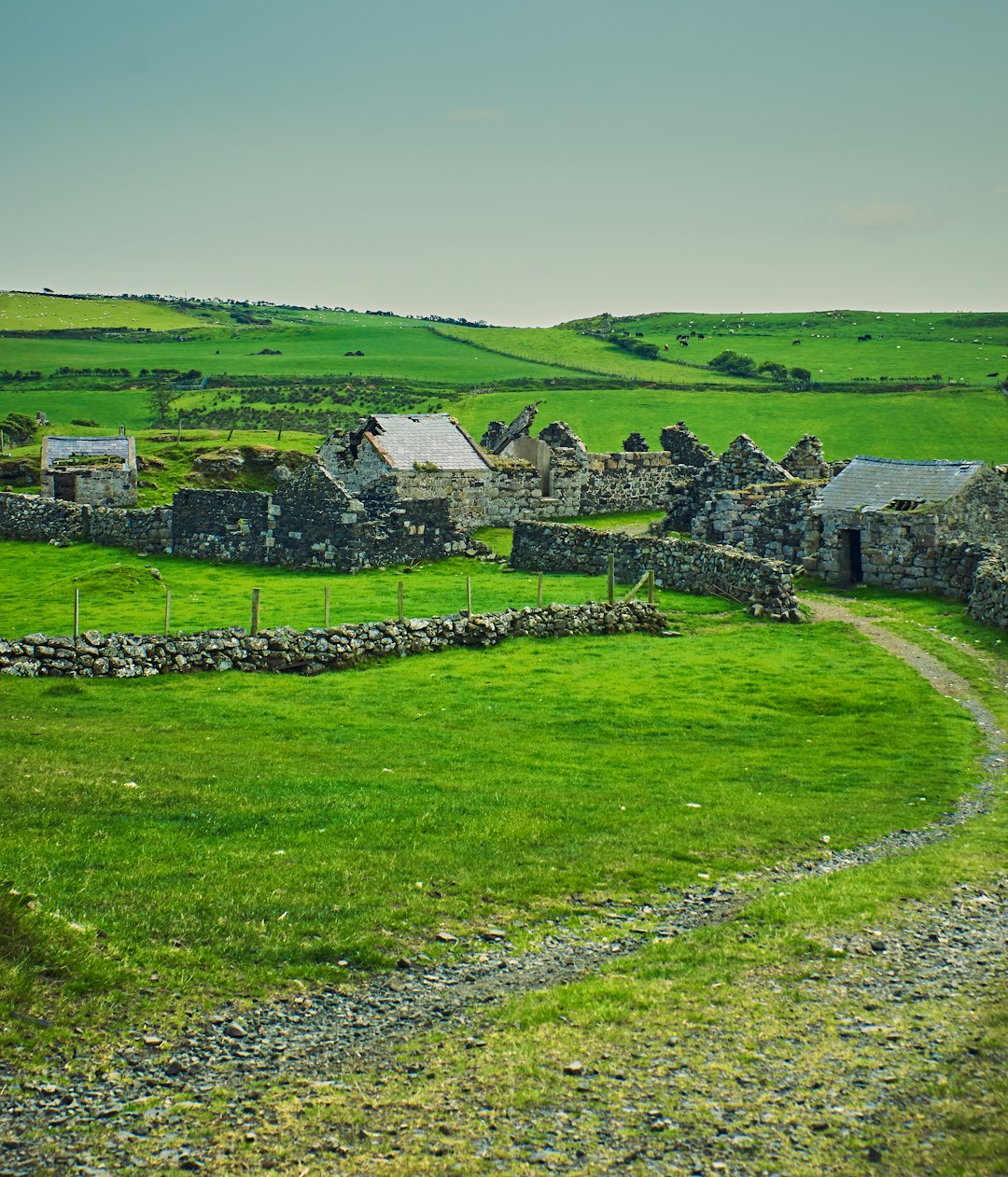
In rural Ireland, a farmer who found a bundle of rotten meat buried at the edge of his field before sunrise would not pick it up. He would not tell the neighbours. He would call for the priest — or for someone older and wiser still. He had been piseóged.
What Is a Piseóg?
The word piseóg (pronounced “pish-ogue”) comes from the Irish for a charm, spell, or superstitious act. But in rural Ireland, it meant something far more specific and far more feared: a deliberate curse placed by a jealous neighbour on your land, your cattle, or your family.
Unlike a vague ill-wish or an evil eye, a piseóg was a physical act. Something was buried, hidden, or placed on your property. And whoever put it there believed — or wanted you to believe — that it would bring ruin.
This was not gentle folklore. It was rural warfare by another name.
What Was Hidden and Where
The objects used in piseóg-making were always things of decay or contamination. Rotten eggs were common. So were scraps of meat left to putrefy, dead animals buried under gateposts, or bundles of hair tied with thread and tucked beneath a threshold stone.
Sometimes it was more subtle. A twist of straw left on a path. A blackthorn branch propped against a wall. An eggshell placed at the corner of a field, barely visible in the grass.
The placement mattered as much as the object itself. Boundaries were powerful — field edges, doorsteps, the gap in a stone wall where cattle passed through each morning. If you could corrupt the boundary, the belief went, you could corrupt everything inside it.
The Season Farmers Feared Most
Bealtaine — the first of May was when piseógs reached their peak. This was when cattle went out to summer pasture. When the milk yield determined whether a family would eat. When jealousy between neighbours was most likely to curdle into something darker.
Women milking their cows before sunrise on May morning were sometimes said to be skimming luck from a rival’s dairy. A farmer who did not walk his land at dawn on May Day was considered reckless. There was too much to lose.
The anxiety was real. If a neighbour’s herd was failing while yours prospered, questions were asked. And in tight rural communities where everyone’s business was everyone’s business, those questions could destroy a reputation.
☘️ Enjoying this? 64,000+ Ireland lovers get stories like this every week. Subscribe free →
The Fear Ran Both Ways
Being suspected of making a piseóg was just as dangerous as being the victim of one. In small parishes, the accusation alone could end a friendship, break a marriage arrangement, or make a family unwelcome at the weekly market.
The records of the Irish Folklore Commission — collected between the 1930s and 1960s — contain hundreds of accounts from across Munster and Connacht. Collectors found that almost every parish had a story. A woman who had the cure for a piseóg. A man whose cows dried up the week his neighbour got a new bull. A family who burned every object found on their land rather than touch it.
The cure was always a ritual. Burning the object at a crossroads at midnight. Burying it in running water. Having a priest bless the land. The specifics varied, but the principle was the same: the curse had to be returned or destroyed, not simply thrown away.
What the Folklore Collectors Found
When the Irish Folklore Commission sent schoolchildren across Ireland in the 1930s — asking them to record the customs and beliefs of their grandparents — piseógs filled entire notebooks.
The collectors recognised that piseógs encoded something important about rural life: the tension between neighbours, the fragility of subsistence farming, and the human need to explain misfortune. If your cow died and your neighbour’s lived, you needed a reason. Piseógs gave you one.
That vast archive is now held at University College Dublin. It is one of the largest collections of folk memory in the world — and piseógs run through it like a dark thread.
Still in Living Memory
Nobody in rural Ireland today would openly admit to believing in piseógs. But the stories are not far away. In west Cork and east Galway, older farmers can describe exactly what a piseóg looks like when you find one. They know what you are and are not supposed to touch.
The belief survived because it named something real. Not magic exactly, but the weight of community judgment. The way that misfortune — a dead calf, a failed harvest, a cow that stopped giving milk — needed an explanation that made human sense.
Ireland has always been good at holding two things at once: the modern and the ancient, the rational and the symbolic. Piseógs belong to that second world. And if you travel through rural Ireland with your eyes open, you’ll notice the careful way certain thresholds are maintained, the lone whitethorn trees left standing in the middle of fields, the field boundaries no one has ever moved.
Some things are kept not because people believe. But because it does no harm to be careful.
☘️ You Might Also Love
☘️ Join 64,000+ Ireland Lovers
Every Friday, get Ireland’s hidden gems, local secrets, and travel inspiration — the kind you won’t find in any guidebook.
Subscribe free — enter your email:
Free forever · · Unsubscribe anytime
Tours & experiences you might love


Powered by Viator. Some links are affiliate links — we may earn a small commission at no extra cost to you.
Secure Your Dream Irish Experience Before It’s Gone!
Planning a trip to Ireland? Don’t let sold-out tours or packed attractions spoil your journey. Iconic experiences like visiting the Cliffs of Moher, exploring the Rock of Cashel, or enjoying a guided walk through Ireland’s ancient past often sell out quickly—especially during peak travel seasons.

Booking in advance guarantees your place and ensures you can fully immerse yourself in the rich culture and breathtaking scenery without stress or disappointment. You’ll also free up time to explore Ireland’s hidden gems and savour those authentic moments that make your trip truly special.
Make the most of your journey—start planning today and secure those must-do experiences before they’re gone!
Subscribe Free