

On the western coast of Ireland, where the Atlantic smashes against slate-grey rocks and the horizon stretches endlessly away, old fishermen used to pause before setting out. Not just to pray, though they did that too. They paused because the sea, they said, was full of women.
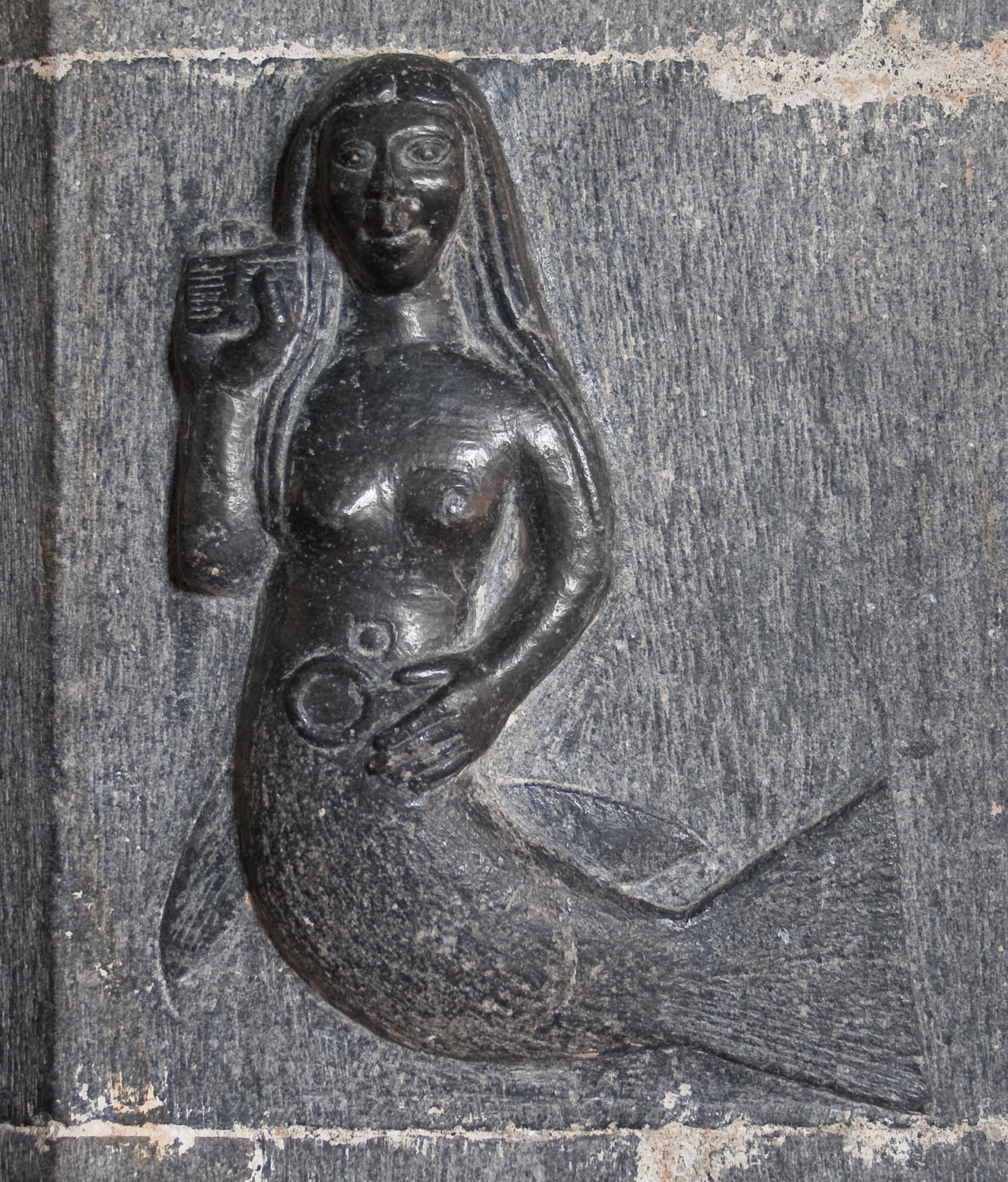
Who Were the Merrows?
The merrow — from the Irish muir (sea) and ogh (maid or youth) — was Ireland’s answer to the mermaid. But the merrow was nothing like the creatures in children’s books.
Female merrows were said to be extraordinarily beautiful, with dark eyes and pale skin, their lower bodies covered in green scales. They lived beneath the Atlantic, breathing through gills, guided by their most treasured possession: a small red cap called a cohuleen druith. Without it, a merrow could not return to her underwater home.
Male merrows were a different matter entirely. Described as small, green-haired, and remarkably ugly, they were not feared but pitied — solitary creatures who occasionally appeared before storms to warn the men they had grown fond of.
The Stolen Cap
The most common merrow story follows a pattern that rarely ends happily.
A fisherman walking the shore before dawn finds a merrow sleeping on a rock, her red cap lying beside her. He takes the cap. She wakes, stranded on land, and he brings her home. Without her cap, she cannot return to the sea.
She becomes his wife. She is warm and devoted, skilled and quiet. She loves her children. But she never stops searching.
She checks the thatch, the hen house, the loose boards under the floor. Year after year, she looks. Then, one morning, she finds it.
She holds the cap for a long moment. She looks back at her children standing in the doorway. Then she walks into the sea and does not come back.
When Love Was Not Enough
The merrow stories are never cruel. The sea-woman does not abandon her children out of coldness. She is simply going home.
Some versions of the tale say she continued to watch over her family from the water — that on stormy nights, fishermen could see a figure in the waves, keeping pace with the boats of men she recognised as her own sons.
The Aran Islands were particularly rich in these stories. Islanders once spoke of merrows spotted on the rocks at low tide, combing their hair and singing in a language that sounded almost like Irish but wasn’t quite. You can explore why the Aran Islands feel like a different Ireland entirely — the legends are still part of what makes the place unlike anywhere else.
☘️ Enjoying this? 64,000+ Ireland lovers get stories like this every week. Subscribe free →
The Families Who Claimed the Sea
Several Irish families, particularly in Connacht, claimed merrow ancestry. This was not always a source of embarrassment. For some, it was a quiet pride.
A child born with webbed fingers, or one who could swim before they could walk, or who stared too long at the horizon — these were said to carry merrow blood. The O’Flaherty family of County Galway reportedly kept the legend alive across generations, treating it as an explanation for the restlessness that ran through their line.
If you are planning a trip to this stretch of the coast, Galway is the ideal base. The full Galway guide covers everything worth seeing in the county, from the city itself to the wild roads heading west.
What the Merrow Really Was
Folklorists have long connected merrow stories to the grey Atlantic seals that haul themselves onto Irish rocks.
The grey seal has enormous dark eyes that seem almost human. It makes sounds that carry across water like a voice. A seal glimpsed half-submerged in poor light, its shape partly hidden by waves — you can see how the stories started.
Scholars also note that similar legends arrived with Norse traders. The Scottish and Faroese selkie tradition, in which seal-folk shed their skins to walk on land, shares clear roots with the merrow and her stolen cap. The western seaboard of Ireland was well within Norse reach. These things crossed water.
But knowing the possible origins of a legend does not make it feel less true. Not on the Irish coast, where the light changes in seconds and the sea is never quite the same twice.
What Lives On
The merrow never fully disappeared.
She surfaces in sean-nós songs, in half-remembered stories from grandparents, in place names scattered along the western seaboard that older locals can still trace back to the old tales.
The fishing communities that carried these stories are smaller now. Many of the old harbours are quiet. But the sea has not changed, and neither has the light. If you are putting together a trip to Ireland, the Ireland planning hub has all you need to begin.
The next time you stand on an Irish beach and watch the Atlantic fold over the rocks in that long, grey rhythm, pause for a moment. Look at where the water meets the stone. The old fishermen who built their lives on this coast were not superstitious fools. They were paying very close attention. And what they saw in the water — whatever it was — deserved to be remembered.
☘️ You Might Also Love
☘️ Join 64,000+ Ireland Lovers
Every Friday, get Ireland’s hidden gems, local secrets, and travel inspiration — the kind you won’t find in any guidebook.
Subscribe free — enter your email:
Free forever · · Unsubscribe anytime
Tours & experiences you might love


Powered by Viator. Some links are affiliate links — we may earn a small commission at no extra cost to you.
Secure Your Dream Irish Experience Before It’s Gone!
Planning a trip to Ireland? Don’t let sold-out tours or packed attractions spoil your journey. Iconic experiences like visiting the Cliffs of Moher, exploring the Rock of Cashel, or enjoying a guided walk through Ireland’s ancient past often sell out quickly—especially during peak travel seasons.

Booking in advance guarantees your place and ensures you can fully immerse yourself in the rich culture and breathtaking scenery without stress or disappointment. You’ll also free up time to explore Ireland’s hidden gems and savour those authentic moments that make your trip truly special.
Make the most of your journey—start planning today and secure those must-do experiences before they’re gone!
Subscribe Free