

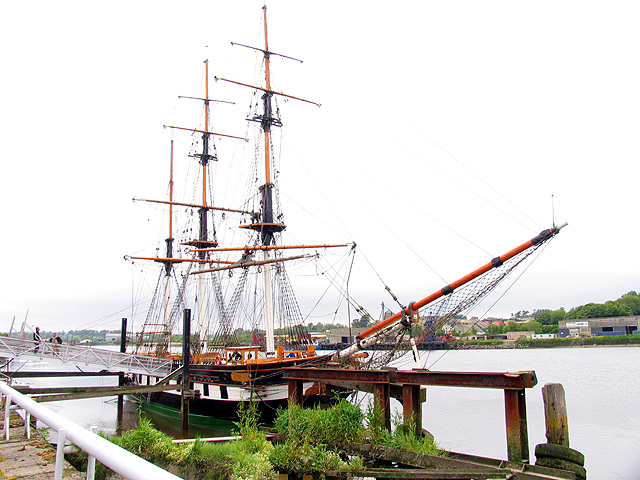
County Wexford sent more people to America than most counties ever remember. When you stand at the dockside in New Ross and look at the full-size replica of the Dunbrody — the ship that carried starving families across the Atlantic — you feel it in your chest. This is where the journey began. For a great many Irish-Americans, the answer to “where did we come from?” is right here in the sunny south-east corner of Ireland.
John F. Kennedy’s great-grandfather Patrick Kennedy left Dunganstown in 1849. He carried little with him. What he built in Boston shaped one of the most famous families in American history. If your family came from Wexford, there is a good chance your story started the same way. This guide will help you find it.
Why Wexford Is Vital for Irish-American Heritage
Wexford was at the centre of the 1798 Rebellion. When the rising was crushed, thousands left. Many had no choice. The Famine a generation later emptied entire townlands. County Wexford’s population fell from just over 202,000 in 1841 to around 180,000 in 1851 — a decline of roughly 22,000, though Wexford was less severely hit by the Famine than many Irish counties thanks to its prosperous farmland. Most of those who left went to New York, Boston, Philadelphia and Baltimore.
This matters for your research. Where there is mass emigration, there are records. Wexford has good ones. The county’s archives hold estate papers, land surveys, newspaper collections and local histories. The genealogy infrastructure here is better than most Irish counties.
Your Irish family name can also point you straight to Wexford. Names like Kavanagh, Murphy, Roche, Doyle, Cullen, Walsh, Brennan and Kinsella are concentrated in this county. If you carry one of those names, there is a real chance Wexford is home.
☘️ Your Irish family has a story waiting to be found.
Discover where your Irish ancestors came from — their county, their name, their story. Our free step-by-step guide walks you through every record, DNA tool, and ancestry archive. No experience needed.
Where to Start: New Ross and the Dunbrody Experience
New Ross is the single best place to begin a Wexford heritage visit. The town sits on the River Barrow, and in 1849 ships left from this quayside loaded with Famine emigrants. The Dunbrody Famine Ship stands in the harbour today as a full-scale replica. It is staffed by costumed guides who tell the story of the crossing with real names and real journeys.
Walk the decks and you will understand something textbooks cannot explain. The space below is barely enough for a grown adult to stand in. Families of six shared this. The passage took six to eight weeks. By the time they reached America, many were starving again.
Just outside New Ross, you can visit the Kennedy Homestead at Dunganstown. This is the farm where Patrick Kennedy was born. The family still owns it. The small farmhouse has been preserved, and the Kennedy family came back to visit it in 1963. Standing there, you realise this is exactly what a heritage trip to Ireland feels like: very small, very real, very human.
New Ross also has the kind of Famine ruins that exist across Ireland but feel especially present here. Take a short drive outside town and you will pass roofless stone cottages beside the road. These were not abandoned last century. People walked out of them in the 1840s and never came back.
Day Two: Enniscorthy and the 1798 Rebellion Connection
Enniscorthy is the county’s second town. It was the heart of the 1798 Rebellion. The United Irish movement rose up here in May 1798. The rebels held Vinegar Hill, on the edge of town, for over a month before the British army retook it. The battle killed hundreds on both sides. Those who survived often fled. Many went to America.
Enniscorthy Castle houses the National 1798 Rebellion Centre. The exhibition is well done and explains both the politics and the human cost of the rising. If your ancestors were from Wexford and arrived in America before 1810, the 1798 connection is worth investigating. Many former rebels used emigration to escape prosecution.
The town itself rewards a slow walk. The cathedral, the castle, the river — it is a genuinely attractive place. More importantly for genealogists, the local Church of Ireland and Catholic records here go back to the 1790s in some parishes. That is earlier than most Irish counties can offer.
The Records: What You Can Find in Wexford
Wexford has four main sources for ancestry research. Each covers a different time period and fills a different gap.
- Griffith’s Valuation (1847–1864): This land survey lists every householder in the county by name, townland and property. It is free to search at askaboutireland.ie. Griffith’s Valuation is often the first solid anchor for Wexford research.
- Catholic parish registers: Most Wexford parishes have records from the 1820s, and a few go back to the 1790s. They are free at IrishGenealogy.ie. Catholic parish records record baptisms, marriages and sometimes burials.
- Civil registration records: From 1864 onwards, all births, marriages and deaths were registered with the state. These are also free at IrishGenealogy.ie and carry more detail than parish records.
- The 1901 and 1911 census: Both are free at IrishGenealogy.ie. They list every person in the household with name, age, occupation, townland and religion. If your ancestor stayed in Wexford, you can find them here.
The Wexford County Library on Mallin Street in Wexford Town holds a strong local history collection. Staff there are used to helping diaspora visitors with research. Ring ahead to book time with a researcher if you have specific questions.
☘️ Enjoying this? 64,000 Ireland lovers get stories like this every week. Subscribe free →
Understanding Wexford’s Townlands
Wexford is divided into roughly 2,400 townlands. A townland is a small geographic area, often just a few hundred acres. It is the address system Irish families used for centuries. When your ancestor wrote home, they wrote the townland name, not the county or the parish. When they told their grandchildren where they came from, they said the townland.
Finding the right townland is the key to Wexford research. Once you have it, you can walk to the exact field your ancestor left. You can find the ruin of the cottage, the church where they baptised their children, and the graves of those who did not emigrate.
Start by looking at the townland in Griffith’s Valuation. Then cross-reference with the 1901 census. If the name is common in one particular townland, that is your anchor. The Irish Townlands website (townlands.ie) lets you map every townland in the county.
Day Three: Wexford Town and the Archives
Wexford Town is worth a day. It has a strong Norman heritage — the Normans arrived here in 1169, before anywhere else in Ireland. The town’s narrow streets follow the medieval street plan. The 12th-century ruins of Selskar Abbey still stand.
For genealogy, the key stop is the County Library and Archives at Ardcavan. Appointments are usually needed. The archive holds estate papers, land records, local newspapers going back to the 1700s, and church registers not yet digitised. If your family owned any land in Wexford — even rented land — the estate papers may have their names in them.
The 1926 Irish Census is also worth searching. It was released online in April 2026 and covers the whole island. For families still in Wexford in 1926, it gives a full household picture with names, ages and addresses.
A Walk Through the Wexford Graveyards
No heritage trip to County Wexford is complete without a graveyard walk. This is not morbid. It is one of the most effective research tools you have.
In Irish tradition, families buried together in the same parish graveyard for generations. In Wexford, this is especially true. You will often find the same family name on eight or ten stones in a single plot, spanning two centuries.
Take a camera. Write down every stone with your family name, even if the dates do not seem to match. Inscriptions connect people. A stone from the 1870s might name the man’s parents, and those parents might be the missing generation in your tree.
Popular graveyards for diaspora research in Wexford include Old Ross Church, Killurin, Enniscorthy Franciscan Friary, and Taghmon. The Co. Wexford Heritage and Genealogy Society has indexed many of these. Their records are searchable online.
What to Do Before You Travel
Three steps will make your Wexford trip far more productive.
- Search Griffith’s Valuation first: Find the county, then narrow by barony and parish. If your surname appears in one townland repeatedly, mark it.
- Search IrishGenealogy.ie: Pull up any Catholic parish records for the area. Even a partial name and date narrows your field.
- Contact the Co. Wexford Heritage and Genealogy Society: They offer paid research services and can often pull local sources that are not online.
If you plan to visit the Kennedy Homestead at Dunganstown, book in advance. It takes private visits by appointment. The same applies to any archive research.
Practical Tips for Your Wexford Ancestry Visit
- Wexford Town is well-served by train from Dublin Heuston (about two hours). Rosslare Strand is also on the line.
- New Ross is 20 minutes by road from Wexford Town.
- The Dunbrody Famine Ship is open daily year-round, closed only on Christmas Day and St Stephen’s Day.
- The best time for graveyard walking is dry days in May, June or September. Grass grows fast in summer and can obscure older stones.
- Irish mobile reception in rural Wexford is generally good. Download offline maps of the county before you arrive.
For a wider view of Irish ancestry research that goes beyond Wexford, the complete guide to tracing Irish ancestry covers every major record type and database available to Irish-Americans today.
Frequently Asked Questions
Is County Wexford good for Irish genealogy research?
Yes. Wexford has better records than many Irish counties. The parish registers go back to the 1790s in some areas, and Griffith’s Valuation covers the whole county. The county library and the Co. Wexford Heritage and Genealogy Society both offer strong local research support.
Did JFK really have ancestors from County Wexford?
Yes. John F. Kennedy’s great-grandfather Patrick Kennedy was born in Dunganstown, County Wexford, around 1823. He emigrated to Boston in 1849 during the Famine. The Kennedy Homestead at Dunganstown is still owned by the Kennedy family and takes private visits by appointment.
What surnames are common in County Wexford?
The most common Wexford surnames include Murphy, Kavanagh, Doyle, Walsh, Roche, Cullen, Brennan, Kinsella and Nolan. Many of these are concentrated in specific baronies within the county. Griffith’s Valuation is the fastest way to see where your name clusters geographically.
Where can I find Wexford parish records for free?
Most digitised Wexford Catholic parish registers are free at IrishGenealogy.ie. The records include baptisms, marriages and some burial entries. For parishes not yet digitised, the original registers are held at the parish church or at the National Library of Ireland in Dublin.
How long should I spend in Wexford on a heritage trip?
Three to five days is ideal. Day one in New Ross for the Dunbrody and Kennedy Homestead. Day two in Enniscorthy for the 1798 Rebellion Centre. Day three in Wexford Town for archive research. Days four and five for townland visits, graveyard walks and any additional archive sessions.
Your ancestors walked out of Wexford with almost nothing. What they built in America was extraordinary. Coming back to find where they started is one of the most powerful trips an Irish-American can make. The county is small enough to cover properly in a week, and the welcome you will get is entirely real.
☘️ Join 64,000+ Ireland Lovers
Every Friday, get Ireland’s hidden gems, local secrets, and travel inspiration — the kind you won’t find in any guidebook.
Subscribe free — enter your email:
Already subscribed? Download your free Ireland guide (PDF)
📲 Know someone who’d love this? Share on WhatsApp →
Love more? Join 43,000 Scotland lovers → · Join 29,000 Italy lovers → · Join 7,000 France lovers →
Free forever · One email per week · Unsubscribe anytime
Tours & experiences you might love


Powered by Viator. Some links are affiliate links — we may earn a small commission at no extra cost to you.
Secure Your Dream Irish Experience Before It’s Gone!
Planning a trip to Ireland? Don’t let sold-out tours or packed attractions spoil your journey. Iconic experiences like visiting the Cliffs of Moher, exploring the Rock of Cashel, or enjoying a guided walk through Ireland’s ancient past often sell out quickly—especially during peak travel seasons.

Booking in advance guarantees your place and ensures you can fully immerse yourself in the rich culture and breathtaking scenery without stress or disappointment. You’ll also free up time to explore Ireland’s hidden gems and savour those authentic moments that make your trip truly special.
Make the most of your journey—start planning today and secure those must-do experiences before they’re gone!