

There are bread rolls. Then there are Waterford Blaas. These soft, white, generously flour-dusted rolls are one of Ireland’s most distinctive and beloved breads. They carry Protected Geographical Indication (PGI) status from the European Union — the same protection granted to Champagne and Parma Ham. You cannot call a bread roll a blaa unless it is made in County Waterford. That tells you everything about how seriously the people of Waterford take their bread.
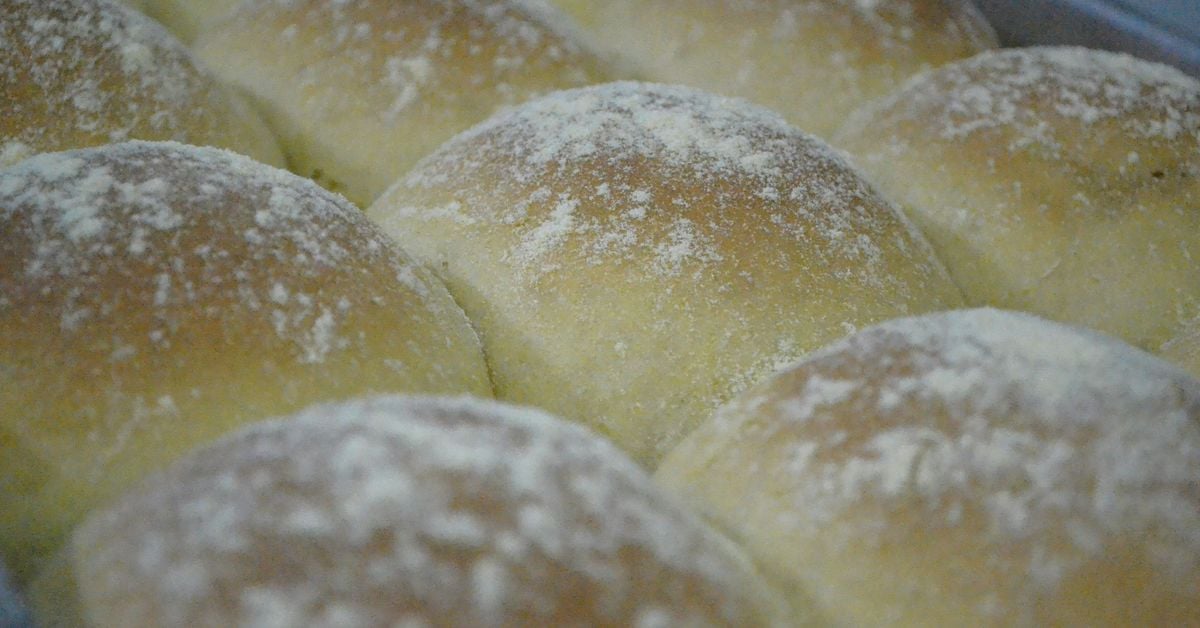
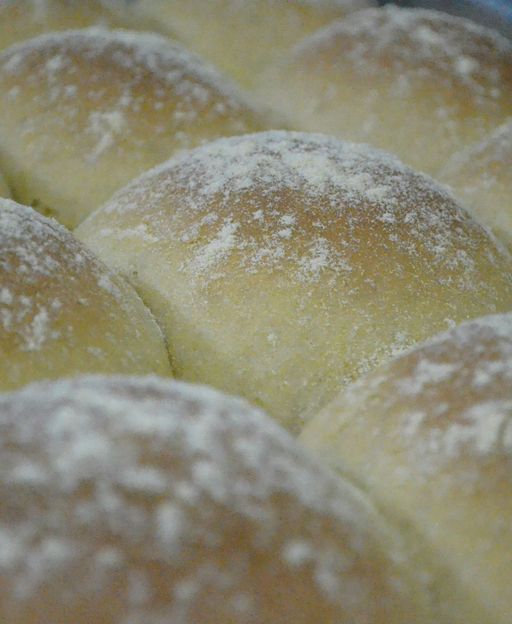
In this recipe, Chris from The Irish Baker Abroad walks us through the authentic method for making Waterford Blaas at home. The result is pillowy, cloud-soft rolls with a white, floury exterior — perfect for a traditional Irish fry-up, or simply spread with butter.
What Is a Waterford Blaa?
A blaa (rhymes with “spa”) is a soft white bread roll made exclusively in County Waterford. The name likely comes from the French word blanc (white) or blé (wheat). It traces back to the Huguenot refugees who settled in Waterford in the late 17th century. These French Protestant bakers brought their bread-making traditions with them, and the blaa was born.
For generations, blaas were a staple of Waterford life — sold fresh every morning from local bakeries. You could walk into any café or shop in Waterford and order a blaa stuffed with bacon and sausage for breakfast. Step outside of County Waterford, though, and you simply could not find one. They were fiercely local, fiercely proud, and entirely unique.
In 2013, Waterford Blaas became the first Irish food product (outside of spirits) to receive PGI status from the European Union. Only bakers in the Waterford area can legally produce and sell a bread roll called a “blaa.” It joins Waterford Crystal as one of the county’s most iconic exports — except this one, you eat. (Baking one at home is a great excuse to plan a trip — see more things to do in Waterford.)
What Makes Blaas Different from Ordinary Bread Rolls?
Three things set Waterford Blaas apart from any bread roll you have made before:
- The wet dough. Blaa dough is deliberately wet and sticky. This is not a mistake. The high water content creates the characteristic soft, airy texture inside. Do not add extra flour during kneading. Embrace the stickiness.
- The generous flour dusting. Blaas are heavily dusted with flour before and after shaping. This is what gives them their distinctive white, powdery coat. It is not decorative — it is essential to the character of the roll.
- The short bake at high heat. Blaas bake at 220°C for just 10 to 12 minutes. They should be barely golden on top. Overbake them and you lose the soft, yielding texture that makes them so addictive.
Ingredients for Waterford Blaas
This recipe makes 12 blaas — enough for a proper Waterford breakfast spread, with a few left over for the afternoon.
- 500g strong white bread flour
- 10g fresh yeast (or 5g active dry yeast, rehydrated)
- 300ml water
- 8g salt (approximately 1 teaspoon)
- 5g caster sugar (approximately 1 teaspoon)
- 5g vegetable oil (approximately 1 teaspoon)
- Extra strong white bread flour for generous dusting
A note on yeast: Chris uses fresh yeast and prefers it strongly. If you cannot source fresh yeast, use 5g of active dry yeast dissolved in a little warm water. Avoid instant (fast-action) yeast — the slower fermentation gives better flavour.
How to Make Waterford Blaas — Step by Step
Step 1 — Activate the Yeast
Crumble the fresh yeast into a small bowl. Add a splash of the water and the sugar. Stir until dissolved. Leave for five minutes. Watch for froth. Froth means the yeast is alive and ready. No froth means the yeast is dead — start again with fresh yeast.
Step 2 — Combine Everything
Place the flour in a large mixing bowl. Add the frothy yeast mixture. Pour in the remaining water. Add the salt and vegetable oil. Mix with your hands. Work until a rough, shaggy dough forms. It will look messy. That is fine — it is supposed to.
Step 3 — Knead
Turn the dough onto a well-floured surface. Knead vigorously for 10 to 15 minutes. Use a bench scraper to bring it back together as you work. The dough starts sticky and wet. Keep kneading. It gradually becomes smoother. Do not add extra flour to the dough itself. Flour goes on the surface, not into the dough.
Step 4 — First Prove (1 to 2 Hours)
Place the kneaded dough in a lightly oiled bowl. Cover it tightly with cling film. Set it somewhere warm — near a radiator, in an airing cupboard, or inside an oven with just the light on. Leave it for 1 to 2 hours. It should double in size. Seal the bowl well. Any air circulation will dry the surface and hinder the rise.
Step 5 — Divide and Shape
Turn the proved dough gently onto a generously floured surface. Divide it into 12 roughly equal pieces. Take one piece. Press it flat with your palm into a disc. Aim for roughly 10 to 12 centimetres across. Do not roll it with a pin. Press it down. Press it into the flour on the surface. Repeat for all 12 pieces. This is the key rule: do not knead the dusting flour back into the dough. Press the roll into the flour. Leave the flour on the outside, not inside the dough.
Step 6 — Second Prove (30 to 45 Minutes)
Place the shaped blaas on a lined baking tray. Leave a little space between each one. Dust the tops generously with flour. Cover loosely with cling film or a damp tea towel. Leave to prove for 30 to 45 minutes. They will plump up visibly. When lifted, they will feel light.
Step 7 — Bake
Preheat your oven to 220°C (200°C fan / Gas Mark 7) before the second prove finishes. Slide the tray into the hot oven. Bake for 10 to 12 minutes. Check at 10 minutes. The tops should be pale gold — not brown. Remove immediately. A dark top means an overbaked blaa, and the softness is gone.
Chris’s Tips for Perfect Blaas
- Wet dough is correct dough. First-time blaa makers always want to add more flour during kneading. Resist that urge. The wet dough is the whole point. Work with it, not against it.
- Flour goes on the outside, not the inside. The shaping flour coats the surface of each blaa. If it gets worked back into the dough, the texture changes. Press the roll into the flour — do not incorporate it.
- Tight cover during first prove. Cling film keeps every bit of moisture in the dough. Any exposed surface forms a skin that blocks the rise. Use a tea towel only for the second prove, not the first.
- Do not rush the proves. Flavour and texture both depend on adequate fermentation time. A cold kitchen means longer proves — and that is perfectly fine.
- Lightly golden means done. These are not crusty rolls. Pull them when the tops are just pale gold. The exterior firms slightly as they cool.
How to Serve Waterford Blaas
In Waterford, the answer is: however you like, whenever you like. But tradition has its say.
The classic Waterford breakfast blaa is the stuff of local legend. Fill it with bacon rashers, sausages, a fried egg, and white and black pudding. Add a generous spread of butter. Slice the blaa across the middle — not all the way through — and pile in the filling. The soft bread soaks up every drop of flavour. That is exactly why it works so well.
For something simpler, try a fresh blaa with good Irish butter and a cup of strong tea. It is one of those combinations that seems far too plain to be as satisfying as it is. The floury crust and the soft interior make each bite deeply comforting.
Blaas also work brilliantly as a lunch roll with ham, mature cheddar, and a little mustard. Or serve them warm alongside a bowl of traditional Irish vegetable soup — a midday meal that feels genuinely Irish from the first spoonful to the last bite.
Eat them the day they are baked — within a few hours of coming out of the oven. If you have leftovers, warm them at 180°C for five minutes the following morning. They will never quite recapture that just-baked softness, but they come very close.
Watch Chris Make Waterford Blaas
See the full technique in Chris’s original video. The shaping step is much easier to understand when you watch it being done — especially the way he presses each blaa into the flour without overworking it.
☘️ Join 64,000+ Ireland Lovers
Every Friday, get Ireland’s hidden gems, local secrets, and travel inspiration — the kind you won’t find in any guidebook.
Subscribe free — enter your email:
Love more? Join 43,000 Scotland lovers → · Join 30,000 Italy lovers → · Join 7,000 France lovers →
Free forever · · Unsubscribe anytime
Frequently Asked Questions
What is a Waterford Blaa?
A Waterford Blaa is a soft, white, flour-dusted bread roll made exclusively in County Waterford, Ireland. It holds Protected Geographical Indication (PGI) status from the European Union — meaning only bakers in the Waterford area can produce and sell bread under the name “blaa.” The rolls are known for their pillowy texture and characteristic white floury coating.
Why is blaa dough so wet and sticky?
The high water content is what creates the signature soft, airy interior. This is not a mistake — it is the defining characteristic of the recipe. Do not add extra flour to the dough during kneading. Use flour on your work surface and hands to manage the stickiness, but keep the dough itself as is.
Can I use dried yeast instead of fresh yeast?
Yes. Use 5g of active dry yeast in place of 10g fresh yeast. Dissolve it in a little warm water with the sugar first. Let it become frothy before adding it to the flour. Avoid instant (fast-action) yeast — the slower fermentation of active dry yeast gives a much better result for blaas.
How long do Waterford Blaas keep?
Blaas are at their very best on the day they are baked — ideally within two to three hours of coming out of the oven. Store leftovers in an airtight container. Warm them at 180°C for five minutes the following morning. They will not be quite as soft as freshly baked, but they are still very good.
More Irish Baking from the Love Ireland Kitchen
If you loved this blaa recipe, here are more traditional Irish bakes to explore:
- How to Make Traditional Irish Soda Bread — the simplest and most beloved Irish bread
- Traditional Dublin Turnover Bread — another classic loaf from Ireland’s bakery tradition
- Traditional Irish Batch Loaf — the soft, pull-apart loaf every Irish household knows
- Traditional Irish Scones — light, fluffy, and ready in thirty minutes
Waterford Blaas connect you directly to a specific place and a specific tradition. When you pull a tray of these from the oven — white, pillowy, and fragrant — you are baking something that has been made in Waterford kitchens for over three hundred years. That is worth a little wet dough on your hands.
Thinking about it for retirement?
If you’ve started thinking seriously about retiring there, our complete our full Retire in Ireland guide covers the visa, healthcare, cost-of-living, and the regions worth shortlisting.
Tours & experiences you might love


Powered by Viator. Some links are affiliate links — we may earn a small commission at no extra cost to you.
Secure Your Dream Irish Experience Before It’s Gone!
Planning a trip to Ireland? Don’t let sold-out tours or packed attractions spoil your journey. Iconic experiences like visiting the Cliffs of Moher, exploring the Rock of Cashel, or enjoying a guided walk through Ireland’s ancient past often sell out quickly—especially during peak travel seasons.

Booking in advance guarantees your place and ensures you can fully immerse yourself in the rich culture and breathtaking scenery without stress or disappointment. You’ll also free up time to explore Ireland’s hidden gems and savour those authentic moments that make your trip truly special.
Make the most of your journey—start planning today and secure those must-do experiences before they’re gone!