

There’s a moment in certain Irish pubs when something shifts. The last strangers have finished their pints and headed out into the night. The noise drops by half. The landlord moves quietly to the front door, glances outside, and turns the key. A lock-in. Not everyone in the room knows what just happened. Those who do stay perfectly still, and perhaps allow themselves a small, private smile.
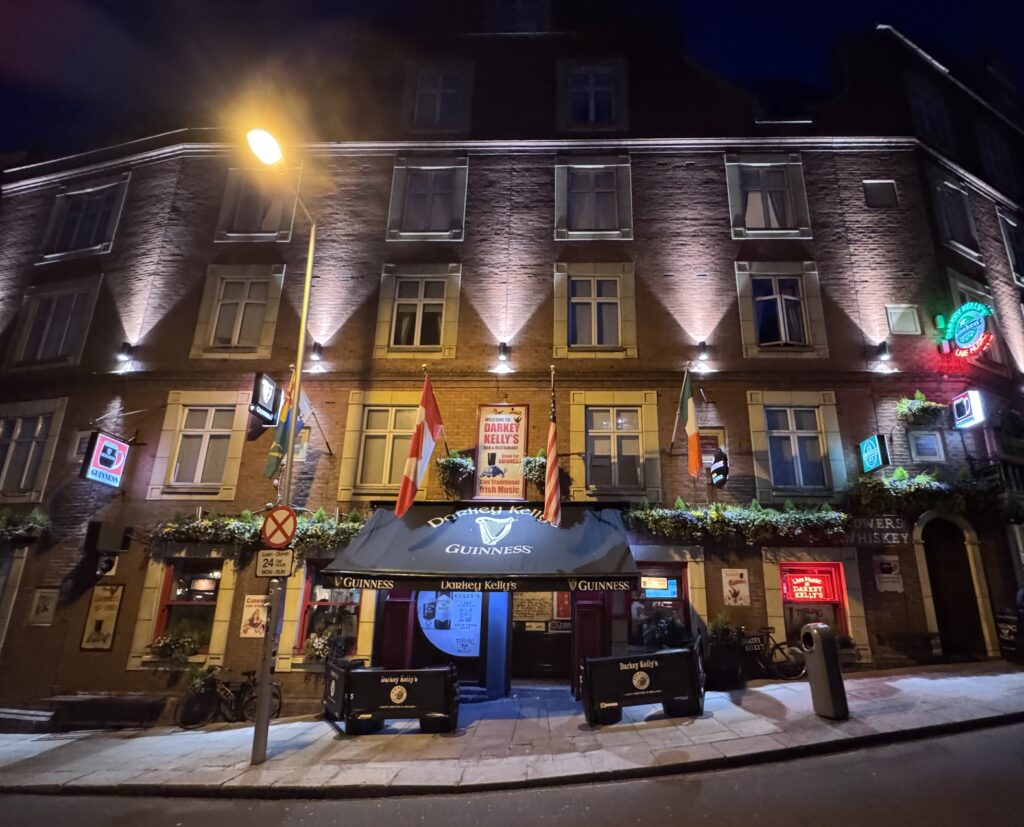
What Is an Irish Pub Lock-In?
In its simplest terms, a lock-in is when a pub continues serving alcohol after official closing time. The shutters come down, the front door is bolted from the inside, and a carefully chosen group of regulars carry on — drinking, talking, singing — long after the law says they should have gone home.
Technically, it is illegal. In practise, it has been one of the most cherished traditions in Irish pub culture for generations. Ireland’s licensing laws have always been a source of creative negotiation, and the lock-in represents perhaps the most beloved workaround of all.
The History Behind the Closed Door
The roots of the lock-in go back to the days of strict licensing laws that forced pubs to close as early as 10 PM — a legacy of legislation that persisted well into the 1980s. The Holy Hour — the mandatory afternoon closure that survived until the 1980s — was born from the same legislation. Read the full story of the law that forced every Irish pub to lock its doors at lunchtime. For communities in rural Ireland, where the pub was the only social space in the parish, simply sending everyone home on the dot was never really an option.
The so-called “Holy Hour” — a mandatory afternoon closure still remembered by older generations — gave rise to a similar culture of finding ways to stay connected. The lock-in was, in many ways, Ireland’s answer to a law that fundamentally misunderstood how the Irish use a pub.
Who Gets an Invite?
There is no list. Nobody sends you a message. A lock-in invitation is not really an invitation at all — it is an absence of being asked to leave.
It happens gradually, over months or years of being a familiar face: of proving yourself to be calm, trustworthy, and above all, discreet. The landlord does not need to explain the arrangement. You understand it already. You do not mention it outside, you do not bring strangers, and you certainly do not post about it.
In rural Ireland especially, the lock-in crossed every social boundary. Farmers, solicitors, the local guard, the parish priest — all might find themselves on the right side of a locked door at midnight, entirely equal in the eyes of the evening.
What Actually Happens Inside
Once the key is turned, something in the room changes. The conversation loses its edge of performance and settles into something warmer and more honest. Voices drop to the register of people who know they are not being overheard.
Somebody starts a song — though you could not say exactly when it began. A bottle appears from under the bar. The landlord, who has been on their feet since noon, finally sits down. They become, for these hours, simply part of the company.
This is where the real Ireland lives. The stories that come out in a lock-in are not the ones on the tourist trail. They are the arguments from forty years ago, the local legends, the quiet admissions that daylight never allows. For visitors who find themselves inside one, it often becomes the moment that turns a holiday into something they never quite recover from. A little reading helps — start with the unwritten rules of every Irish pub and you will already feel at home before the first round.
The Legal Landscape Today
Are Pub Lock-Ins Illegal in Ireland?
Technically yes. A lock-in involves serving alcohol beyond the legal closing time, risking the publican’s licence and a fine for remaining customers. In practice, enforcement has always been rare — and in tight-knit communities, the local guard is sometimes among those present.
Irish licensing law currently permits service until 11:30 PM on weeknights and 12:30 AM on Fridays and Saturdays, with late licences extending some premises further. A lock-in goes beyond all of this, meaning the publican risks their licence and the remaining customers risk a fine.
In practise, the risk has always been low. In tight-knit communities, the local guard is often personally known to the landlord — and occasionally, as mentioned, might be among those present. Since the introduction of the late-licence system, fewer pubs rely on lock-ins to keep the night alive. But they have not disappeared. They have simply become more private, more considered, and, if anything, more meaningful.
Why the Lock-In Still Endures
The lock-in matters not because of the extra drink, but because of what it represents: trust, and belonging. Being chosen for one is the landlord saying, without a word, that you are not a customer tonight. You are one of them.
For the many Irish people living abroad who return home and find themselves pulled back into a familiar pub on a winter night, a lock-in is a kind of homecoming that no flight can quite replicate. It is the continuation of something unbroken.
And for the rare visitor lucky enough to be included — the one who was in the right place, had been coming back all week, had listened more than they spoke — it often becomes the story they tell for the rest of their lives. Not the castle, not the Cliffs. The night they stayed.
If you are planning a visit and hoping for moments like this, our Ireland trip planning guide is the best place to start. And for the hidden stories behind Irish pub culture, the forgotten reason Irish pubs have snug rooms is well worth a read — a tradition with just as much history behind it.
The Love Ireland newsletter shares these kinds of stories every week — the ones that never make it into the guidebooks.
One Last Round
A lock-in does not last for ever. Eventually the bottles empty, the talk grows sleepy, and someone mentions they have to be up at six. The door unlocks quietly. You step out into the cold night air, and the pub becomes just a building again.
But you carry something with you. The quiet knowledge that somewhere, behind those walls, Ireland is still exactly what it has always been.
☘️ You Might Also Love
64,000 Ireland lovers can’t be wrong.
Every week, our free newsletter delivers hidden gems, seasonal guides, local stories, and practical travel tips — straight to your inbox. Join the community that loves Ireland as much as you do.
☘️ Want More Hidden Ireland?
Join 64,000+ subscribers who discover Ireland’s best-kept secrets every week.
Subscribe Free — Join the Community →
Free forever · Unsubscribe anytime · No spam
📥 Free Download: Ireland Travel Planning Guide
Our most popular resource — itineraries, insider tips, and the 50 places you must not miss.
Tours & experiences you might love


Powered by Viator. Some links are affiliate links — we may earn a small commission at no extra cost to you.
Secure Your Dream Irish Experience Before It’s Gone!
Planning a trip to Ireland? Don’t let sold-out tours or packed attractions spoil your journey. Iconic experiences like visiting the Cliffs of Moher, exploring the Rock of Cashel, or enjoying a guided walk through Ireland’s ancient past often sell out quickly—especially during peak travel seasons.

Booking in advance guarantees your place and ensures you can fully immerse yourself in the rich culture and breathtaking scenery without stress or disappointment. You’ll also free up time to explore Ireland’s hidden gems and savour those authentic moments that make your trip truly special.
Make the most of your journey—start planning today and secure those must-do experiences before they’re gone!