

Somewhere in your family tree, or in the names of the people you grew up around, there are two letters that have been carrying a message for over a thousand years.
The “O” in O’Brien. The “Mac” in MacDonald. Most people assume they’re a kind of decoration — old prefixes that make a name sound nicely Irish.
Watch: Do You Qualify for an Irish Passport?
Tracing your Irish family? If one of your grandparents was born in Ireland, you may be able to become an Irish citizen. This 14-minute guide explains who qualifies, what it costs and how long it takes. Thinking of making the move? Get the free Moving to Ireland checklist.
They are anything but decorative. They are a declaration of lineage, reaching back before the Norman invasion, before the Vikings, to a time when your name was your proof of who you were.
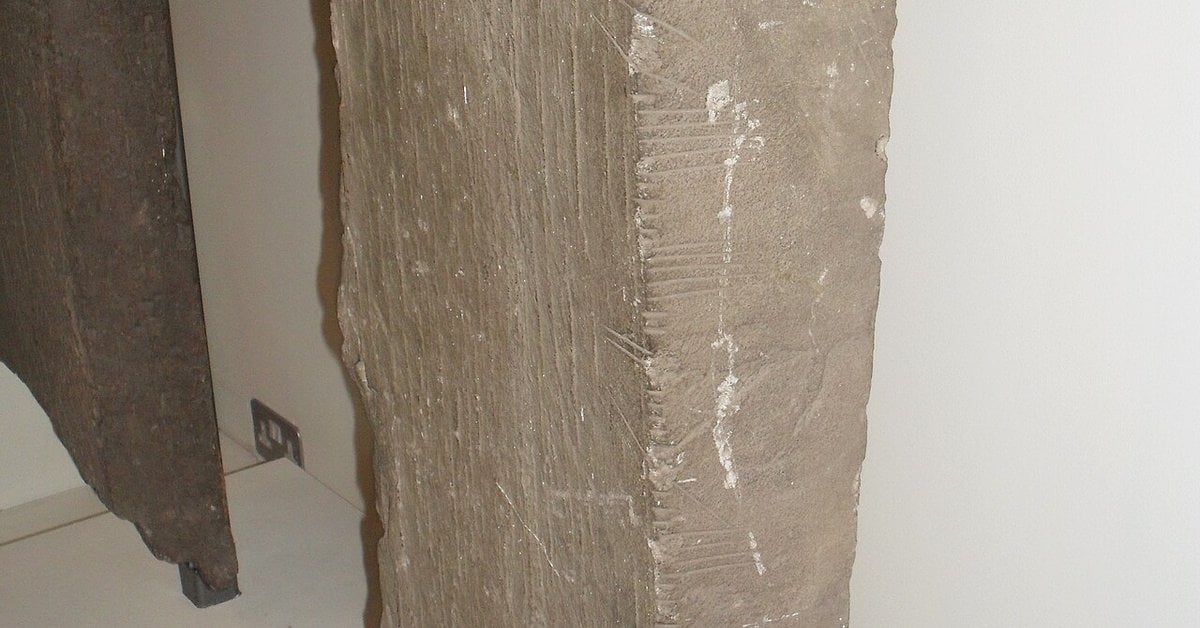
What “Ó” Actually Means
In Old Irish, ó (also written ua) means one thing: grandson. Or more precisely, descendant of.
When Briain Bórumha — the man history knows as Brian Boru — became High King of Ireland around 1002 AD, his grandsons and their descendants became known as Uí Briain: the descendants of Briain. Over generations, Uí Briain became O’Brien.
Every single person named O’Brien is, in the oldest sense of the word, announcing their lineage to the world every time they sign their name.
Not a stranger. Not a nobody. A named and recorded descendant of a specific person, in a specific line, going back over a millennium. The “O” is not an ornament. It is a genealogical record, worn every day.
The World Mac Built
Mac — sometimes written Mc, sometimes shortened further in anglicisation — means son of.
Mac Cárthaigh (McCarthy). Mac Cormaic (McCormack). Mac Donnchadha (McDonagh). These were not simply names — they were introductions. They told everyone in the room who you were, where you stood in the social order, and who had come before you.
In ancient Gaelic society, your lineage was everything. It determined your rights, your land entitlements, your place in the tuath — the tribal territory you belonged to.
Knowing who you were descended from wasn’t sentiment. It was legal standing. The name was your credentials.
Why Women Had Different Rules
Gaelic naming conventions were precise in a way modern English never quite captured. An unmarried woman did not use “Mac” or “O” in the same form as her father or brothers. She used Ní (daughter of) or Nic (daughter of the son of).
A daughter of Seán Ó Briain would be Máire Ní Bhriain. If she married into the Mac Cárthaigh family, she became Máire Nic Cárthaigh.
It was a complete system — one that tracked not just a person’s father, but their precise place in an entire network of kin. Modern English has no equivalent. One name. One piece of paper. A thousand years of who you are.
The Great Erasure
When English colonial administration spread across Ireland from the 12th century onwards, Gaelic names became a problem. They were difficult to record, difficult to tax, and — most importantly — they announced too clearly who a person was and where their loyalties lay.
Under various statutes and social pressures, Irish naming conventions were suppressed and anglicised. Families were pressured — and at times compelled — to drop their prefixes entirely.
O’Neill became Neill. Mac Giolla Chríost became Gilchrist. Ó Murchú became Murphy — and then, for many families, just Murphy. No prefix at all.
For generations, Irish families carried stripped names. In many cases, it wasn’t a choice. It was a survival strategy in a country where being too visibly Gaelic carried serious risk.
How the Names Came Back
In the late 19th and early 20th century, something remarkable happened. As Irish cultural identity re-emerged — driven by the Gaelic Revival, the foundation of the GAA, and eventually independence — thousands of families reclaimed their prefixes.
Families who had carried stripped anglicised names for generations began adding the “O” back in. Not as an affectation. As a reclamation.
If you carry an “O’” or a “Mac” surname today, there is a real possibility that prefix was deliberately restored — within living or recent memory — by a grandparent or great-grandparent who knew exactly what they were doing when they picked up the pen.
What Your Name Is Still Saying
There are estimated to be 70 million people worldwide of Irish descent. Many carry the “O” or the “Mac” without ever thinking about what it means. It is simply their name — inherited, familiar, ordinary.
But every time an O’Sullivan introduces herself in Boston, or a MacCarthy signs a document in Sydney, or an O’Callaghan walks through a door in Chicago — they are, quite unconsciously, completing a chain of identity that stretches back over a thousand years.
A grandson of someone. A son of someone. A daughter of someone. The name remembers, even when the person doesn’t.
If you’ve ever wanted to trace your Irish family roots by county, the answers often go deeper than you’d expect — every name has a story. And if you want to understand what it truly meant for Irish families to leave, the letters they sent home from America say it in their own quiet words.
If you’re planning to visit Ireland to walk the land your name comes from, our planning guide is the best place to begin.
Your surname is not decoration.
It is a thousand-year-old whisper that has refused to go quiet.
☘️ Want More Hidden Ireland?
Join 64,000+ subscribers who discover Ireland’s best-kept secrets every week.
Subscribe Free — Join the Community →
Free forever · Unsubscribe anytime · No spam
📥 Free Download: Ireland Travel Planning Guide
Our most popular resource — itineraries, insider tips, and the 50 places you must not miss.
Tours & experiences you might love


Powered by Viator. Some links are affiliate links — we may earn a small commission at no extra cost to you.
Secure Your Dream Irish Experience Before It’s Gone!
Planning a trip to Ireland? Don’t let sold-out tours or packed attractions spoil your journey. Iconic experiences like visiting the Cliffs of Moher, exploring the Rock of Cashel, or enjoying a guided walk through Ireland’s ancient past often sell out quickly—especially during peak travel seasons.

Booking in advance guarantees your place and ensures you can fully immerse yourself in the rich culture and breathtaking scenery without stress or disappointment. You’ll also free up time to explore Ireland’s hidden gems and savour those authentic moments that make your trip truly special.
Make the most of your journey—start planning today and secure those must-do experiences before they’re gone!