

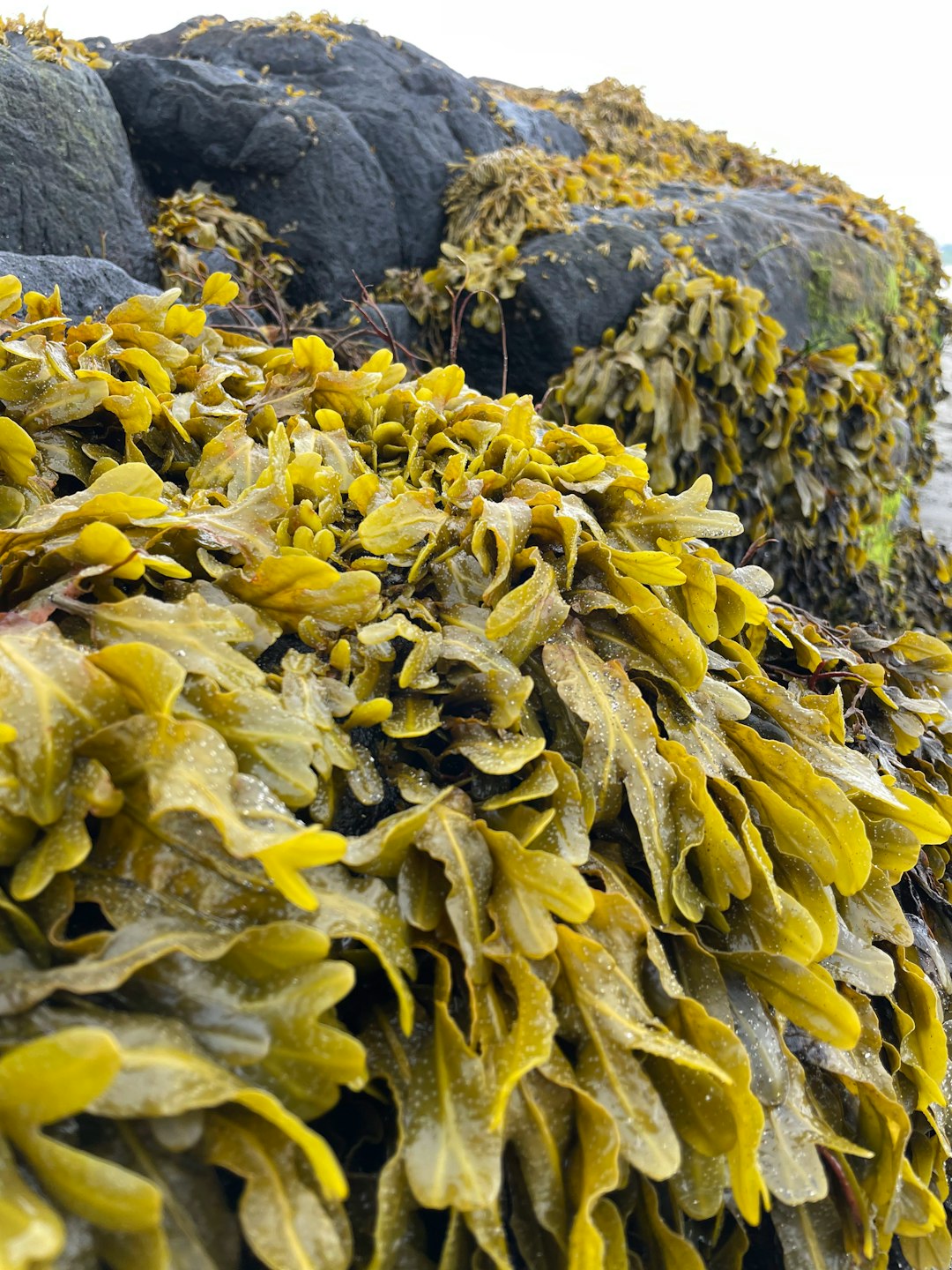
Walk the rocky shore of Connemara or Donegal at low tide and you will find something that every coastal family in Ireland once depended upon. It lies draped across the rocks, slick and glistening, in shades of rust, olive, and deepest green. For thousands of years, the Irish didn’t just see the sea as a boundary — they harvested it.
An Ancient Shore Harvest
Long before supermarkets, before refrigeration, before even the potato arrived in Ireland, coastal communities had the sea. And the sea gave back in ways that landlocked townlands could never imagine.
Seaweed — or feamainn, as it is known in Irish — was not some desperate last resort. It was embedded into daily life along every western shore, from the Aran Islands to Donegal’s ragged coastline. Families gathered at low tide carrying creels and baskets, pulling dillisk from the rocks, cutting bladderwrack by the armful, and collecting carrageen from the tidal pools.
It was simply what you did. It was Tuesday.
The Names Every Coastal Child Knew
Irish coastal families didn’t just know “seaweed.” They had names for everything.
Dillisk — also known as dulse — was eaten raw, straight from the rock. Salty, chewy, and deeply flavourful, children ate it like sweets on the walk home from the shore. It needed no preparation. The sea had already done the work.
Carrageen moss was prized for its remarkable thickening properties. Boiled in milk, sweetened with a little honey, and left to set overnight, it became a pudding that was creamy, nourishing, and believed to be deeply good for the chest and lungs.
Bladderwrack and kelp, meanwhile, were heaped onto the fields rather than eaten. They were Ireland’s original fertiliser — helping crops grow from thin, boggy soil that should, by rights, have produced nothing at all.
The Harvest That Outlasted the Famine
☘️ Love Irish Food & Culture?
Every Wednesday, we send our best Irish recipes, food stories, and kitchen traditions straight to your inbox. Join 64,000+ readers who love Ireland.
When the Great Famine struck in the 1840s, Ireland’s dependence on the potato became catastrophic. Inland communities were devastated. But along the western coasts, the old knowledge held.
Coastal families who still knew their shore — who understood the tides, who knew which weed was edible and which to leave — had something to fall back on when everything else failed. Historical accounts describe children eating seaweed raw at the waterline, whole families wading out at low tide with whatever they could carry.
It was not abundance. But it was survival. And the people who lived through it never forgot where that survival came from.
The Seaweed Bath — A Living Tradition
Even today, one of Ireland’s most unusual and beloved customs survives along the western shore: the seaweed bath.
In Enniscrone, County Sligo — and in a handful of other coastal towns — you can lower yourself into a cast-iron bath filled with warm seawater and freshly harvested bladderwrack. As the water heats, the weed releases minerals and a natural gel that leaves the skin soft and the body profoundly relaxed.
The Kilcullen Seaweed Baths in Enniscrone have been operating since 1912. A century later, they are busier than ever. If you’re planning a trip along the Wild Atlantic coast, an hour in a seaweed bath is one of those quietly extraordinary experiences that stays with you long after you’ve left.
From Shore to Fine Dining Table
In recent decades, what coastal grandmothers always knew has caught the attention of scientists and chefs alike.
Seaweeds like dillisk and kelp have been confirmed as extraordinarily rich in iodine, iron, magnesium, and powerful antioxidants. What the Irish Atlantic coast provided freely for millennia, the wellness industry now packages and sells at considerable cost.
Meanwhile, Ireland’s finest restaurants have rediscovered the shore’s edible bounty. Dillisk butter. Kelp-cured salmon. Carrageen panna cotta. Dishes that might have seemed eccentric a generation ago now appear on tasting menus in Galway, Clifden, and beyond. The culinary traditions of Ireland run far deeper than most visitors realise — and often the most remarkable foods are the ones that simply never went away.
The Aran Islands: Where the Tradition Is Strongest
Nowhere in Ireland has the seaweed tradition been more deeply woven into daily life than on the Aran Islands.
The Aran limestone is almost entirely without natural soil. What little grows there was built over generations from crushed seashells, sand, and — above all — seaweed dragged from the shore and laid on bare rock. The islanders literally created their own earth from the sea, basket by basket, year by year.
That intimate knowledge of the coastline — the specific bays, the right tides, the season for each weed — was passed from parent to child for hundreds of years. Much of it still is. The island life that tourists rarely see on the Aran Islands is, in part, still shaped by this ancient relationship with the shore.
A Quiet Gift That Never Stopped Giving
The sea, along Ireland’s wild western coast, has always been more than a view.
It fed, healed, and fertilised. It sustained communities through prosperity and through devastation alike. And long after the rest of the world moved on, Ireland’s coastal families quietly carried on — at low tide, barefoot on the rocks, doing what their grandparents did, and their grandparents before them.
Some traditions don’t need to be rescued. They simply need to be noticed again.
Love Ireland? So do 65,000 of us.
Join the Love Ireland newsletter — free stories of Irish heritage, hidden gems, and the magic of the Emerald Isle delivered to your inbox.
☘️ Get More Irish Recipes & Stories
Join 64,000+ readers for weekly Irish recipes, food traditions, travel guides, and hidden gems. Free every morning.
📥 Free Download: Ireland Travel Planning Guide
Our most popular resource — itineraries, insider tips, and the 50 places you must not miss.
Tours & experiences you might love


Powered by Viator. Some links are affiliate links — we may earn a small commission at no extra cost to you.
Secure Your Dream Irish Experience Before It’s Gone!
Planning a trip to Ireland? Don’t let sold-out tours or packed attractions spoil your journey. Iconic experiences like visiting the Cliffs of Moher, exploring the Rock of Cashel, or enjoying a guided walk through Ireland’s ancient past often sell out quickly—especially during peak travel seasons.

Booking in advance guarantees your place and ensures you can fully immerse yourself in the rich culture and breathtaking scenery without stress or disappointment. You’ll also free up time to explore Ireland’s hidden gems and savour those authentic moments that make your trip truly special.
Make the most of your journey—start planning today and secure those must-do experiences before they’re gone!