

Most Irish-Americans know their family came from Cork, or Mayo, or Kerry. But that’s only half the story. The real key to your Irish ancestry is a word most people have never heard: townland.
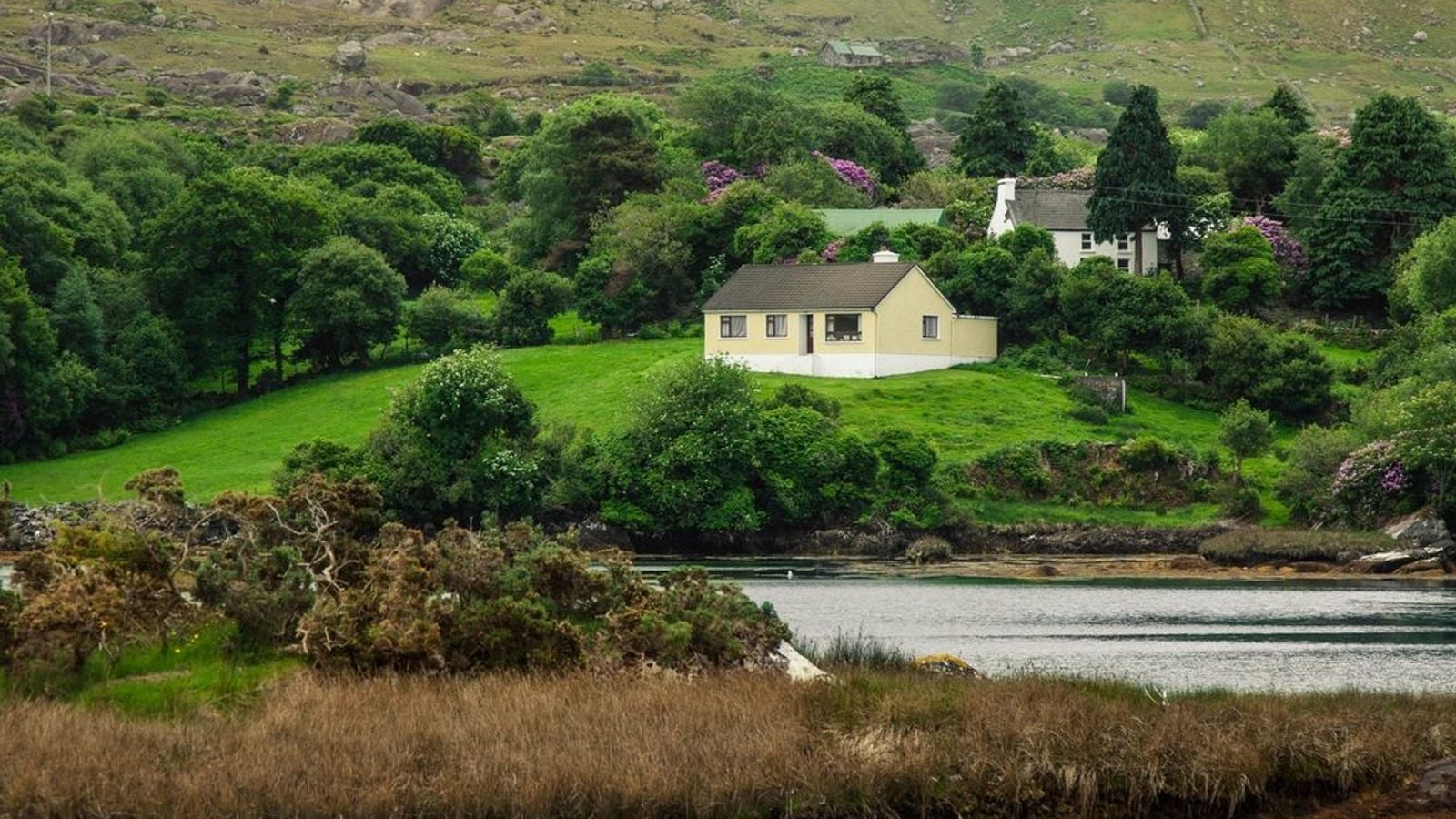
For centuries, before counties had any meaning to ordinary people, Ireland was divided into something much older and more intimate. Townlands are the true building blocks of Irish life — and they have never gone away.
What Exactly Is a Townland?
A townland (in Irish, baile fearainn) is a small area of land, usually between 100 and 300 acres. Ireland has more than 62,000 of them. They date back to ancient Celtic Ireland, and many follow boundaries that are older than Christianity itself.
They are not villages. Not parishes. Not counties. A townland might contain just a handful of farms, or it might hold dozens of houses. What makes it a townland is its name, its boundaries, and its deep sense of belonging.
Think of them as Ireland’s smallest unit of identity. In rural Ireland, you don’t just come from Galway. You come from Ballyconneely. You come from Cornamona. You come from Keeraun. The townland is home in a way the county never can be.
England had parishes. Scotland had townships. Ireland had townlands — and the difference matters more than most people realise. The townland was not just an administrative division. It was the shape of your entire world.
The Names Are Ancient Maps
Every townland name tells you something about the land, the people, or the history. Most names were never translated into English — they survived in Irish even as the language itself retreated.
Baile (or Bally) means homestead or settlement. Cnoc (or Knock) means hill. Cill (or Kill) means church. Inis means island. Carraig means rock. Doire (or Derry) means oak grove.
So Ballynahinch means “the townland of the island.” Knockmore means “the big hill.” Kilmacduagh means “the church of MacDuach.” The landscape is written into the name, and that name has been spoken aloud by every generation for a thousand years or more.
Many townland names also carry the surnames of ancient landowners. Ballybricken. Ballyduff. Ballyseán. Someone named Bricken, or Duff, or Seán once held that ground — and their name is still carved into the map today.
Some names record a tragedy. Some mark a holy well, a river ford, or a ringfort. Some remember a saint who passed through once and never came back. Reading Irish townland names is like reading a very old letter from people who are long gone but still very much present.
Why Irish-Americans Need to Know This
When your great-great-grandmother left Ireland in the 1840s or 1880s, she didn’t write “County Roscommon” in her letters home. She wrote “Ballintubber.” “Kilrooskey.” “Cloonfree.” The townland was home. The county was just administration.
And here’s the crucial thing: the most important genealogy records in Ireland list the townland, not just the county. Griffith’s Valuation — the detailed property survey completed between 1847 and 1864 — is organised entirely by townland. So are the Tithe Applotment Books from the 1820s, which list every landholder in Ireland. The 1901 and 1911 census records name the townland for every single household.
If you’ve been searching for your Irish family using only the county name, you’ve been looking at the map from the wrong altitude. Zooming in to the townland level changes everything.
Find out more about how Irish naming traditions connect to ancestry in our piece on what Irish surnames quietly reveal about your family’s origins.
☘️ Enjoying this? 64,000+ Ireland lovers get stories like this every week. Subscribe free →
Finding Your Ancestral Townland
Several free tools can help you pinpoint where your family lived. The IreAtlas Townland Database lists every townland in Ireland with its county, barony, civil parish, and Poor Law Union — the exact categories used in historical records.
Start with a family name and a county. Then look carefully at what historical documents say. Ship manifests from the famine era, death certificates, naturalisation papers — many contain a townland name hiding in plain sight. American death records for Irish immigrants, especially from the 1880s onward, frequently name the specific townland of origin.
Some passengers simply listed their townland on arrival documents. It felt more natural than naming the county — the county was a British invention. The townland was where they actually lived, worked, and belonged.
Once you have a name, search for it on Google Maps. Since 2014, Ireland’s Ordnance Survey has integrated townland boundaries into digital mapping. You can zoom in and see exactly where your family’s land begins and ends — the precise patch of earth your ancestors farmed, argued over, and loved.
If your search leads you to a specific part of Ireland, it’s worth building a trip around it. Our Ireland trip planning guide can help you shape a journey to the exact corner of the country your family called home. You might also find deep meaning in the story of the tiny Irish farm that shaped American history — a reminder of how much meaning fits into a small piece of Irish ground.
The Townland Is Still Alive
In many parts of rural Ireland, people still give their townland as their address. Not a street number. Not a postcode. Just the townland name, the county, and Ireland. And the postman knows exactly where to go.
Local elders can draw you a mental map of their townland from memory — every field, every neighbour, every boundary ditch. That knowledge passes between generations in a way that formal records never can.
Ireland’s Local Government has been working to preserve townland names as official address components. Eircode, Ireland’s postal code system introduced in 2015, was designed partly to work alongside townland addresses rather than replace them.
There are also passionate volunteer communities mapping every townland in detail, photographing boundary stones, documenting the old Irish names before they are lost. It is slow, patient, devoted work — very Irish in that way.
Standing in the Field Your People Worked
There is a particular feeling that comes from standing in your ancestral townland for the first time. You might drive past a small road sign you’d never have noticed before — Baile Átha or Cnocán Glas — and something shifts inside you.
The land becomes specific. It becomes yours, or rather, you become part of it.
Your great-great-grandmother walked this lane. Your ancestors planted these fields, cut this turf, carried water from this stream. For everyone else driving past, it’s just another corner of rural Ireland. For you, it’s the answer to a question you’ve been carrying your whole life.
Ireland isn’t just one island. It’s 62,000 small ones. And somewhere among them, one has your name on it.
☘️ You Might Also Love
☘️ Want More Hidden Ireland?
Join 64,000+ subscribers who discover Ireland’s best-kept secrets every week.
Subscribe Free — Join the Community →
Free forever · Unsubscribe anytime · No spam
📥 Free Download: Ireland Travel Planning Guide
Our most popular resource — itineraries, insider tips, and the 50 places you must not miss.
Tours & experiences you might love


Powered by Viator. Some links are affiliate links — we may earn a small commission at no extra cost to you.
Secure Your Dream Irish Experience Before It’s Gone!
Planning a trip to Ireland? Don’t let sold-out tours or packed attractions spoil your journey. Iconic experiences like visiting the Cliffs of Moher, exploring the Rock of Cashel, or enjoying a guided walk through Ireland’s ancient past often sell out quickly—especially during peak travel seasons.

Booking in advance guarantees your place and ensures you can fully immerse yourself in the rich culture and breathtaking scenery without stress or disappointment. You’ll also free up time to explore Ireland’s hidden gems and savour those authentic moments that make your trip truly special.
Make the most of your journey—start planning today and secure those must-do experiences before they’re gone!