

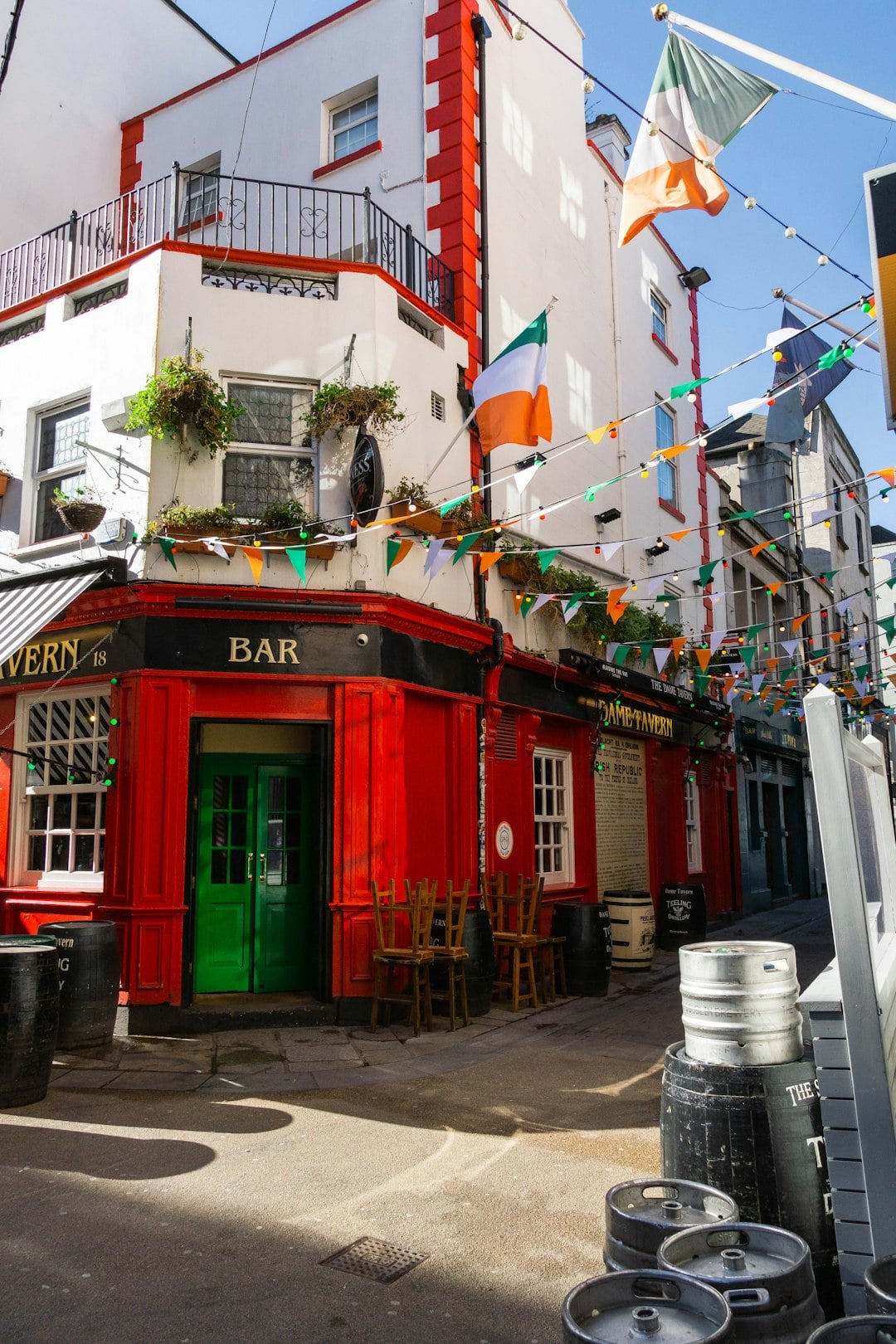
You’re walking down an Irish street and something stops you. The Bleeding Horse. The Gravediggers. The Brazen Head. You walk inside before you’ve even decided to — because the name made you too curious to pass.
Try the Guinness Timer ⏱️
A perfect pour takes 119.5 seconds — the rest, two minutes, gives the stout time to settle. Time your own pint and see if you wait long enough.
Irish pub names are unlike anything else in Europe. They reach into mythology, rebellion, trade, and dark local legend. They were chosen to mean something. Most of them still do.
Why Irish Pub Names Work Like No Others
In most countries, pubs are named after their owners or a generic heraldic symbol — The White Hart, The Red Lion. Ireland took a different path.
Walk into any Irish town and read the signs above the doors. You’re reading a compressed history of the place. Every town has its own heroes, its own trades, its own saints, its own secrets. And every Irish pub name is a clue to all of it.
What sets them apart is range. You’ll find poetry and humour and grief all within a short walk of each other. A pub called An Droichead Beag (The Little Bridge) sits beside one called The Craic House and another bearing the name of a man hanged in 1803. That compression of time is uniquely Irish.
Even the ordinary names carry weight. “Kavanagh’s” is just a surname — until you learn that the Kavanaghs ran the pub beside Glasnevin Cemetery and quietly passed pints through a hole in the wall to the gravediggers next door. The name stuck. The story stuck with it.
If you’re planning a trip to Ireland, reading the pub signs will tell you more about a place than any tourist brochure.
Names That Remember Rebellion
Ireland has a long history of resistance, and its pubs kept a record of every fighter. You’ll find pubs named after Theobald Wolfe Tone, the Protestant lawyer who led the 1798 rebellion and became one of Ireland’s most enduring heroes. Pubs honouring Robert Emmet, who was executed at 25 after a failed uprising in 1803. Pubs remembering the men and women of 1916.
These weren’t just sentimental choices. In the 19th century, naming a pub after a rebel was a small, deliberate act of defiance. The pub became a place where that name could be said aloud, where those stories could be passed between generations without being written down anywhere the authorities could find.
The Brazen Head in Dublin — dating to 1198 and one of the oldest pubs in Europe — was a meeting point for United Irishmen including Wolfe Tone himself. The name means bold or defiant. It suited the clientele.
When you drink in a pub named after a rebel, you’re drinking in a memory that someone kept alive on purpose. That’s not an accident. That’s Irish pub culture doing what it was always meant to do.
☘️ Enjoying this? 64,000+ Ireland lovers get stories like this every week. Subscribe free →
The Names That Hide Dark Local History
Some Irish pub names require a little explaining — and the explanation is usually worth it.
The Bleeding Horse near Dublin’s Camden Street dates to 1649. Local legend says a cavalry horse, wounded in battle, stumbled to that exact spot and collapsed. The pub was built where it fell, and kept the name. It’s grim. It’s also utterly Irish — the kind of story that gets told with a raised glass rather than a lowered voice.
The Stoneybatter references an ancient Irish road — sráid an bhóthair cloiche, the road of the stone path — that once led out of Dublin. The road predates the pub by many centuries. The name outlasted the road entirely.
Some names tell you about the land. Others tell you about what happened on it. Both matter. The pub becomes the keeper of local knowledge that would otherwise disappear — no plaque, no museum display, just a name above a door and someone willing to explain it.
You’ll find the same pattern across every county. A pub name that looks random usually isn’t. Irish pubs have always been more than just a place to drink — they were community archives, and the names were part of that record.
Names Rooted in Trades and Crafts
Many Irish pub names remember the trades that once surrounded them. The Cooperage references barrel-making — fitting in any town where Guinness was brewed or stored. The Forge remembers the blacksmith’s fire that burned nearby. The Ploughboy honoured the farmworkers who gathered there at the end of long days in the field.
These weren’t decorative choices. A pub near the docks would be called The Anchor or The Mariner. One near the leather yards would become The Tannery. The tradesmen who drank there recognised themselves in the name, and that recognition was part of why they came back.
Today you’ll find pubs where the trade that gave them their name has been gone for a century. The cooperage closed, the tannery demolished, the forge long since silent. But the pub kept the name, and a curious visitor can piece together what the neighbourhood once was just by reading the sign.
That’s a form of preservation that no heritage society organised. It happened because someone liked the name, kept the name, and the name outlasted everything else.
The Gaelic Names That Still Survive
Some pubs kept their Irish language names entirely, and they’re worth learning to read.
Teach (pronounced “chakh”) means house. Tigh is the older spelling you’ll still see in the west of Ireland. An means “the.” Put them together and Tigh Neachtain in Galway becomes simply “Neachtain’s House” — a pub that has been serving since the 17th century.
In the Gaeltacht regions — the areas where Irish is still spoken as a daily language — pub names are almost entirely in Irish. An Droichead Beag (The Little Bridge) in Dingle. Tigh Chóilí in Galway. An Puball (The Tent). These names carry no translation for the tourist. You either know, or you ask.
Asking is always the right move in Ireland. A question about a pub name will get you a ten-minute story and probably a drink.
If you want to recognise Gaelic pub names when you visit, understanding a few basics of Irish pub culture before you go will open more doors than you’d expect — literally and otherwise.
Reading the Name Before You Go In
No Irish pub name is accidental. Every one was chosen by someone who wanted you to remember something — a hero, a trade, a tragedy, a stretch of ancient road.
The sign above the door is an invitation. Not just to come in and drink, but to ask what the name means, why it was chosen, and who it remembers. In Ireland, the answer is almost always worth staying for.
Next time you walk past an Irish pub, stop for a moment before you go in. Look up at the sign. You might be standing at the edge of a story that’s three hundred years old — and the person behind the bar can probably tell you the whole thing, if you ask.
☘️ You Might Also Love
Love Ireland? So do 65,000 of us.
Every week, our free newsletter delivers hidden gems, seasonal guides, local stories, and practical travel tips — straight to your inbox. Join the community that loves Ireland as much as you do.
☘️ Want More Hidden Ireland?
Join 64,000+ subscribers who discover Ireland’s best-kept secrets every week.
Subscribe Free — Join the Community →
Free forever · Unsubscribe anytime · No spam
📥 Free Download: Ireland Travel Planning Guide
Our most popular resource — itineraries, insider tips, and the 50 places you must not miss.
Tours & experiences you might love


Powered by Viator. Some links are affiliate links — we may earn a small commission at no extra cost to you.
Secure Your Dream Irish Experience Before It’s Gone!
Planning a trip to Ireland? Don’t let sold-out tours or packed attractions spoil your journey. Iconic experiences like visiting the Cliffs of Moher, exploring the Rock of Cashel, or enjoying a guided walk through Ireland’s ancient past often sell out quickly—especially during peak travel seasons.

Booking in advance guarantees your place and ensures you can fully immerse yourself in the rich culture and breathtaking scenery without stress or disappointment. You’ll also free up time to explore Ireland’s hidden gems and savour those authentic moments that make your trip truly special.
Make the most of your journey—start planning today and secure those must-do experiences before they’re gone!