

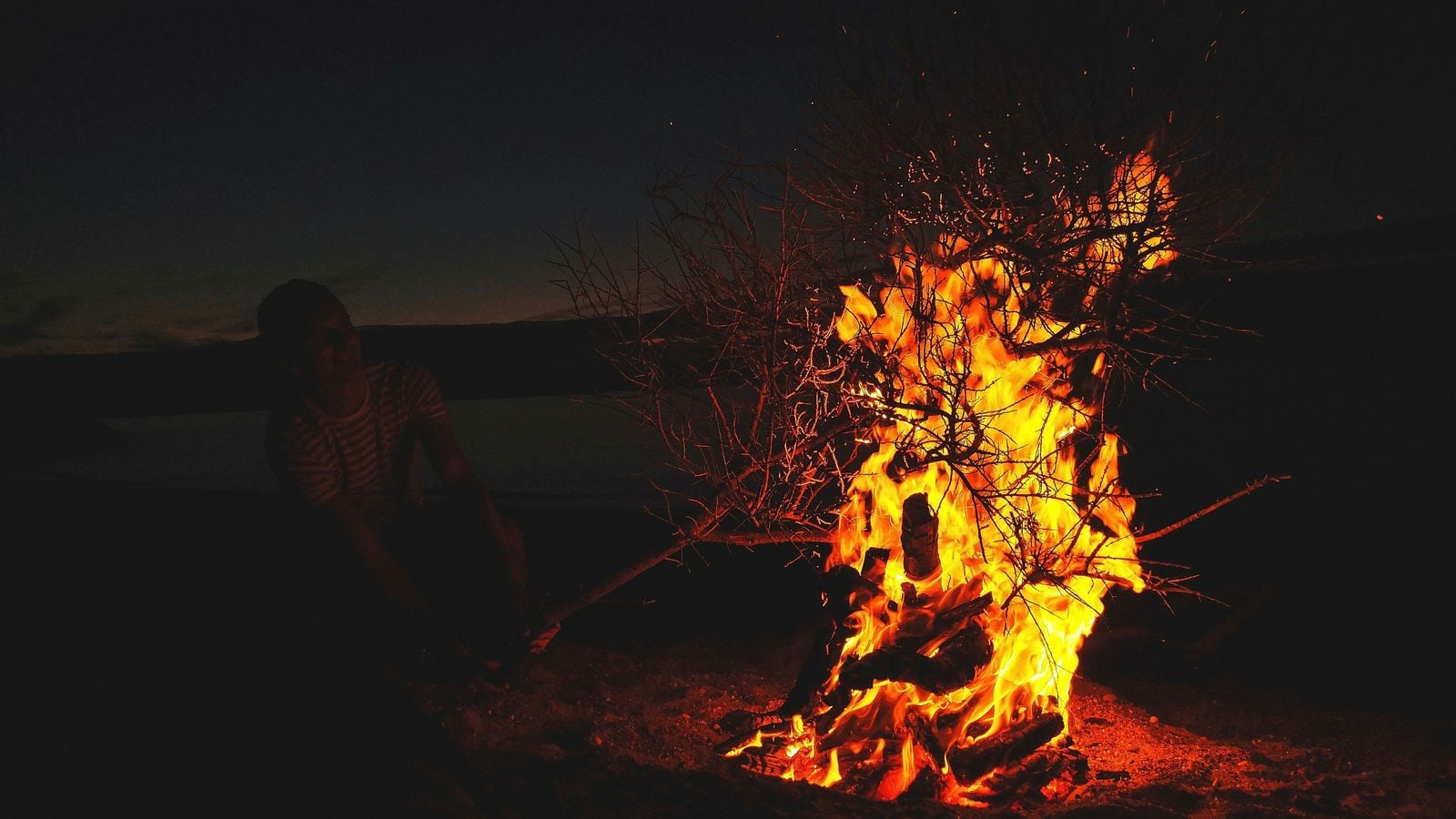
Every 23rd of June, something unusual happens across Ireland. Bonfires appear in housing estates, on beaches, and at crossroads. Crowds gather. The air smells of smoke. And then, as the flames die down, people do something that has been done on this night for thousands of years.
The Night That Stops Irish Towns
The 23rd of June is the eve of St John’s Day — the feast honouring John the Baptist, celebrated on the 24th. But the bonfires that appear across Ireland that night are much older than any Christian calendar.
Long before it was St John’s Night, it was Midsummer. The days had stretched as long as they would go. Now they would start to shorten again. Ancient communities marked this turning point with fire — and that fire was anything but ordinary.
In Irish, the night is known as Oíche Fhéile Eoin — the Eve of John’s Feast. But the rituals people carry out on that night belong to a language older than Irish itself.
Fire as Protection
In pre-Christian Ireland, midsummer fire wasn’t just about celebration. It was understood to have power.
Cattle were driven through the smoke — or between two fires — to protect them from disease before the summer grazing season. Families brought burning sticks home from the communal bonfire to relight their own hearths. Some accounts describe a burning wheel rolled down a hillside into water, representing the sun at its peak.
These weren’t idle traditions. They were practical rituals carried out by people who depended entirely on the land and their animals for survival. If you want to understand how fire shaped Ireland’s seasonal calendar, the Bealtaine tradition tells the same story from a different month.
The Jump That Still Means Luck
One of the most enduring St John’s Night customs is leaping over the fire.
Whoever jumps the highest is said to have the most luck in the year ahead. Young men compete for the bragging rights. Others jump for health, or to mark a wish. In some areas, couples jumped together — a symbolic joining.
The jump has no particular Christian meaning. It belongs to an older layer of belief, where fire could cleanse and bless in a way that no prayer alone could manage. The tradition sits alongside the deep Irish belief that fire inside the home was alive — something to be tended, respected, and never carelessly extinguished.
☘️ Enjoying this? 64,000+ Ireland lovers get stories like this every weekday morning. Subscribe free →
Where the Tradition Burns Brightest
St John’s Night is celebrated across Ireland, but certain places keep it with particular intensity.
Cork city has one of the strongest living traditions. In many Cork neighbourhoods, residents still pile up wood and pallets in the days before June 23rd. The bonfire in the street is a community event — everyone from toddlers to grandparents turns out. The smell of smoke drifts through the city all evening.
Galway, Clare, and parts of the west also hold the tradition warmly. On the Aran Islands and along the Connemara coast, the June bonfire has a connection to the ancient landscape that feels less like nostalgia and more like instinct. If you want to see it for yourself, the Ireland trip planning guide covers the best ways to time a summer visit.
Why the Church Never Quite Stopped It
The Catholic Church had a complicated relationship with St John’s Night.
On one hand, the feast of John the Baptist gave the bonfires an acceptable Christian framing. On the other hand, the leaping, the cattle rituals, and the general wildness of the night made clergy uneasy. In some parishes, priests actively discouraged the tradition through the 19th and 20th centuries.
It survived anyway. The Irish have always been skilled at holding two things at once — Christian practice and older custom — without finding them contradictory. The bonfire stayed. It simply acquired a saint’s name.
Still Alive, Every June
Modern St John’s Night is not exactly what it was two centuries ago. In some towns the tradition has faded. In others it has grown louder.
But every June 23rd, somewhere in Ireland, someone is piling up timber in a street or on a beach. Children run around in the dark. Older people sit and watch. The fire catches, the sparks rise, and a small piece of something very old is still alive.
That is worth knowing about, even if no guidebook has ever thought to mention it.
If you find yourself in Ireland on a late June evening and smell smoke in the air, follow it. You may stumble into one of the oldest living rituals on the island — lit not for tourists, but because some things simply refuse to be forgotten.
☘️ You Might Also Love
☘️ Join 64,000+ Ireland Lovers
Every Friday, get Ireland’s hidden gems, local secrets, and travel inspiration — the kind you won’t find in any guidebook.
Free forever · Unsubscribe anytime
Tours & experiences you might love


Powered by Viator. Some links are affiliate links — we may earn a small commission at no extra cost to you.
Secure Your Dream Irish Experience Before It’s Gone!
Planning a trip to Ireland? Don’t let sold-out tours or packed attractions spoil your journey. Iconic experiences like visiting the Cliffs of Moher, exploring the Rock of Cashel, or enjoying a guided walk through Ireland’s ancient past often sell out quickly—especially during peak travel seasons.

Booking in advance guarantees your place and ensures you can fully immerse yourself in the rich culture and breathtaking scenery without stress or disappointment. You’ll also free up time to explore Ireland’s hidden gems and savour those authentic moments that make your trip truly special.
Make the most of your journey—start planning today and secure those must-do experiences before they’re gone!