

Somewhere in County Kerry, a farmer is ploughing a field. In the ditch beside his land, half-buried and ignored, stands a stone about a metre tall. Along its edge, a series of small notches have been cut into the rock — patterns of one to five marks. Those notches are letters. They spell out a name that hasn’t been spoken aloud in 1,500 years.
That stone is an Ogham stone. Ireland has around 400 of them. Most have no fence, no sign, and no visitor. They simply stand in fields and ditches, waiting for someone to look closely enough.
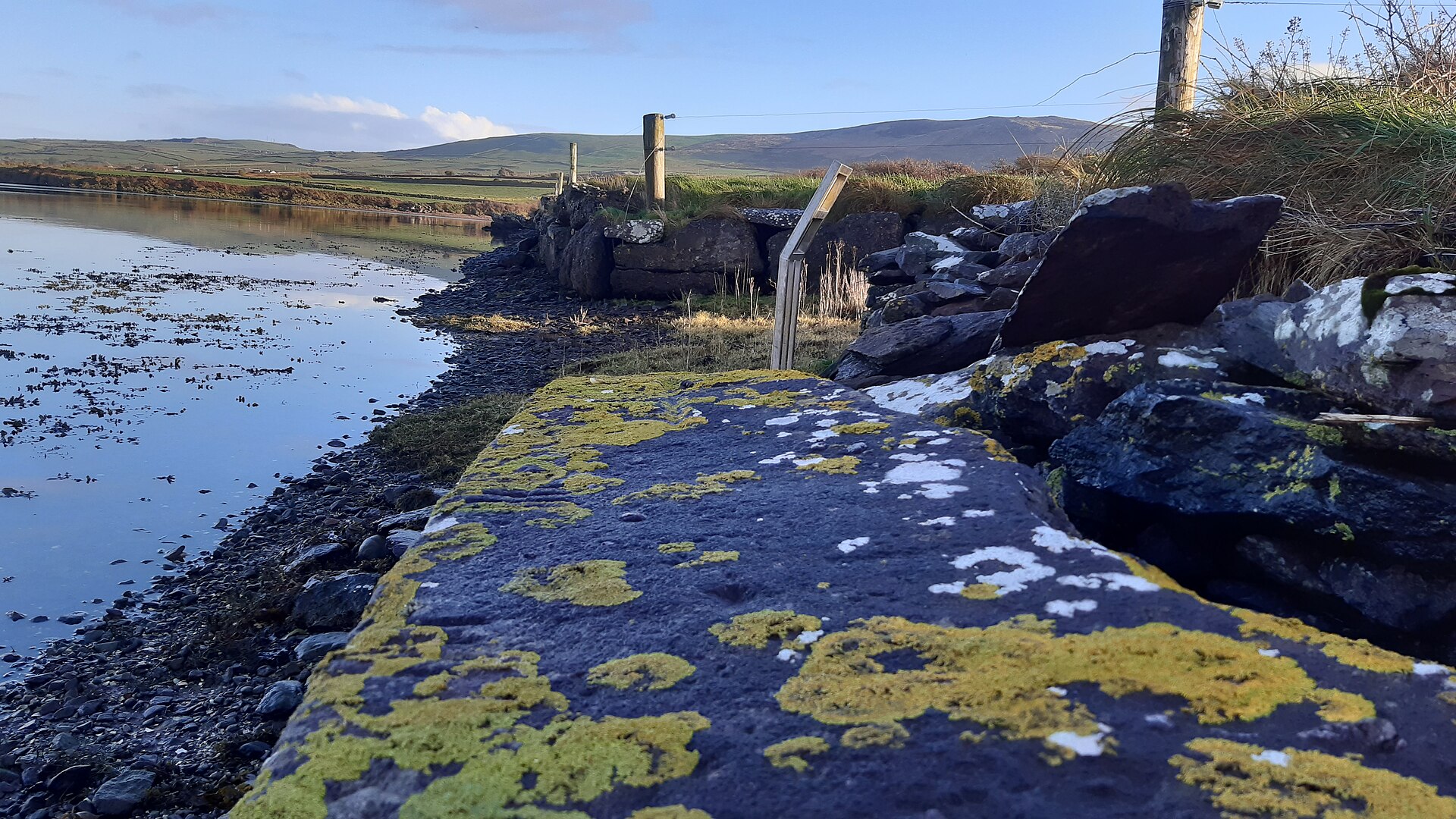
What Ogham Actually Is
Ogham (pronounced OH-am) is the oldest known form of written Irish. It consists of a series of notches and lines carved along the edge of a standing stone, reading from the base upwards.
Each character represents a letter — and each letter was named after a type of tree. The alphabet has twenty letters, later expanded to twenty-five. Characters were named for trees like the birch (beith), the oak (dair), and the hazel (coll).
Writing a name in Ogham meant carving it in nature’s own vocabulary. In early Ireland, the landscape and the language were never far apart. A stone marked with Ogham wasn’t just a monument — it was a statement in the oldest dialect the land understood.
Who Made Them and Why
Most Ogham stones date from the 4th to the 7th century. This was the period when Ireland was moving from a fully oral culture to one that had recently encountered Roman writing through contact with Britain and the Continent.
Ogham appears to have developed as a specifically Irish response to Latin literacy. Rather than borrowing the Roman alphabet wholesale, early Irish scholars built their own system — rooted in the natural world, carved into stone rather than written on parchment.
The majority of surviving inscriptions are memorial stones. They typically read: “X, son of Y.” A claim on land. A marker of lineage. A name preserved long after the person beneath it had turned to dust. A few stones appear on territorial boundaries — permanent declarations that this land belongs to this family. They are, in a sense, the oldest land titles in Irish history.
Where to Find Ogham Stones in Ireland
Ireland’s highest concentration of Ogham stones is in County Kerry and County Cork. The Dingle Peninsula has a remarkable trail of them. You can walk the Ogham Stone Trail through the Corca Dhuibhne Gaeltacht — a landscape where the Irish language has never stopped being spoken and the stones feel like a natural continuation of that unbroken tradition.
Waterford, Kilkenny, and Tipperary also hold significant collections. If you’re exploring the hidden valleys of Kerry, you might encounter Ogham stones in old church ruins, propped against farmyard fences, or half-submerged in ditches — sometimes re-used as building material by people who no longer knew what they were.
☘️ Enjoying this? 64,000+ Ireland lovers get stories like this every weekday morning. Subscribe free →
The Stones That Ended Up in Walls
For centuries after the early Christian period, Ogham literacy was largely lost. People who encountered these stones often had no idea they were carved with language. They were simply flat-edged rocks — and useful ones at that.
Several Ogham stones have been found re-used as lintels over doorways, as field boundary markers, and as paving slabs — sometimes upside down. The fact that so many survived is a small miracle. Those that were recognised as significant — often by Irish monks who preserved Ogham knowledge in Latin manuscripts — were eventually moved to safety.
Today, the largest single collection is housed in the Stone Corridor of University College Cork: row upon row of stones, each one bearing a name, standing in a building that probably wasn’t what their carvers had in mind.
What the Inscriptions Actually Say
Ogham stones are primarily genealogical records, but they’re also windows into early Irish naming traditions, land ownership, the spread of Christianity, and the languages spoken on this island before written history.
Some inscriptions appear in both Ogham and Latin — bilingual stones from the transitional centuries when Ireland was becoming Christian but hadn’t quite let go of older ways. A few use Primitive Irish, an even older form of the language that sounds almost nothing like modern speech.
Reading an Ogham stone today is surprisingly achievable. You need a correspondence chart that maps each sequence of notches to a letter, a few minutes, and some patience with stone edges worn smooth by fifteen centuries of Irish weather. With those three things, you can read a name that was carved by a family who simply wanted to be remembered. In many cases, they have been.
Why They Still Matter Today
There’s something quietly powerful about standing beside an Ogham stone. A person stood at that same rock in the fifth century and decided that these notches — these careful cuts along a rough edge — would carry their name into the future. They couldn’t have imagined how far it would travel.
The Ogham stones are not in museums behind glass. Most of them are still outside, in the fields and hedgerows where they were placed. They are not preserved in amber. They’re still doing what they were always meant to do: marking a presence, holding a name, enduring.
If you’re planning a trip to Ireland, add at least one Ogham stone to your route. You won’t need a tour guide. You’ll just need to find the edge, and know how to read it.
☘️ You Might Also Love
Tours & experiences you might love


Powered by Viator. Some links are affiliate links — we may earn a small commission at no extra cost to you.
Secure Your Dream Irish Experience Before It’s Gone!
Planning a trip to Ireland? Don’t let sold-out tours or packed attractions spoil your journey. Iconic experiences like visiting the Cliffs of Moher, exploring the Rock of Cashel, or enjoying a guided walk through Ireland’s ancient past often sell out quickly—especially during peak travel seasons.

Booking in advance guarantees your place and ensures you can fully immerse yourself in the rich culture and breathtaking scenery without stress or disappointment. You’ll also free up time to explore Ireland’s hidden gems and savour those authentic moments that make your trip truly special.
Make the most of your journey—start planning today and secure those must-do experiences before they’re gone!