

Walk into a high-end tailor in London, New York, or Tokyo and ask for the finest woollen cloth. There is a good chance it was woven in a cottage in County Donegal. Not a factory. A cottage. That is the peculiar magic of Donegal tweed — a cloth so rooted in its place that you can almost see the landscape in every thread.
What Makes Donegal Tweed Different
Not all tweed is the same. Donegal tweed has a signature: small flecks of colour — white, orange, green, blue — scattered through the base yarn. These are called nepps, and they are deliberately added during the blending process.
The effect mirrors the speckled lichen on Donegal’s stone walls, the flash of wildflowers across bogland, the way Atlantic light shifts over moorland at dusk. It is a cloth that looks like the county it comes from.
The base colour shifts between batches too. One length might lean towards heather and grey. Another carries ochre or deep forest green. No two cuts of genuine Donegal tweed are ever quite the same — which is part of why serious cloth buyers have sought it out for generations.
There is also a practical reason for those flecks. In the old cottage weaving tradition, wool from different dye lots would be blended together to make the most of what was available. The nepps were born of necessity. They became, over time, the most distinctive feature of the cloth.
From Cottage Loom to the World’s Great Cities
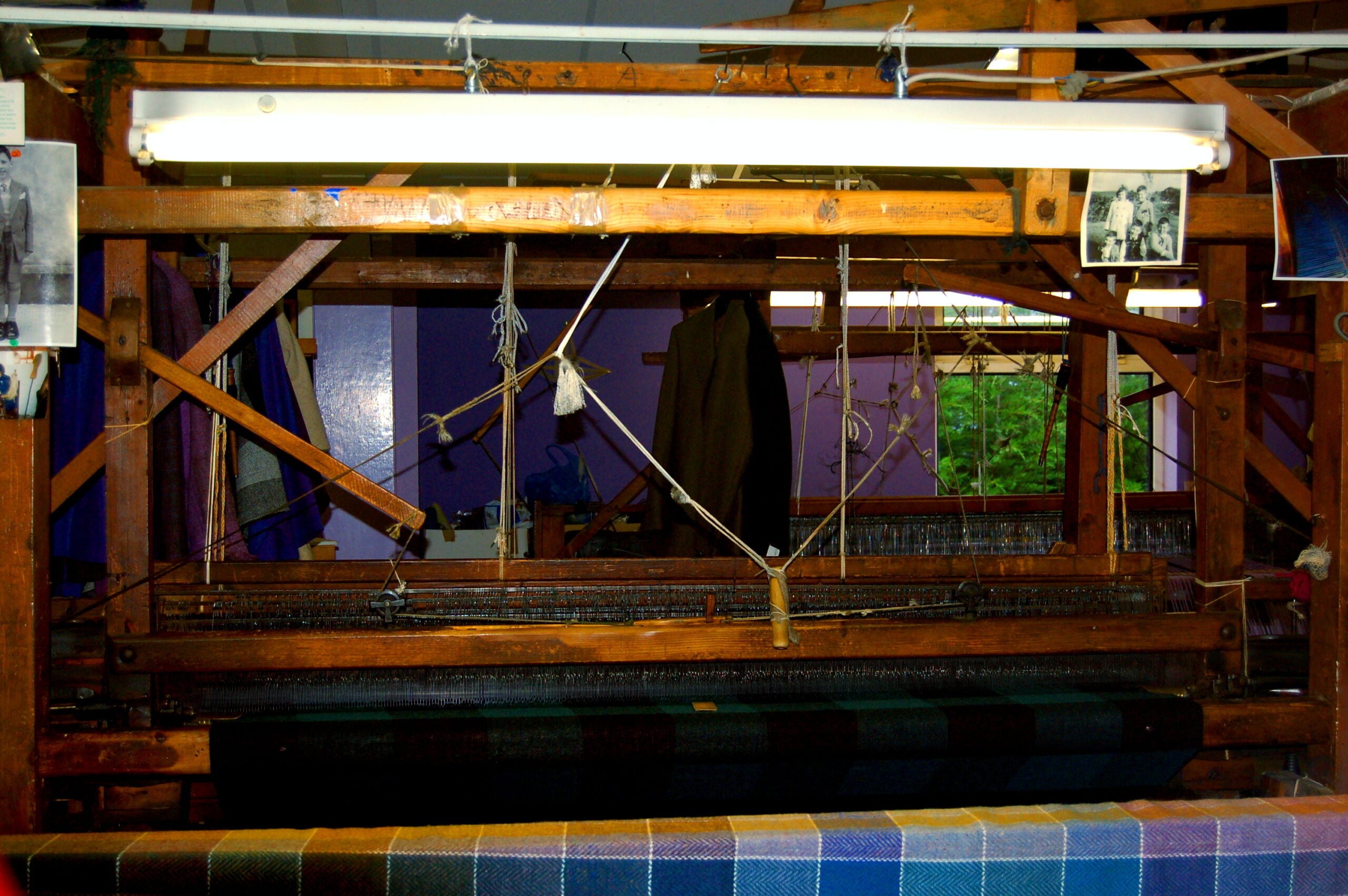
Donegal tweed’s origins are domestic. For centuries, families across rural Donegal supplemented their income by weaving cloth on handlooms kept inside their homes. The loom sat in the main room, often close to the fire, and the rhythm of its shuttle was woven into daily life.
In the 19th century, organisations like the Congested Districts Board worked to support the craft — training weavers, improving standards, and connecting Donegal cloth with markets in Britain and Ireland. What had been a quiet local tradition became a recognised textile with a growing reputation.
Soon, Donegal tweed found its way to the windows of Savile Row tailors in London and the ateliers of Paris. It was rugged enough for outdoor life — shooting, fishing, long walks on Atlantic headlands — but refined enough for a skilled tailor’s needle. The combination was unlike anything else available.
The Cloth That Dressed the World
In the 20th century, Donegal tweed became associated with a certain kind of well-made, unhurried life. Country houses across Britain and Ireland filled with it. Designers began requesting it by name.
Coco Chanel is said to have admired its texture and incorporated it into her collections. John F. Kennedy wore it. The cloth carried a quiet authority — the sort that does not announce itself but is immediately recognised by those who understand cloth.
What set it apart from other tweeds was always the speckle. Those unpredictable flecks of colour, impossible to replicate exactly by machine, gave each piece its own character. A jacket cut from Donegal tweed does not look like anyone else’s jacket. That individuality became part of its appeal.
☘️ Enjoying this? 64,000+ Ireland lovers get stories like this every week. Subscribe free →
Who Still Makes Donegal Tweed Today
Several mills and weavers in Donegal continue the tradition. Magee of Donegal Town has been weaving tweed since 1866 — the same family, the same town, for over 150 years. Visitors can stop in and watch the cloth being made. It is one of the few places in Ireland where a centuries-old craft is still a living, working business.
McNutt of Downings, in the Rosguill peninsula, is another name that cloth enthusiasts travel to find. Their weavers still work on handlooms that are close to a century old. Pieces woven on domestic handlooms take longer and carry more variation than anything a machine can produce — which is precisely why people seek them out.
Smaller independent weavers work across the county too, often selling directly from their workshops. Tracking them down takes a little effort, but it is effort that rewards the curious traveller.
If you are taking time to explore Donegal, a visit to a working tweed mill is unlike almost anything else you will find in Ireland. And if you are still in the early stages of planning your trip to Ireland, it is well worth putting Donegal on the map.
The Cloth That Still Carries the Land
What is most striking about Donegal tweed is that it has not separated from the place that made it. The speckled pattern is not a marketing device. It reflects the bogland and the rock and the rough Atlantic light. That connection is genuine and unbroken across centuries.
The weavers who make it today are still using wool that comes from the same land their predecessors worked. The patterns and the methods have been handed down through families and communities. The cloth you can buy in Donegal Town today is not so different from the cloth that left these shores two hundred years ago.
When you hold a piece of genuine Donegal tweed, you are in some sense holding Donegal itself — its colours, its textures, its particular quality of light on a grey Atlantic morning.
Most things eventually lose their connection to where they came from. Donegal tweed, somehow, has not.
☘️ You Might Also Love
Tours & experiences you might love


Powered by Viator. Some links are affiliate links — we may earn a small commission at no extra cost to you.
Secure Your Dream Irish Experience Before It’s Gone!
Planning a trip to Ireland? Don’t let sold-out tours or packed attractions spoil your journey. Iconic experiences like visiting the Cliffs of Moher, exploring the Rock of Cashel, or enjoying a guided walk through Ireland’s ancient past often sell out quickly—especially during peak travel seasons.

Booking in advance guarantees your place and ensures you can fully immerse yourself in the rich culture and breathtaking scenery without stress or disappointment. You’ll also free up time to explore Ireland’s hidden gems and savour those authentic moments that make your trip truly special.
Make the most of your journey—start planning today and secure those must-do experiences before they’re gone!