

Irish surnames from Wicklow carry the spirit of the last great Gaelic holdouts in Leinster. County Wicklow lies just south of Dublin, between the Irish Sea and the Wicklow Mountains. The O’Tooles and O’Byrnes sheltered in those mountains for centuries while the rest of the province fell to the Normans. Byrne, Doyle, O’Toole, Nolan — these names come from a county that refused to yield. If your family carries a Wicklow name, you carry that stubborn pride.
Free Irish ancestry tool ☘️
Have an Irish surname? Find your ancestral Irish county — we’ll trace your name to where the family originated, with a short note on its history.
Irish Surnames from Wicklow: The Garden of Ireland’s Gaelic Heartland
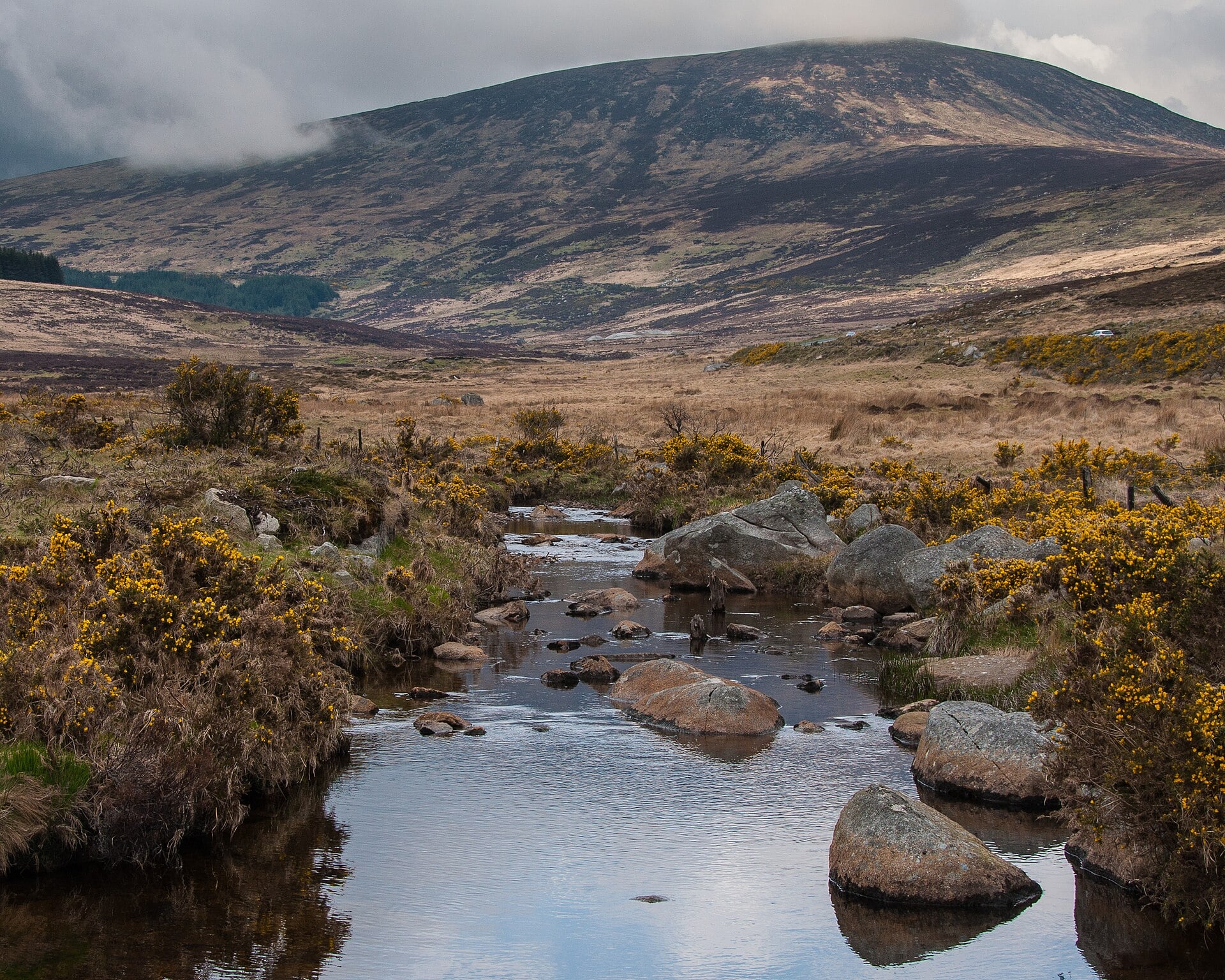
People call County Wicklow ‘the Garden of Ireland’. Its hills, glens, and rivers make it one of the most scenic counties in the country. But Wicklow was also a fortress. The Wicklow Mountains kept English power at bay for generations.
Watch: Do You Qualify for an Irish Passport?
Tracing your Irish family? If one of your grandparents was born in Ireland, you may be able to become an Irish citizen. This 14-minute guide explains who qualifies, what it costs and how long it takes. Thinking of making the move? Get the free Moving to Ireland checklist.
Two great Gaelic families shaped the county. The O’Tooles ruled the northern part. The O’Byrnes held the south and east. Together, they made County Wicklow a Gaelic stronghold long after the rest of Leinster had fallen.
The Norman invasion of the 1170s pushed both families into the mountains. From there, they raided the Pale — the English-controlled zone around Dublin — for three hundred years. Their reputation for resistance was fierce and well earned.
The seventeenth century brought the end. Cromwellian forces broke the last Wicklow clans in the 1650s. The old families lost their land. Many left in the centuries that followed, carrying Wicklow surnames across the world.
If you are tracing your roots, our guide to tracing your Irish ancestry covers every archive and database you need.
O’Toole – Ó Tuathail: Lords of the Wicklow Mountains
O’Toole is the name most linked to County Wicklow. The Gaelic form is Ó Tuathail — descendant of Tuathal. The name Tuathal meant lord of the people. It described a ruler who held authority over an entire tribe or territory.
The O’Tooles held the territory of Fercullen. This covered the northern Wicklow mountains, running from the Scalp to the Vale of Glendalough. Their main seat lay near what is now Powerscourt in Enniskerry. They traced their line back to the ancient kings of Leinster.
The Norman invasion of 1169 drove them off the lowlands. They retreated into the mountains and kept power there for four more centuries. No other Leinster family resisted English pressure as long.
The most famous O’Toole was Saint Laurence. Born around 1128, he became Archbishop of Dublin in 1162. He led the defence of Dublin when the Normans came. Pope Honorius III canonised him in 1225. He is one of the most revered figures to come from the O’Toole family.
The O’Tooles held on against English rule until the early 1600s. When their power finally broke, many left for Europe as soldiers. Their descendants now carry the name across Ireland, America, and Australia.
O’Byrne – Ó Broin: Lords of the Wicklow Glens
Byrne is the most common surname in County Wicklow today. It comes from the older form O’Byrne. The Gaelic form is Ó Broin — descendant of Bran. Bran meant raven. It was a warrior name for a fierce and resilient clan.
The O’Byrnes ruled Crioch Branach — the territory of the O’Byrnes. This covered the central and southern parts of Wicklow. Their heartland sat around Rathdrum and the Vale of Avoca.
They resisted English rule with real determination. Their chieftain Fiach Mac Hugh O’Byrne was one of the most feared Gaelic leaders of his era. He sheltered the Ulster lords Hugh O’Neill and Red Hugh O’Donnell during their campaigns against the Crown. English forces killed him in an ambush in 1597.
The O’Byrnes fought on after his death. They held out in Wicklow until the 1640s. That made them among the last Gaelic families standing in Leinster. After their defeat, many scattered. But large numbers stayed. Byrne is now one of the most common surnames on the island of Ireland.
☘️ Enjoying this? 64,000+ Ireland lovers get stories like this every week.
Thinking about it for retirement? If you’ve started thinking seriously about retiring there, our complete our full Retire in Ireland guide covers the visa, healthcare, cost-of-living, and the regions worth shortlisting.
Doyle – Ó Dubhghaill: The Dark Foreigners
Doyle has a surprising origin. It does not come from a Gaelic king or Irish warrior. It comes from the Vikings.
The Gaelic form is Ó Dubhghaill — descendant of Dubhghall. The name means dark foreigner. The Irish gave this label to the Danish Vikings who settled their coastline. They called the Norwegians the fair foreigners. The Danes were the dark foreigners.
Viking settlers put down roots in Wicklow during the ninth and tenth centuries. They built a base near what is now Wicklow town. Over time, they mixed with the local population and became fully Gaelicised. Their descendants kept the Norse nickname as a surname.
Doyle is one of the most common surnames in County Wicklow today. It is found especially along the coast, tracing back to those early Norse settlements. The name spread widely after the Famine, reaching Irish communities across America, Australia, and Britain.
Nolan – Ó Nualláin: A Leading Leinster Family
Nolan is a Wicklow name with deep roots. The Gaelic form is Ó Nualláin — descendant of Nuallán. The name comes from nuall, meaning shout or renown. It described someone well-known — a person whose name carried real weight.
The Nolans were one of the leading septs of Leinster. Their main territory lay in the barony of Forth in County Carlow. A strong branch settled in south County Wicklow, where their name took hold. They had close ties to the old Leinster royal houses for generations.
The Nolans kept their identity through the Plantation era and the Famine years. They were a family that held on.
Today Nolan is common across south Wicklow and Carlow. Large numbers emigrated to the United States in the nineteenth century. You will find the name in Irish communities in Boston, Philadelphia, and New York.
How Wicklow Surnames Crossed the Atlantic
County Wicklow sits close to Dublin. That made emigration easier for its people than for those in western counties.
During the Great Famine of 1845 to 1852, Wicklow families left through Dublin port. Many also sailed from Dún Laoghaire, then known as Kingstown. They crossed to Liverpool and boarded ships to New York, Boston, and Philadelphia.
An earlier wave left after the Williamite Wars in the 1690s. O’Toole and O’Byrne descendants joined the Flight of the Wild Geese. They served in the Irish Brigades of France and Spain.
The Pennsylvania coalfields drew many Wicklow families in the mid-1800s. Doyle and Byrne names appear in the mining towns of Scranton and Wilkes-Barre. Their descendants now form part of the great Irish-American community along the east coast.
Wicklow is a small county. But its names travel far.
How to Trace Your Wicklow Ancestry
Wicklow County Archive
Wicklow County Archive sits in Wicklow town. It holds estate papers, land records, and local government documents. These are especially useful for families from the tenant class who farmed Wicklow’s valleys after the Plantation. The archive links to the national network at rootsireland.ie.
Griffith’s Valuation and Census Records
Griffith’s Valuation listed every landholder in County Wicklow in the 1850s. You can search it for free at askaboutireland.ie. The 1901 and 1911 census returns are fully searchable at census.nationalarchives.ie. These are the best starting points for Famine-era Wicklow research.
Church and Civil Records
Civil registration of births, marriages, and deaths began in 1864. Earlier records come from Catholic and Church of Ireland parish registers. Many Wicklow parish records survive and are searchable through the National Archives. For a complete step-by-step guide, see our guide to tracing your Irish ancestry.
Where to Visit in Wicklow to Connect with Your Heritage
Glendalough. Glendalough stands in a glacial valley deep in the Wicklow Mountains. Saint Kevin founded his monastic community here in the sixth century. The site became one of the great centres of early Christian learning in Ireland. Walking through it today, you walk ground that Wicklow’s greatest families once considered sacred. The O’Toole clan held Glendalough as part of their ancestral territory for centuries.
Powerscourt Estate, Enniskerry. Powerscourt sits in the north of the county at the foot of the Great Sugar Loaf mountain. The O’Tooles held this land for centuries before the Normans took it. The estate and gardens are open to visitors. They offer a striking backdrop to the O’Toole story in this part of Wicklow.
The Vale of Avoca. The Vale of Avoca was O’Byrne country. This is where the Avonmore and Avonbeg rivers meet, at a spot known as the Meeting of the Waters. The O’Byrnes held the glens and hills around this valley for generations. Thomas Moore wrote his poem ‘The Meeting of the Waters’ about this place in the nineteenth century.
Wicklow Gaol, Wicklow Town. Wicklow Gaol tells the story of the 1798 Rebellion, when Wicklow men rose against British rule. The gaol held rebels, transportees, and ordinary prisoners from across the county. It is now a heritage museum that brings Wicklow history to life. If your ancestor was caught up in 1798, this is the place to start.
Our Irish heritage trip planning guide explains how to visit your ancestral county in person. Our 7-day Irish ancestry itinerary gives a full framework for your trip.
Frequently Asked Questions About Wicklow Surnames
What are the most common Irish surnames from County Wicklow?
The most historically significant surnames from County Wicklow include Byrne (O’Byrne), O’Toole, Doyle, Nolan, and Murphy. Byrne is the most common surname in the county today. It traces back to the O’Byrne lords of Crioch Branach. O’Toole was the ruling family of the northern Wicklow mountains. Doyle has Norse Viking origins, while Nolan was a leading Leinster family with roots in south Wicklow.
What does O’Toole mean in Irish?
O’Toole comes from the Gaelic Ó Tuathail, meaning descendant of Tuathal. The name Tuathal meant lord of the people. The O’Tooles were the ruling lords of Fercullen in north County Wicklow. They were one of the most powerful Gaelic families in Leinster. Saint Laurence O’Toole, Archbishop of Dublin, came from this family and was canonised in 1225.
Who were the O’Byrnes of County Wicklow?
The O’Byrnes (Ó Broin) were the Gaelic lords of Crioch Branach in south County Wicklow. Their name means descendant of Bran, an old word for raven. They ruled the territory around Rathdrum and the Vale of Avoca. Fiach Mac Hugh O’Byrne, who died in 1597, was among the last great Gaelic chieftains of Wicklow. Byrne remains the most common surname in County Wicklow today.
What does Doyle mean in Irish?
Doyle comes from the Gaelic Ó Dubhghaill, meaning descendant of Dubhghall. Dubhghall means dark foreigner. The Irish gave this name to Danish Vikings who settled along the eastern coast of Ireland. The Doyles of Wicklow trace back to those Norse settlers. They became fully Gaelicised over centuries and are now one of the most common families in the county.
Where can I trace my County Wicklow ancestry?
Start with Wicklow County Archive in Wicklow town, which holds estate papers and land records. Use askaboutireland.ie to search Griffith’s Valuation from the 1850s. Search the 1901 and 1911 census returns at census.nationalarchives.ie. The rootsireland.ie database holds Wicklow church records through the county genealogy service.
Your Wicklow Roots Are Waiting
County Wicklow held out longest among the Leinster counties. The O’Tooles and O’Byrnes fought for their land and their identity for centuries. The Doyles brought a Norse past and made it Irish. The Nolans kept close ties to the old Leinster royal houses through the centuries.
If your name is Byrne, Doyle, O’Toole, or Nolan, your family was part of that story. Stand at Glendalough and you stand where Wicklow’s saints and scholars built something that still stands today. Walk the Vale of Avoca and you walk through O’Byrne country.
That name is yours now. Follow it home.
Explore more of our Irish surnames series — covering Cork, Galway, Kerry, Dublin, Clare, Mayo, Donegal, Tipperary, Limerick, Waterford, Wexford, Kilkenny, Sligo, Roscommon, Antrim, Down, Tyrone, Derry, Armagh, Fermanagh, Cavan, Monaghan, Leitrim, Longford, Westmeath, Offaly, Laois, Carlow, and more.
☘️ Join 64,000+ Ireland Lovers
Every Friday, get Ireland’s hidden gems, local secrets, and travel inspiration — the kind you won’t find in any guidebook.
Subscribe free — enter your email:
📲 Know someone who’d love this? Share on WhatsApp →
Free forever · One email per week · Unsubscribe anytime
Tours & experiences you might love


Powered by Viator. Some links are affiliate links — we may earn a small commission at no extra cost to you.
Secure Your Dream Irish Experience Before It’s Gone!
Planning a trip to Ireland? Don’t let sold-out tours or packed attractions spoil your journey. Iconic experiences like visiting the Cliffs of Moher, exploring the Rock of Cashel, or enjoying a guided walk through Ireland’s ancient past often sell out quickly—especially during peak travel seasons.

Booking in advance guarantees your place and ensures you can fully immerse yourself in the rich culture and breathtaking scenery without stress or disappointment. You’ll also free up time to explore Ireland’s hidden gems and savour those authentic moments that make your trip truly special.
Make the most of your journey—start planning today and secure those must-do experiences before they’re gone!
Subscribe Free