

For millions of Irish-Americans, planning an Irish heritage trip is something they have spoken about for years — perhaps a lifetime. There is a moment when the family stories, the DNA results, and the emotional pull of Ireland finally become something more concrete: a flight booked, a county identified, a plan forming. This guide is for that moment. Whether you have a surname, a county, and a handful of dates, or only a vague sense that your people came from “somewhere in the west,” this is how to transform that longing into one of the most meaningful journeys you will ever make.
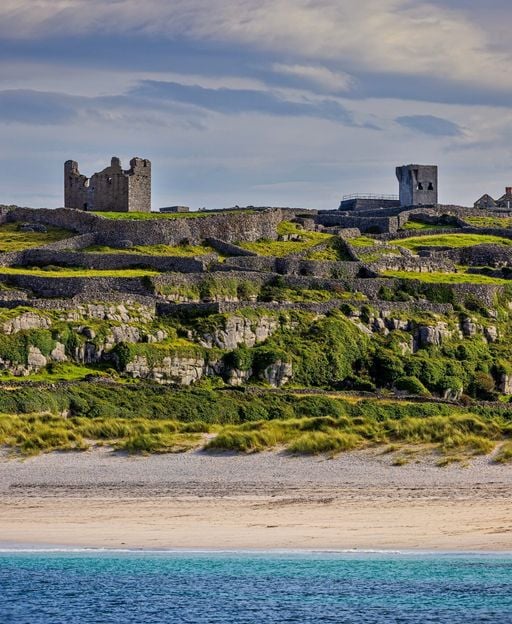
An Irish heritage trip is not like ordinary travel. You are not just visiting a country — you are visiting the place where your family’s story began, the landscape that shaped who they were before they left. The cobbled streets of Galway, the fog rolling in off Bantry Bay, the silence of a Connemara bog in October — these are not abstract beauties. For those with Irish roots, they carry a deeper resonance that most visitors will never feel.
Watch: Do You Qualify for an Irish Passport?
Tracing your Irish family? If one of your grandparents was born in Ireland, you may be able to become an Irish citizen. This 14-minute guide explains who qualifies, what it costs and how long it takes. Thinking of making the move? Get the free Moving to Ireland checklist.
Before You Travel: Building Your Research Foundation
The single most important investment you can make before boarding a flight to Ireland is time spent on research. The more specific your information — county, townland, parish, and surnames — the more meaningful your time in Ireland will be. Arriving at a heritage centre with a county name and three surnames will yield far more than arriving with only a vague ethnic identity.
Start with the Online Genealogy Databases
Several free resources should be your first ports of call. IrishGenealogy.ie holds civil registration records (births, marriages, and deaths from 1864 onwards) and Catholic parish registers, all free to search. FamilySearch.org holds an enormous collection of Irish records at no cost. For a more complete overview of research strategies — including how to navigate the records destroyed in the 1922 Public Record Office fire — read our full guide to finding your Irish ancestry before you begin.
If you already know your county but want to understand which surnames were historically associated with it, our county surname guides can help. The most searched counties for Irish-Americans are well covered: see Irish surnames from Cork, Irish surnames from Galway, and Irish surnames from Kerry for a start.
DNA Testing – Narrowing Your Search Before You Fly
Consumer DNA tests from AncestryDNA, 23andMe, or MyHeritage are not just curiosity pieces — they can be genuinely useful planning tools. AncestryDNA has identified over 200 distinct Irish communities within its database and can point users toward specific regions of Ireland. 23andMe has found that most users with Irish heritage trace connections to Cork, Mayo, and Galway in the Republic. A test taken three to four months before your trip gives you time to review matches and potentially connect with distant cousins in Ireland who might meet you during your visit.
For serious paternal lineage research, the specialist service Irish Origenes analyses Y-DNA results to pinpoint county-level origins — a significant step beyond what mainstream testing companies provide.
Understanding Townlands — The Key to Your Ancestor’s Doorstep
Ireland is divided into approximately 60,462 townlands — small, ancient territorial units that predate any modern administrative system. They range from a few dozen to several hundred acres and are often named for landscape features, an early family name, or a historical event. Townlands are the most granular geographic unit in Irish record-keeping, and they are essential to heritage trip planning.
Civil registration records (births, marriages, deaths from 1864), Catholic parish registers, and — crucially — Griffith’s Valuation (the 1847–1864 property survey that recorded every Irish household) are all organised by townland. Once you have a townland name, you can use the free Placenames Database of Ireland (logainm.ie) to locate it on a modern map. That is the address your ancestors left behind.
Planning Your Irish Heritage Trip: When to Go and Where to Stay
The Irish archives are open year-round, and Ireland’s heritage sites do not observe a tourist season in the way that more southerly destinations do. That said, there are practical considerations worth weighing.
Spring (April–June) is ideal. Days are long, the countryside is intensely green, heritage centres are fully staffed, and the tourist crowds of summer have not yet arrived. Heritage researchers especially benefit from the quieter atmosphere in archive reading rooms and the ability to take their time in rural areas.
Autumn (September–October) is the next best option. The light is extraordinary — golden and low — and the emotional atmosphere of fading summer suits a reflective heritage journey well. Rural areas are quiet again after the high season.
Book accommodation in the county you are researching rather than defaulting to Dublin hotels. If your roots are in Clare, stay in Ennis. If they are in Connemara, stay in Clifden or Roundstone. Proximity to the landscape your ancestors knew — to the roads, the church, the bay — makes a profound difference to the experience. Our guide to renting a car in Ireland from the USA is essential reading: public transport in rural Ireland is limited, and independent travel by car is by far the most practical option for heritage visitors.
The Archives: Where Your Ancestors’ Stories Live
Ireland’s main genealogy archives are among the most accessible in the world for visiting researchers. Plan at least one full day in Dublin for archive visits — and ideally two, so that a cancelled appointment or an unexpected discovery can be absorbed without rushing.
National Archives of Ireland, Dublin
Located at Bishop Street, Dublin 8, the National Archives is the primary national repository for government and civil records. The free 1901 and 1911 census returns are fully digitised and available at Census.NationalArchives.ie — they are the most accessible household records in Irish genealogy and should be your starting point for any research visit.
To use the reading rooms, you will need a free Reader’s Ticket, issued on your first visit — bring your passport and a recent utility bill. The archive is open Monday to Friday, 10am–5pm (closed for lunch 1pm–2pm). A free Genealogy Advisory Service operates on a first-come, first-served basis; arrive when the doors open for the best chance of a consultation with a professional archivist.
National Library of Ireland, Dublin
On Kildare Street, the National Library holds digitised images of Catholic parish registers covering most of Ireland, the largest collection of Irish newspapers in existence, and Griffith’s Valuation. No Reader’s Ticket is required to use the Genealogy Room — simply walk in and begin. The staff here are experienced in guiding visitors through Catholic parish registers, which are often the only surviving record of families from the pre-1864 period.
PRONI — For Northern Irish Ancestry
If your ancestors came from Ulster — Antrim, Armagh, Cavan, Derry, Down, Fermanagh, Monaghan, or Tyrone — the Public Record Office of Northern Ireland (PRONI) in Belfast is essential. Located in the Titanic Quarter, PRONI holds records from around 1600 to the present and includes church registers, landed estates records, wills, and the Valuation Revisions from 1864 to 1933. Register for a visitor pass on arrival; no advance appointment is needed. Use PRONI’s online eCatalogue to identify relevant records before you travel.
County Heritage Centres
The Irish Family History Foundation operates a network of 32 local genealogy centres across Ireland, coordinated through RootsIreland.ie. These centres hold Catholic Church records, civil registration records, and local headstone transcriptions, and they are staffed by genealogists with deep knowledge of their county’s records. Many hold collections that are not yet digitised and are only accessible in person. Contact the relevant centre in advance of your visit — most welcome walk-in visitors but some operate on an appointment basis.
Visiting Your Ancestral Townland
This is the moment many heritage visitors describe as the most powerful of the entire trip — and the one they are least prepared for. Standing in the field where your great-great-grandmother was born, looking at the remains of a stone cottage, feeling the Atlantic wind that she felt every morning of her life — this is not abstract history. It is, for many people, a homecoming that no other form of travel can replicate.
How to Locate Your Townland
Once you have identified a townland from civil records, parish registers, or Griffith’s Valuation, the Placenames Database of Ireland (logainm.ie) gives you its precise location, Irish-language form, and pronunciation. Cross-reference with the associated Griffith’s Valuation maps at askaboutireland.ie to identify the exact plot of land your ancestor occupied. Organisations such as My Ireland Family Heritage can provide GPS coordinates for original homesites going back over 200 years — an invaluable service for those whose townland is otherwise difficult to distinguish on the modern landscape.
What to Expect When You Arrive
Manage your expectations — not to diminish the experience, but to deepen it. Some ancestral townlands are now under modern bungalows; some have changed dramatically since the Famine. Others are entirely unchanged: stone-walled fields tumbling toward the sea, ruined gable walls standing in bog grass, the outline of a potato ridge still visible in a summer field. What you will almost always find is that the landscape itself retains something — an atmosphere, a quality of light and wind and silence — that connects you to the people who walked it before you.
Speak to local people. In rural Ireland, especially in Connemara, Donegal, Clare, and Kerry, local residents often know the family histories of their area in extraordinary detail and may point you to relatives, graveyards, or old photographs that no archive could provide. The voluntary organisation Ireland Reaching Out (irelandxo.com) has a nationwide network of over 220 local volunteers who help connect diaspora with their ancestral parishes — some visits have resulted in introductions to living cousins.
Irish Heritage Graveyards — Reading the Stones
Parish graveyards are among the most powerful stops on any heritage trip. In rural Ireland, many families buried generation after generation in the same churchyard, and a single headstone can span four or five generations — giving maiden names, addresses, and dates that no civil record preserves.
Key Resources
IrishGraveyards.ie holds searchable transcriptions from many Irish graveyards. The Historic Graves Project (historicgraves.com) has surveyed over 800 graveyards across the Republic, with GPS mapping and photographic records. For Dublin’s most important genealogical cemetery, Glasnevin, the Dublin Cemeteries Trust holds records of over 1.5 million individuals, searchable at dctrust.ie.
Practical Tips for Graveyard Visits
- Bring waterproof boots — Irish graveyards are frequently overgrown and wet, even in summer
- Photograph every headstone in a family section, even those too weathered to read — digital enhancement tools can sometimes recover faded inscriptions
- Many older graves have no headstone at all, as erecting a stone was a sign of means — absence of a marker is not absence of a burial
- Note the townland or address on headstones — it often matches civil records and can confirm you have found the right family
Hiring a Local Heritage Guide
For a heritage trip of any substance, hiring a local guide or professional genealogist is one of the best investments you can make. The difference between visiting Ireland independently and visiting with a genealogist who has spent weeks researching your family before you arrive is the difference between a beautiful holiday and a genuine discovery.
Reputable providers include My Ireland Family Heritage, which specialises in ancestral townland tours and can locate original homesites; Irish Researchers (irishresearchers.com), whose team offers a free preliminary search before commitment; and Mary G Tours (marygtours.ie), led by a UCC-qualified genealogist with specialist knowledge of Kerry and Munster. The voluntary network Ireland Reaching Out connects diaspora visitors with local parish volunteers at no charge.
Budget between €500 and €1,500 for a meaningful one-to-two-day guided ancestry experience that includes pre-visit archival research. Many families find that a single day with a local guide reveals more than months of independent online research.
A Suggested 5-Day Irish Heritage Itinerary
This itinerary assumes your roots are in the west of Ireland — Galway, Mayo, or Clare — though the same structure applies to any county.
Day 1 — Arrive Dublin / National Archives: Fly overnight, check in, and spend the afternoon at the National Archives on Bishop Street. Use the free Genealogy Advisory Service if available. Evening: explore Dublin’s heritage quarter around Kilmainham.
Day 2 — National Library / Depart West: Morning at the National Library Genealogy Room — particularly valuable for Catholic parish registers. Afternoon: drive or take the train west to your base county. If you are going to Galway or Connemara, aim to arrive by early evening to catch the light.
Day 3 — County Heritage Centre / Local Archives: Full day with the county heritage centre. Bring all your research notes, photographs of documents, and a list of all known surnames, dates, and townlands. Staff can search records unavailable online and may identify connections immediately.
Day 4 — Ancestral Townland and Graveyard Visit: The centrepiece of the trip. Drive to the townland, walk the land, visit the local graveyard, and speak to anyone who knows the area. Allow a full day; these visits rarely run to schedule and rarely need to.
Day 5 — Local Heritage Sites / Return: Visit any heritage sites associated with your family — an O’Flaherty stronghold, a famine memorial, a castle associated with your name. Afternoon departure or overnight stay for a morning flight. For a longer trip, our 10-Day Ireland Itinerary can be adapted to include deeper county exploration across multiple regions.
The Emotional Journey: What to Expect
No guide can fully prepare you for this. Researchers who work with heritage visitors describe moments — standing in a field, reading a headstone, looking out from a cliff edge toward America — where the accumulated weight of years, emigration, stories passed down through kitchens and Sunday dinners, suddenly becomes physically real.
Many Irish-American visitors describe the experience of a heritage trip as a kind of grief and joy combined: grief for what was lost, joy for what has been found. The families who left Ireland for America in the 1840s and 1850s did so in the knowledge that they were unlikely ever to return. They threw parties for the departing — the American Wake — because they understood that emigration was, in its way, a kind of death. To understand that tradition and what it meant to both sides, read our piece on why Irish families held a party when someone left for America and called it a wake.
Your trip is, in some sense, the return that was never made. That is not a small thing.
Your ancestors left Ireland. Now it’s time to go back.
Every week, our free Love Ireland newsletter delivers hidden heritage gems, ancestry research tips, local stories, and travel guides — straight to your inbox. Join thousands rediscovering their Irish roots.
Frequently Asked Questions About Planning an Irish Heritage Trip
How far in advance should I research before visiting Ireland?
Ideally, begin your online genealogy research at least three to six months before travel. This gives you time to order DNA tests (results take six to ten weeks), correspond with county heritage centres, and arrange any professional guide services that require advance research preparation. Many guided ancestry tours involve weeks of pre-visit archival work by the guide — this cannot be compressed into days.
Do I need a Reader’s Ticket to use Irish genealogy archives?
For the National Archives of Ireland, yes — a free Reader’s Ticket is issued on your first visit. Bring a passport (or national ID) and proof of permanent address such as a recent utility bill. The National Library of Ireland’s Genealogy Room does not require a ticket — walk-in access is available. PRONI in Belfast issues a visitor pass on arrival. None of these archives charge for genealogy research, though some individual county heritage centres may charge a fee for professional research services.
Can DNA testing really help me plan a heritage trip to Ireland?
Yes, in several important ways. A test from AncestryDNA or 23andMe can narrow your Irish ancestry from a general ethnicity to a specific region — AncestryDNA identifies over 200 distinct Irish communities. More practically, DNA matches connect you with other people who share your ancestry, some of whom may be living in Ireland and willing to meet. The specialist service Irish Origenes uses Y-DNA results to identify county-level origins for paternal lineages. Do the test as early in your planning process as possible to maximise how useful the results can be before travel.
What is a townland, and how do I find the one my ancestors came from?
A townland is a small, ancient territorial unit — Ireland has approximately 60,462 of them. They are the geographic foundation of Irish genealogical records: civil births and deaths, Catholic parish registers, and Griffith’s Valuation are all recorded at townland level. To find your ancestral townland, search civil registration records on IrishGenealogy.ie or Catholic parish registers on the National Library of Ireland website — both typically list the townland of the family. Once identified, use the Placenames Database of Ireland (logainm.ie) to locate the townland on a modern map.
Is it worth hiring a local heritage guide in Ireland?
For most heritage visitors, yes — particularly if your research has stalled online and you want to go deeper. Local guides with genealogical expertise have access to undigitised records, relationships with local knowledge-holders, and the experience to interpret ambiguous records that might otherwise mislead you. If your budget is limited, the voluntary Ireland Reaching Out network (irelandxo.com) connects diaspora visitors with local parish volunteers at no cost. For the full guided experience including pre-visit archival research, budget between €500 and €1,500 for a one-to-two-day tour.
☘️ You Might Also Love
64,000 Ireland lovers can’t be wrong.
Every week, our free newsletter delivers hidden gems, seasonal guides, local stories, and practical travel tips — straight to your inbox. Join the community that loves Ireland as much as you do.
Or subscribe free — enter your email below:
☘️ Want More Hidden Ireland?
Join 64,000+ subscribers who discover Ireland’s best-kept secrets every week.
Subscribe Free — Join the Community →
Free forever · Unsubscribe anytime · No spam
📥 Free Download: Ireland Travel Planning Guide
Our most popular resource — itineraries, insider tips, and the 50 places you must not miss.
Tours & experiences you might love


Powered by Viator. Some links are affiliate links — we may earn a small commission at no extra cost to you.
Secure Your Dream Irish Experience Before It’s Gone!
Planning a trip to Ireland? Don’t let sold-out tours or packed attractions spoil your journey. Iconic experiences like visiting the Cliffs of Moher, exploring the Rock of Cashel, or enjoying a guided walk through Ireland’s ancient past often sell out quickly—especially during peak travel seasons.

Booking in advance guarantees your place and ensures you can fully immerse yourself in the rich culture and breathtaking scenery without stress or disappointment. You’ll also free up time to explore Ireland’s hidden gems and savour those authentic moments that make your trip truly special.
Make the most of your journey—start planning today and secure those must-do experiences before they’re gone!