

The Morrigan is one of the most powerful figures in Irish mythology. She is a triple goddess of war, fate, and sovereignty. For thousands of years, the Irish people feared and respected her. Crows gathering over a battlefield were her sign. She washed the bloody clothes of warriors about to die. She decided the fate of kings. If your family carries Irish blood, your ancestors once lived inside her story.
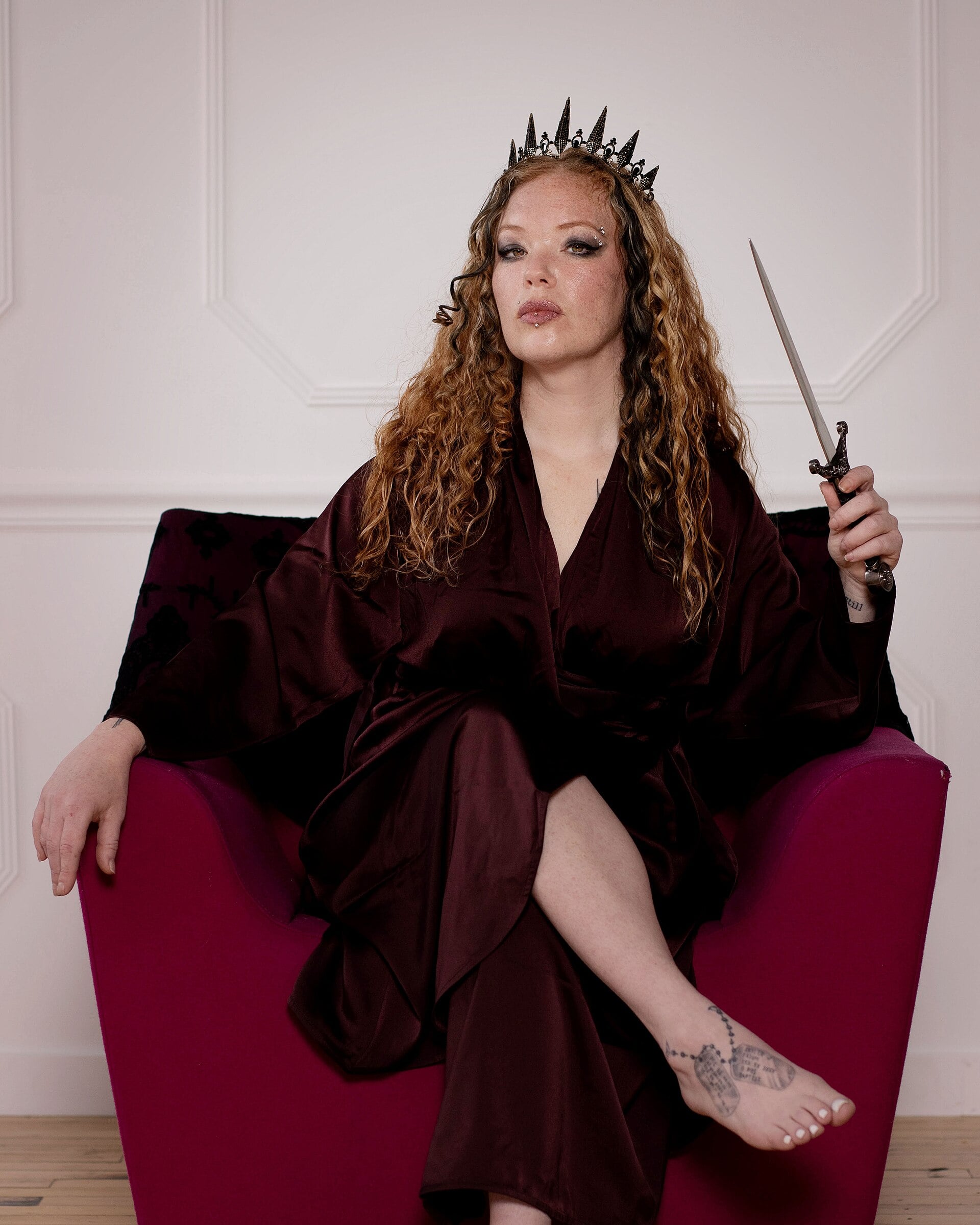
Who Is the Morrigan?
The name “Morrigan” comes from Old Irish. Most scholars translate it as “Phantom Queen” or “Great Queen.” The root word “mór” means great or phantom. “Rígan” means queen. Some scholars also read it as “Terror Queen.” All three translations fit her perfectly.
She belongs to the Tuatha Dé Danann — the ancient race who ruled Ireland before the Gaels arrived. The Irish did not worship them like Roman gods. Instead, they saw them as powerful beings who lived beneath the hills and lakes. The Tuatha Dé Danann shaped the landscape, the weather, and the fate of kings.
The Morrigan stands above most of these beings. She is older than memory. She represents something the Irish feared more than battle — the unknowable power of fate itself.
The Three Faces of the Morrigan
The Morrigan rarely appears as one being. She comes as three. The three faces shift depending on the myth, but the most common version includes these figures:
- Badb (pronounced “Bive”) is the battle crow. She flies over battlefields and brings chaos to warriors. Her name means “boiling” or “scald crow.” When the Irish heard crows calling before a battle, they thought of Badb.
- Macha is the goddess of sovereignty and horses. Armagh takes its name from her — “Ard Macha” means “Macha’s Height.” She is a fierce protector of the land. You can read her full story in our guide to the goddess Macha and the Curse of Ulster.
- Nemain (or in some traditions, Anand or Morrigu) brings panic and frenzy. She scatters the minds of soldiers. Entire armies fled at the sound of her cry.
Together, these three figures form one powerful force. The Morrigan controls the fate of warriors, the sovereignty of kings, and the outcome of battles. No single Irish goddess held more weight in the mythological cycle.
☘️ Your Irish family has a story waiting to be found.
Discover where your Irish ancestors came from — their county, their name, their story. Our free step-by-step guide walks you through every record, DNA tool, and ancestry archive. No experience needed.
Claim Your Free Irish Ancestry Guide →The Morrigan and Cú Chulainn
The most famous story of the Morrigan involves Ireland’s greatest hero, Cú Chulainn. Their relationship is part love, part war, and part fate.
She first appeared to him at a ford. She came as a beautiful young woman. She offered him her love and her help in battle. Cú Chulainn refused her. He did not know who she was. That refusal cost him dearly.
The Morrigan attacked him three times. She became an eel and wrapped around his legs as he fought in the water. He threw her aside and broke three of her ribs. She became a wolf and stampeded cattle at him. He drove her off, blinding one of her eyes. She became a white heifer and led a second stampede. He broke one of her legs.
Later, Cú Chulainn met an old woman milking a cow by the road. She offered him three drinks of milk. After each drink, he blessed her wounds. “The health of a woman who gives” he said — and each blessing healed one of her injuries. He had healed the Morrigan without knowing it. This moment showed that she was not simply his enemy. She was something larger than any single fight.
When Cú Chulainn died on the battlefield, the Morrigan perched on his shoulder as a crow. Only then did his enemies dare approach him. That crow on the shoulder of a dead warrior became one of the most enduring images in Irish myth.
☘️ Enjoying this? 64,000 Ireland lovers get stories like this every week. Subscribe free →
The Morrigan and the Sovereignty of Ireland
The Morrigan represents something deeper than war. She embodies the sovereignty of Ireland itself.
In early Irish culture, the king did not just rule the people. He was bound to the land. The land gave him power and legitimacy. Sovereignty goddesses tested every man who sought to be king.
The Morrigan often appeared as a hideous hag to test potential kings. Those who accepted her as she was — old, ugly, fearsome — became great rulers. She would then transform into a beautiful woman and grant them the sovereignty of Ireland. Those who rejected her had no right to rule.
This idea runs through dozens of Irish stories. Your ancestors understood the land as a living force. The Morrigan gave that force a voice, a face, and a fierce will.
The Hill of Tara in County Meath stood at the heart of this idea. Kings came to Tara to be crowned under the watch of the sovereignty goddesses. The Lia Fáil — the Stone of Destiny — would cry out when the rightful king touched it. Sovereignty itself cried out through the stone. The Celtic warrior tradition was built around this idea that land and power were inseparable.
The Morrigan Lives On in Irish Folklore
The Morrigan never truly disappeared from Irish life. She transformed over the centuries.
She became the banshee — the “bean sídhe” or woman of the fairy mound. The banshee wails before a death. She washes funeral clothes by the river. This is the Morrigan in a later, more local form. The act of washing the clothes of the dead is one of her oldest signatures.
Crows carried her memory in rural Ireland for centuries. Old farming families in County Sligo and County Meath watched where crows landed. A crow on the roof meant bad news was coming. Children grew up knowing this. Their parents told them the same thing their parents had told them. The belief has roots going back to the Morrigan’s role as a bird of fate — read more in our guide to the Morrigan as Ireland’s crow goddess.
In County Armagh, the connection ran deeper. Macha’s name is woven into the soil itself. Farmers in the region grew up near Navan Fort — Emain Macha — one of the great ceremonial sites of ancient Ireland. Local families in the nineteenth century still told stories of the goddess, even if they no longer used her name. The memory lived in the landscape, in the place names, in the habits of a people who had carried these stories for three thousand years.
Irish emigrants who left for Boston, New York, and Chicago in the 1840s and 1850s brought these instincts with them. They told their children to watch the crows. They kept a careful eye on the edge of visible things. The Morrigan lived on in their habits, even when the words were forgotten.
Where to Visit Morrigan Sites in Ireland
- Navan Fort (Emain Macha), County Armagh. This hilltop enclosure is Macha’s sacred site. It served as the ritual capital of Ulster for centuries. The name means “Macha’s Height.” Standing there, you stand where her stories were first told.
- The Hill of Tara, County Meath. Tara was the seat of the High Kings of Ireland. Sovereignty goddesses, including the Morrigan, were tied to this sacred hill. Several Neolithic monuments stand within the complex, including the Mound of the Hostages.
- Keshcorran Caves, County Sligo. This limestone hill with its cave system features in the mythological cycles. It connects to the Tuatha Dé Danann and the Otherworld beneath Ireland’s surface.
- The River Unius (Unshin), County Sligo. The Morrigan met the Dagda here at Samhain, before the Second Battle of Mag Tuired, and pledged him her aid against the Fomorian forces. The river flows quietly through farmland today.
Your Irish Ancestors and the Morrigan
Every Irish family carried a mythological world inside them. The Morrigan was part of that world for thousands of years.
If your family came from County Armagh, they lived near Macha’s sacred hill. They watched the crows. They knew what Navan Fort meant. If your family came from County Sligo, they grew up near the Keshcorran Caves and the stories attached to those ancient rocks. If they came from County Meath, they lived in sight of the Hill of Tara.
Finding out which county your ancestors came from opens a direct line to these stories. Each region shaped how people understood the Morrigan and the world she presided over.
Our guide to tracing your Irish roots from America walks you through the records, archives, and DNA tools that can help you find your family’s county. Civil registration records from 1864, church baptism records going back further, and Griffith’s Valuation from the 1840s and 1850s can usually place a family within a specific townland within two or three generations. Once you have that county, the stories — and the landscape they lived in — come into focus.
Frequently Asked Questions About the Morrigan
What does the Morrigan’s name mean?
Most scholars translate “Morrigan” as “Phantom Queen” or “Great Queen.” The word “mór” means great or phantom in Old Irish. “Rígan” means queen. Some traditions also read the name as “Terror Queen.” All three meanings fit her role in Irish mythology.
Is the Morrigan the same as a banshee?
Not exactly, but they share common roots. The banshee comes from the Irish “bean sídhe,” meaning “woman of the fairy mound.” The Morrigan predates the banshee by thousands of years. Both wash the clothes of those about to die. The banshee is a later, more localised form of a much older tradition that the Morrigan represents.
Who are the three aspects of the Morrigan?
The most common version includes Badb (the battle crow who brings chaos), Macha (the sovereignty goddess connected to horses and land), and Nemain (who brings panic and frenzy to warriors). Some traditions replace Nemain with Anand or use the name Morrigu for the third aspect. The three work together as a single force.
Why is the Morrigan connected to crows?
Crows are the Morrigan’s signature animals. She shapeshifts into a crow in several myths. She perched on Cú Chulainn’s shoulder as a crow when he died. Crows gathering over a battlefield were seen as her presence among the fallen. This belief carried into rural Irish life for centuries after the mythological age.
Can I visit places connected to the Morrigan in Ireland?
Yes. Navan Fort (Emain Macha) in County Armagh is directly connected to Macha, one of her three faces. The Hill of Tara in County Meath is linked to sovereignty rituals she presided over. The River Unius in County Sligo marks where the Morrigan met the Dagda before the Battle of Mag Tuired. All three sites are open to visitors.
☘️ Join 64,000+ Ireland Lovers
Every Friday, get Ireland’s hidden gems, local secrets, and travel inspiration — the kind you won’t find in any guidebook.
Subscribe free — enter your email:
Get the free guide
Enter your email and we will send you straight to the download.
📲 Know someone who’d love this? Share on WhatsApp →
Love more? Join 43,000 Scotland lovers → · Join 29,000 Italy lovers → · Join 7,000 France lovers →
Free forever · One email per week · Unsubscribe anytime
Tours & experiences you might love


Powered by Viator. Some links are affiliate links — we may earn a small commission at no extra cost to you.
Secure Your Dream Irish Experience Before It’s Gone!
Planning a trip to Ireland? Don’t let sold-out tours or packed attractions spoil your journey. Iconic experiences like visiting the Cliffs of Moher, exploring the Rock of Cashel, or enjoying a guided walk through Ireland’s ancient past often sell out quickly—especially during peak travel seasons.

Booking in advance guarantees your place and ensures you can fully immerse yourself in the rich culture and breathtaking scenery without stress or disappointment. You’ll also free up time to explore Ireland’s hidden gems and savour those authentic moments that make your trip truly special.
Make the most of your journey—start planning today and secure those must-do experiences before they’re gone!