

To trace your Irish ancestry, start with three free sites: IrishGenealogy.ie for civil records and census data, AskAboutIreland.ie for Griffith’s land survey, and the National Library of Ireland’s register site for parish records. These cover most Irish families from the 1820s on. If you know the county, you can often find your great-grandparents’ parents within a few hours.
Free Irish ancestry tool ☘️
Have an Irish surname? Find your ancestral Irish county — we’ll trace your name to where the family originated, with a short note on its history.
Seventy million people around the world claim Irish roots. Most have a surname, a family story, and a vague idea that their people came from somewhere in Ireland. Many never take the next step to find out exactly where. This guide will help you do that.
What the Records Actually Cover
Before you start, learn what records exist. Three main types cover most Irish ancestry work.
Civil records give you the most complete source from 1864 on. Ireland’s General Register Office holds birth, death, and marriage records from 1864. These records name parents, witnesses, and often give exact townland addresses.
The 1901 and 1911 Census returns let you search for free at IrishGenealogy.ie. They record every person in every house — name, age, townland, and faith. They show whole family groups in one place, which makes them a great starting point.
Griffith’s Survey (1847–1864) lists every landholder and tenant in Ireland by exact townland. Search it free at AskAboutIreland.ie. If your family lived in Ireland before the Famine, this survey will almost always name them.
Step One — Start With What You Already Know
Before you open a single database, write down everything you have. Gather papers from your own family first.
- Your Irish ancestor’s full name (and any spelling forms you have seen)
- Their rough birth year and their parents’ names
- Any place name — county, parish, or townland — from family stories or old papers
- When they arrived in America and where they first settled
- Names of brothers or sisters who may have crossed at the same time
Then check US records before you move to Irish ones. Ship passenger lists from Ellis Island often show a “last home” in Ireland. That might be a county name or a specific town. One detail like that turns a broad search into a county one.
The stevemorse.org tool gives better filters than the Ellis Island site. It lets you search by birth year, country, and port. Use it first. For arrivals before Ellis Island (1820–1892), CastleGarden.org covers that earlier period.
☘️ Your Irish family has a story waiting to be found.
Discover where your Irish ancestors came from — their county, their name, their story. Our free step-by-step guide walks you through every record, DNA tool, and ancestry archive. No experience needed.
The Core Irish Records
Civil Records (1864 Onwards)
Go to IrishGenealogy.ie first. The search is free. Birth records name both parents and give the family’s townland. A birth record from 1875 shows the father’s job and the exact address. That often puts the family on a map.
Marriage records name both sets of parents and the witnesses. Death records give age, cause, and location. These three record types let you build a family across two or three family lines from your desk.
The 1901 and 1911 Census
The census returns on IrishGenealogy.ie are scanned images of original household forms. Every person in every house in Ireland appears there. You can read the original handwriting. The 1901 census often shows family members who later left for America, giving you their ages and birthplaces. That fixes them in time.
These returns work well when you have a county but not a parish. Search the surname across the whole county, then narrow by townland — our complete guide to Irish townlands covers that final step in more depth. Irish families often lived near each other for many years. Finding one household often reveals cousins in the same townland.
Parish Records Before 1864
Civil records started in 1864. Before that, you need Catholic or Church of Ireland records. The National Library of Ireland’s register site holds Catholic parish records going back in some cases back to the 1790s. Search is free. Coverage varies by county and parish.
When I searched the records for the parish of Kilmihil in west County Clare, I found baptism entries from the 1820s that gave me four new generations. The records used Latin, but the names were clear. It took less than a morning to trace a line back to the 1810s.
Griffith’s Survey — The Anchor Record
Griffith’s Survey stands as the most useful single record for pre-Famine work. The survey ran between 1847 and 1864 across all of Ireland. It names every person who paid rates on land or buildings — which means almost every householder in the country.
Search it free at AskAboutIreland.ie. Type in your surname and select the county. You see every person with that name, their townland, and the size of their holding. Click through to see the original map. The maps still exist — you can zoom in to see the field your ancestors farmed.
This record helps most with common Irish surnames. If your name is Murphy, Sullivan, or Walsh, Griffith’s shows you which barony and parish each family lived in. That turns a county-level search into something you can manage.
For more on how Irish surnames cluster by county, see our guides to Irish surnames from County Cork, Irish surnames from County Galway, and Irish surnames from County Kerry. Knowing where your name is most dense can save hours of searching.
☘️ Enjoying this? 64,000 Ireland lovers get stories like this every week. Subscribe free →
Emigration and Passenger Records
If your ancestors left Ireland between 1820 and 1957, passenger records may give you their last Irish address.
- Castle Garden (1820–1892): Free at CastleGarden.org. Covers arrivals into New York before Ellis Island.
- Ellis Island (1892–1957): Search at stevemorse.org for sharper filters. Lists from 1906 on give the most detail.
- Cobh Heritage Centre: Holds records from the port of Queenstown (now Cobh) in County Cork, the main port for millions of Irish emigrants.
The Cobh Heritage Centre is worth a visit if your family came from Munster. The centre holds ship records and the names of emigrants who boarded them. Some records link directly to the departure townland.
Irish families often left in groups. Siblings and cousins crossed together. Searching a sibling’s name in the same passenger list can confirm you have the right family. Even a blank result helps — if a brother’s name does not appear, he may have stayed in Ireland. His descendants might still live there.
DNA Testing for Irish Ancestry
DNA testing helps when paper records run out. AncestryDNA and 23andMe both show ethnic estimates. More usefully, they show DNA matches. If a second cousin in Ireland has also tested, you appear as a match to each other. That can open doors no archive can.
Irish DNA research divides the island into regional groups. People with roots in Connacht often share different markers from those with roots in Munster or Ulster. A strong “Irish-west” result points to counties like Galway, Mayo, Clare, or Roscommon. This gives you a starting region even without a paper trail.
DNA works best alongside paper research, not instead of it. Once Griffith’s gives you a townland, DNA matches from the same area confirm you are on the right branch of the family.
Pinpointing the Right County
Irish surnames tend to cluster in specific counties. Before you search every Irish record, check our guide to what your Irish surname reveals about where your family came from. Each surname usually has a clear home county.
A Murphy from Munster and a Murphy from Ulster are different families. Both may have gone to Boston in the same decade. But knowing which branch you come from saves hours of searching in the wrong county.
Our county surname guides cover all 32 counties. Good starting points include Irish surnames from Dublin and Irish surnames from Mayo — two of the counties that sent the most emigrants to America.
Where to Research In Person
Online these sites give you a strong start. But some records only exist in person, and visiting Ireland changes the whole experience.
The National Archives of Ireland (Dublin)
The National Archives on Bishop Street holds land records, wills, army records, and estate papers. Staff can advise on which records are relevant to your county. Many items are now digital, but the original volumes live here. The reading room is free to use.
The National Library of Ireland (Dublin)
The National Library on Kildare Street holds the largest set of Catholic parish records in Ireland. Many are free at the NLI site. Staff can confirm coverage for your county and parish. If a record has no microfilm, they can point you to the diocesan archive where the original lives.
The EPIC Museum (Dublin)
The EPIC — The Irish Emigration Museum stands on Custom House Quay in Dublin. It tells the story of people leaving Ireland from the Famine to today. It is not an archive. But it gives you rich context for why families left and where they went. Many Irish-American visitors call it the most moving experience of their whole heritage trip. Go before you visit the archives — it frames everything else.
County Genealogy Centres
Most Irish counties run a local research centre. These centres hold grave records, local papers, estate files, and other local records that national databases don’t carry. The South Mayo Family Research Centre in Ballinrobe and the North Mayo Heritage Centre near Crossmolina cover Mayo families in a depth no online site can match. Book ahead before you travel.
Planning Your Heritage Visit
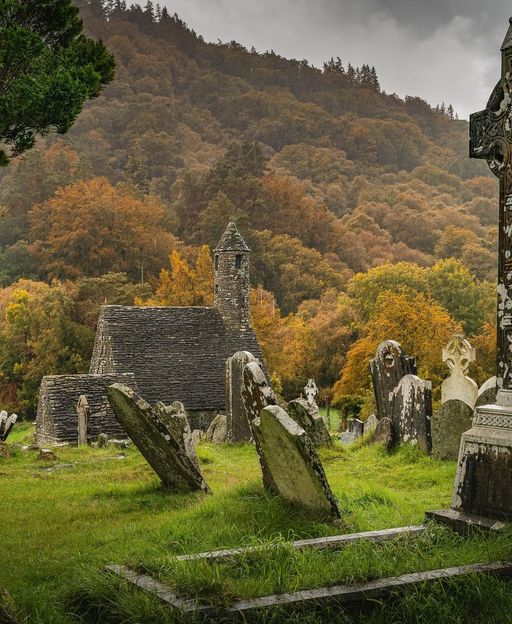
Once you have a townland or parish, visiting Ireland changes the research fully. Walking the ground your ancestors walked is different from reading a document about it. The stone walls, the hill above the valley, the graveyard with your family name on the headstones — these make ancestry feel real.
Read our guide to planning an Irish heritage trip to your ancestral county before you book. It covers hiring local guides, visiting townlands, and getting the most from a five-day trip. See also our worked example of finding Irish roots in County Clare. It shows how US research leads back to a specific parish.
Frequently Asked Questions
What is the best free resource for tracing Irish ancestry?
IrishGenealogy.ie is the best single starting point. It gives free access to civil birth, marriage, and death records from 1864, plus the 1901 and 1911 census returns. AskAboutIreland.ie adds Griffith’s Survey (1847–1864), the key pre-Famine record for finding exact townlands. Both are free with no sign-up required.
What if I only know the county, not the parish?
Use Griffith’s Survey on AskAboutIreland.ie. Search by surname and county. The results show every person with that name, grouped by area and townland. That narrows a county-level search to a specific zone. Then search IrishGenealogy.ie for the same surname in that area to find the right parish records.
What happened to Irish records in 1922?
The Public Record Office in Dublin burned during the Civil War in 1922. The fire destroyed most pre-1864 Church of Ireland records and many old wills. Catholic parish records and all civil records survived. Griffith’s Survey, the Tithe Books (1823–1837), and both census returns are intact and free to search online.
How do I find Irish ancestors who left Ireland before 1864?
Use the Tithe Applotment Books (1823–1837), free on the National Archives of Ireland’s website and FamilySearch (Ancestry.com also holds a copy, but only with a paid subscription). These predate civil records and name householders across Ireland before the Famine. Combine them with Griffith’s Survey and Catholic parish records for the same county. That builds a picture of the family in the early nineteenth century.
Should I visit Ireland to do ancestry work?
Visiting adds depth that no site can provide. County local research centres hold local records not found online. Walking the townland your ancestors came from is a fully different experience from reading the census entry. Many Irish-American visitors say the heritage trip changed how they saw their family story. Our heritage trip planning guide has the full travel plan.
☘️ Join 64,000+ Ireland Lovers
Every Friday, get Ireland’s hidden gems, local secrets, and travel inspiration — the kind you won’t find in any guidebook.
Subscribe free — enter your email:
Already subscribed? Download your free Ireland guide (PDF)
📲 Know someone who’d love this? Share on WhatsApp →
Love more? Join 43,000 Scotland lovers → · Join 29,000 Italy lovers → · Join 7,000 France lovers →
Free forever · One email per week · Unsubscribe anytime
Tours & experiences you might love


Powered by Viator. Some links are affiliate links — we may earn a small commission at no extra cost to you.
Secure Your Dream Irish Experience Before It’s Gone!
Planning a trip to Ireland? Don’t let sold-out tours or packed attractions spoil your journey. Iconic experiences like visiting the Cliffs of Moher, exploring the Rock of Cashel, or enjoying a guided walk through Ireland’s ancient past often sell out quickly—especially during peak travel seasons.

Booking in advance guarantees your place and ensures you can fully immerse yourself in the rich culture and breathtaking scenery without stress or disappointment. You’ll also free up time to explore Ireland’s hidden gems and savour those authentic moments that make your trip truly special.
Make the most of your journey—start planning today and secure those must-do experiences before they’re gone!