

If your family tree carries a name like McCarthy, O’Sullivan, Collins or Murphy, there is a good chance your roots run deep into the red sandstone soil of County Cork. The Irish surnames from Cork are among the most widespread in the entire Irish diaspora — carried across the Atlantic in famine ships, passed down through generations in Boston kitchens and New York tenements, and whispered as a kind of inheritance across the centuries. This guide explores where those names truly come from, what they mean, and how you can begin to follow them home.
Try our free Irish ancestry tools ☘️
Have an Irish surname? Find your ancestral Irish county — type your surname and we’ll trace it back to the county where it originated, with a short note on the family’s history.
Curious about your first name in Irish too? Your Irish Name translates first names to their Gaelic equivalent — with the meaning and the pronunciation.
The Story Behind Cork’s Surnames
County Cork is Ireland’s largest county, and its history is written into its surnames. Long before maps, passports or parish registers existed, a person’s surname told you who they were, where they came from, and who they owed allegiance to. To understand Cork’s surnames is to understand Cork’s turbulent, layered, extraordinary history.
Watch: Do You Qualify for an Irish Passport?
Tracing your Irish family? If one of your grandparents was born in Ireland, you may be able to become an Irish citizen. This 14-minute guide explains who qualifies, what it costs and how long it takes. Thinking of making the move? Get the free Moving to Ireland checklist.
Before you dive into researching your specific name, it is worth reading our full guide to tracing Irish ancestry — it will give you the research framework to use once you know which surnames you are looking for.
The Gaelic Foundation
The majority of Cork’s historic surnames are Gaelic Irish in origin, descending from the ancient kingdoms and septs that ruled Munster for centuries. Most follow the pattern of Ó (grandson/descendant of) or Mac (son of) followed by a personal name. Surnames such as Ó Súilleabháin (O’Sullivan), Mac Cárthaigh (McCarthy) and Ó Murchadha (Murphy) tell a story of dynasties, territorial loyalties and ancient kingship. The dominant Gaelic ruling family of Cork was the MacCarthy dynasty, who descended from the Eóganacht kings of Munster and built Blarney Castle in the fifteenth century.
The Norman Arrivals
From 1169 onwards, Anglo-Norman knights arrived in Ireland and settled across Cork. Families such as de Barri (Barry), de Roche (Roche), and FitzGerald planted their roots in Cork’s most fertile baronies. Within a few generations, they had married into Gaelic families, spoken Irish, and become, as historians put it, “more Irish than the Irish themselves.” The Barrys received the barony now named after them — Barrymore — directly from King John in 1206.
The Viking Thread
One name in Cork carries the extraordinary legacy of the Norse invaders: Cotter (Mac Coitir). The family traces to Óttar of Dublin, a Viking King of Dublin who died in 1148. The name survived the Norman conquest intact, making it one of the very few Irish surnames with a confirmed Viking origin. Today, place names including Ballymacotter in East Cork preserve that heritage.
Irish Surnames from Cork — Origins and Meanings
Below are fifteen of the most historically significant Cork surnames, with their Gaelic origins, meanings and the Cork territories they came from.
McCarthy / Mac Cárthaigh — The Kings of Desmond
The McCarthy dynasty is arguably the most powerful native Cork family in history. Descended from the ancient Eóganacht Chaisil, they were pushed from Tipperary by the O’Briens and established themselves as Kings of Desmond — the ancient kingdom covering modern Cork and Kerry. The name means Son of Carthach, from an Old Irish root likely meaning “loving.” The clan split into four great branches: MacCarthy Mór (south Kerry), MacCarthy Reagh (Carbery, southwest Cork), MacCarthy Muskerry (who built Blarney Castle) and MacCarthy Duhallow (northwest Cork). Cork had over 2,298 McCarthy households recorded in Griffith’s Valuation — more than any other county in Ireland.
O’Sullivan / Ó Súilleabháin — Lords of Beara
O’Sullivan was the single most numerous surname in County Cork in the 1901 census, with over 16,905 persons. The name means “dark-eyed one” or “hawk-eyed one,” from súil (eye). The O’Sullivans descended from the same Eóganacht stock as the McCarthys. Their most famous branch, O’Sullivan Beare, held the wild and beautiful Beara Peninsula until their total destruction following the Battle of Kinsale in 1601. Donal Cam O’Sullivan Beare led a desperate winter march northward with his surviving people — one of the most tragic episodes in Irish history. The southwest Cork coastline remains O’Sullivan country to this day.
Murphy / Ó Murchadha — Sea Warriors
Murphy is Ireland’s most common surname nationally, and Cork’s second most numerous in the 1901 census (14,533 persons). The name means “sea warrior,” from muir (sea) and cath (battle). The Cork Murphys are a distinct sept from the better-known Wexford branch, with roots in the Muskerry area along the River Lee valley. If you carry this name, your ancestors may well have farmed the Cork hillsides above Macroom or fished the tidal reaches of the Lee.
Barry / de Barri — Norman Lords of East Cork
Barry is one of Cork’s most prominent Norman surnames. The de Barri family arrived from Pembrokeshire, Wales, and by 1206 King John had confirmed William de Barry in possession of Castlelyons, Buttevant and Barrycourt in East Cork. An entire barony — Barrymore — still bears the family name. Gerald of Wales, the famous medieval chronicler, was himself a de Barri. Over centuries the family became thoroughly Gaelicised, and the Earls of Barrymore were among the most powerful lords in Munster.
Collins / Ó Coileáin — From Limerick to West Cork
The Collins sept originated in North Desmond (modern Limerick) as lords of the baronies of Connello. In the thirteenth century they were driven south by the Anglo-Norman Geraldines and settled in West Cork near Timoleague and Clonakilty. The name means “descendant of Coileán,” from coileán, meaning “whelp” or “young animal.” The most famous bearer of this Cork surname is Michael Collins (1890–1922), born at Woodfield, Sam’s Cross, near Clonakilty — the revolutionary leader who negotiated the Anglo-Irish Treaty and was killed in an ambush at Béal na Bláth, just miles from where he grew up.
O’Callaghan / Ó Ceallacháin — Lords of Duhallow
The O’Callaghans descend from Ceallachán, King of Munster from AD 935–954. They established a lordship in the barony of Duhallow along the Blackwater River between Kanturk and Mallow — a territory they held for over four centuries. Their principal strongholds were Clonmeen Castle and Dromaneen Castle. After the Cromwellian conquest, their lands were confiscated and the chieftain’s family was transplanted to Clare. The Hibernian Chronicle of 1778 records the death of “the last of the ancient family of O’Callaghan of Clonmeen.” If your O’Callaghans come from Cork, the Blackwater Valley is where their story begins.
Crowley / Ó Cruadhlaoich — The Hard Warriors
The Crowleys came from Connacht in the thirteenth century, migrating south to settle in the barony of East Carbery, north of the Bandon River. The name means “descendant of the hard hero” — from cruadh (hard/tough) and laoch (hero/warrior). They acquired their Cork territory by marrying into and then replacing the Coughlan family. West Cork’s coastline, from Bandon to Kinsale, is Crowley country.
FitzGerald / Mac Gearailt — The Earls of Desmond
The FitzGeralds were one of the great Norman dynasties of Ireland. Their Cork branch, the Earls of Desmond, commanded a vast lordship across Cork, Kerry, Limerick and Waterford from 1329 until their total destruction in the Desmond Rebellions of the 1570s–1583. Gerald FitzGerald, 3rd Earl of Desmond, became famous as a poet who wrote in the Irish language — a remarkable testament to how completely the Normans absorbed Gaelic culture. The fall of the Desmond earldom led directly to the Plantation of Munster, reshaping Cork forever.
O’Driscoll / Ó hEidirsceoil — Lords of the Sea
The O’Driscolls were among the most ancient of all Cork families, descending from the Corca Laoidhe — a tribal grouping whose ancestors were Kings of Munster before the rise of the Eóganacht in the seventh century. They held the extreme southwest tip of Cork: Baltimore, Cape Clear Island, Sherkin Island, Heir Island and the coastline from Courtmacsherry to Mizen Head. They were sea lords who taxed fishing vessels passing through their waters. Today, Baltimore and the islands of Roaring Water Bay are the heartland of O’Driscoll heritage.
Riordan / Ó Ríordáin — The Royal Bard
The Riordans carry one of the most poetic origins of any Irish surname. The name means “descendant of the royal bard” — from ríogh (royal/kingly) and bardán (little bard/poet). The sept originated in the kingdom of Eile (roughly modern Tipperary/Offaly) and migrated to Cork, where by the fifteenth century they were settled in Muskerry as followers and poets of the McCarthy lords. The Cork variant Riordan/Reardon is among the most recognisable. The placename Ballyreardon in East Cork marks their historic presence.
Cotter / Mac Coitir — Ireland’s Viking Name
Cotter stands apart from every other Cork surname. Its origin traces not to a Gaelic king or a Norman knight but to a Norse Viking: Óttar of Dublin, King of Dublin from 1142–1148. The Gaelicised form Mac Coitir became Cotter. The family was seated at Carrigtwohill near Cork City, and local place names including Ballymacotter and Farrancotter preserve their Norse legacy. Cotter is confirmed as the only surname of Viking/Hiberno-Norse origin among the historic top surnames of County Cork.
Sheehan / Ó Síocháin — The Peaceful One
Sheehan comes from síodhach, meaning “peaceful.” The name, in its diminutive form Síodhachán, gives us one of Cork’s most quietly beautiful surnames. Believed to have originated as a Dál gCais sept in County Limerick, the family migrated southward and by the fourteenth century was recorded in the Diocese of Cloyne in Cork. Today the name is most common in Cork, with strong presence also in Kerry and the Limerick borderlands.
Hurley / Ó hUirtile — Three Names, One Cork Identity
Hurley in Cork is a remarkable convergence: at least three distinct original Gaelic names — Ó hUirtile, Ó Muirthile and Ó hIarlatha — were all anglicised to Hurley over time. The most numerous Cork branch, Ó Muirthile, were based around Kilbrittain in West Cork. The third branch, Ó hIarlatha, was centred on Ballyvourney in the mountains of West Cork. Despite their separate origins, the great majority of Hurleys today are of Cork descent.
Lynch / Ó Loingsigh — The Mariner
Lynch has a dual origin: a Gaelic Cork line and a Norman Galway line. The Cork Lynches descend from the Ó Loingsigh sept — the name comes from loingseach, meaning “seaman” or “mariner.” They served the O’Sullivan Beare clan in West Cork and forfeited their lands in the seventeenth-century confiscations. Griffith’s Valuation recorded 658 Lynch households in Cork — the largest county concentration in Ireland — showing how deeply this surname embedded itself here.
O’Brien / Ó Briain — Brian Boru’s Legacy in Cork
The O’Briens descend from Brian Boru, High King of Ireland, who died at the Battle of Clontarf in 1014. Their primary heartland was Thomond in County Clare, but O’Brien families settled in significant numbers in north Cork along the Limerick border. The name may mean “high/noble” or derive from the personal name Brian. The Treaty of Glanmire in 1118 formalised the division of Munster between O’Briens and McCarthys — a moment that shaped the very identity of County Cork.
Cork, the Great Famine, and the Diaspora
Understanding where Cork’s surnames went requires understanding what happened to County Cork between 1845 and 1852. The Great Famine devastated Ireland, but Cork was among the counties most terribly affected. The county’s population fell from 854,118 to 649,903 between 1841 and 1851 — a loss of nearly a quarter of all its people in a single decade. Skibbereen, in the O’Driscoll heartland of West Cork, became so synonymous with Famine suffering that its name was recognised around the world.
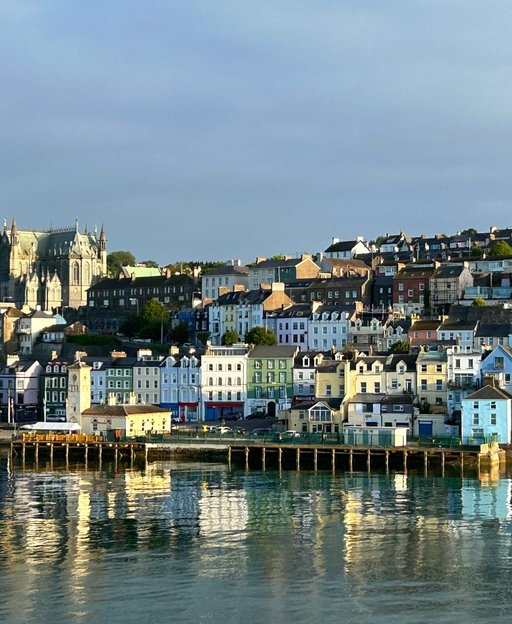
The port of Cobh — known as Queenstown until 1922 — was Ireland’s greatest emigration port. In the Famine decade alone, an estimated 250,000 people departed through Cork Harbour. From 1848 to 1950, over 2.5 million Irish emigrants sailed from Cobh — more than from any other port in Irish history. Annie Moore, a fifteen-year-old girl from County Cork, was the first person to be processed through Ellis Island when it opened on 1 January 1892.
If your family’s Irish surname appears in Boston, New York, Philadelphia or Chicago, there is a strong chance it arrived via Cobh. South Boston — “Southie” — became particularly associated with Cork and Kerry emigrants, and the McCarthys, O’Sullivans, Murphys and Collinses of Massachusetts carry that heritage still. You can explore this emotional connection further in our piece on what it means to be Irish blood pumping through your veins.
Where to Research Your Cork Ancestry Today
Knowing your surname is just the beginning. If you want to find the specific townland, parish or family your ancestors came from, these are the resources that matter most. For a full framework on how to approach this research, see our step-by-step guide to finding your Irish ancestors.
Cork City and County Archives (CCCA)
Located at the Seamus Murphy Building, 32 Great William O’Brien Street, Blackpool, Cork City (tel: 021 450 5886), the CCCA was the first local government archives service established in Ireland. It holds over 3.5 kilometres of records comprising more than 1,000 individual collections, most dating from 1600 to 1990. This includes estate records, legal documents, church records and personal archives. Online cemetery records for St. Finbarr’s Cemetery (1867–1930) are available at corkarchives.ie.
Mallow Heritage Centre
At 27/28 Bank Place, Mallow, Co. Cork (tel: +353 22 50302), the Mallow Heritage Centre holds genealogy records for 46 parishes in the Diocese of Cloyne — covering north and east Cork. Established in 1987, it holds Roman Catholic baptism and marriage records, Church of Ireland records, Griffith’s Valuation for 1851–1853, and graveyard inscriptions. This is the essential first port of call for O’Callaghan, Riordan and O’Brien research in Cork.
Skibbereen Heritage Centre
For west Cork surnames — O’Driscoll, Collins, Crowley, Hurley and O’Sullivan of the Beara Peninsula — the Skibbereen Heritage Centre holds a database of over 600,000 local records. Its Cork Graveyard Project compiled nearly 100,000 burial records in a free online database at graveyards.skibbheritage.com. The centre also houses a permanent Great Famine exhibition — a powerful and sobering experience for anyone tracing Cork roots. Abbeystrowry, nearby, is the Famine burial ground that holds up to 10,000 victims.
Online Resources
Rootsireland.ie provides both online search and referral services for Cork records through both the Mallow Heritage Centre (north/east Cork) and general county-wide searches. The National Archives of Ireland (nationalarchives.ie) holds the 1901 and 1911 censuses free online — often the best starting point for tracking a Cork family to a specific address.
Also see our guide to Irish heritage towns where you can begin tracing your ancestors — several of Cork’s most significant heritage sites are featured.
Planning Your Heritage Visit to County Cork
Research is one thing. Standing in the parish where your great-great-grandmother was baptised is something else entirely. Cork is one of the most rewarding counties in Ireland for heritage travel: it has the coast where the Famine ships departed, the castles the MacCarthys built, the fields the O’Driscolls farmed, and the graveyards where generation after generation of Cork families were laid to rest.
Key stops for a Cork heritage visit include: Cobh — for the Queenstown Story emigration museum and the harbour your ancestors may have departed from; Blarney — for Blarney Castle and the McCarthy heartland; Mallow — for archive research in the heritage centre; the Beara Peninsula — for O’Sullivan Beare history and some of the most dramatic scenery in Ireland; Skibbereen — for Famine history and west Cork genealogy; and Baltimore and Cape Clear Island — for the O’Driscoll sea lords.
Our 7-day Ireland itinerary from the USA can be adapted to focus your time on Cork — and we recommend adding at least two full days in west Cork if ancestry research is your purpose.
For broader inspiration on combining heritage exploration with travel, see our guide to popular Irish surnames and their meanings — it covers the national picture that Cork’s surnames sit within.
Frequently Asked Questions About Irish Surnames from Cork
What is the most common Irish surname in County Cork?
O’Sullivan is the most common surname historically recorded in County Cork. The 1901 census recorded over 16,905 O’Sullivans in the county — the highest concentration of any surname. Murphy is second with 14,533 persons, followed by McCarthy. These three surnames together account for a significant proportion of the Cork-descended Irish diaspora worldwide.
Where did Cork’s Gaelic surnames come from?
Most Cork Gaelic surnames descended from the septs — family groups — that formed under the ancient Eóganacht kingdoms of Munster. The most powerful dynasty was the MacCarthys, who split into four major branches across Cork and Kerry. Other septs such as the O’Sullivans, O’Driscolls and O’Callaghans each held specific territories, typically named as baronies, within the county. Surnames were generally fixed and hereditary from around the tenth century onwards.
Are there Norman surnames from County Cork?
Yes — several of Cork’s most recognisable surnames are of Norman origin. Barry (de Barri), Roche (de Roche), FitzGerald, Barrett and Condon all arrived with the Anglo-Norman invasion from 1169 onwards. Within a few generations these families became thoroughly Gaelicised, adopting Irish customs, language and culture. The de Barry family gave their name to the entire Barony of Barrymore in East Cork — a lasting tribute to their medieval dominance.
Where is the best place to research Cork genealogy in person?
For north and east Cork, the Mallow Heritage Centre (Bank Place, Mallow) is the primary resource, holding records for 46 parishes in the Diocese of Cloyne. For west Cork surnames, the Skibbereen Heritage Centre holds over 600,000 local records and a free online graveyard database. For broader county research, the Cork City and County Archives (Blackpool, Cork City) holds over 3.5 kilometres of records from 1600 to 1990. All three welcome visitors by appointment.
Which Cork surnames are most common in the United States?
The Cork surnames most frequently encountered in the Irish-American diaspora are Murphy, Sullivan/O’Sullivan, McCarthy, Collins, and Barry — reflecting both the size of these septs and the scale of emigration from Cork during and after the Great Famine. Boston, in particular South Boston, became heavily associated with Cork and Kerry emigrants. New York, Philadelphia and Baltimore also received large numbers. Annie Moore from County Cork was famously the first immigrant processed through Ellis Island in 1892.
Is the Cotter surname really of Viking origin?
Yes — Cotter (Mac Coitir) is confirmed by genealogical research as the only major Cork surname with a verified Viking origin. The family traces to Óttar of Dublin, King of Dublin who died in 1148. The Norse personal name Óttarr was Gaelicised to Oitir and then Mac Coitir. The family settled at Carrigtwohill in East Cork, and local place names including Ballymacotter still preserve their Norse heritage nearly nine centuries later.
Your Ancestors Left Ireland. Now It’s Time to Go Back.
The surnames carried by Irish-Americans are not just names. They are the residue of kingdoms and septs, of Famine crossings and Ellis Island queues, of mothers who packed what little they had into a bundle and stepped aboard a ship at Cobh, not knowing if they would ever see Cork again.
Each name in this guide connects to a specific place — a barony, a coastline, a castle, a graveyard in west Cork where the headstones still carry your name. That place still exists. The fields are still there. The sea still breaks against the same rocks at Mizen Head and on the Beara Peninsula. The Celtic crosses still stand in the old churchyards.
Whether you carry a McCarthy name from Blarney, an O’Sullivan from the Beara Peninsula, a Collins from Clonakilty, or a Driscoll from Baltimore — County Cork is waiting for you. Join thousands of Irish-Americans who are rediscovering their Cork roots — subscribe to our heritage newsletter and receive our free guide to planning your Irish ancestry journey, delivered straight to your inbox.
☘️ You Might Also Love
64,000 Ireland lovers can’t be wrong.
Every week, our free newsletter delivers hidden gems, seasonal guides, local stories, and practical travel tips — straight to your inbox. Join the community that loves Ireland as much as you do.
Or subscribe free — enter your email below:
☘️ Want More Hidden Ireland?
Join 64,000+ subscribers who discover Ireland’s best-kept secrets every week.
Subscribe Free — Join the Community →
Free forever · Unsubscribe anytime · No spam
📥 Free Download: Ireland Travel Planning Guide
Our most popular resource — itineraries, insider tips, and the 50 places you must not miss.
Tours & experiences you might love


Powered by Viator. Some links are affiliate links — we may earn a small commission at no extra cost to you.
Secure Your Dream Irish Experience Before It’s Gone!
Planning a trip to Ireland? Don’t let sold-out tours or packed attractions spoil your journey. Iconic experiences like visiting the Cliffs of Moher, exploring the Rock of Cashel, or enjoying a guided walk through Ireland’s ancient past often sell out quickly—especially during peak travel seasons.

Booking in advance guarantees your place and ensures you can fully immerse yourself in the rich culture and breathtaking scenery without stress or disappointment. You’ll also free up time to explore Ireland’s hidden gems and savour those authentic moments that make your trip truly special.
Make the most of your journey—start planning today and secure those must-do experiences before they’re gone!