

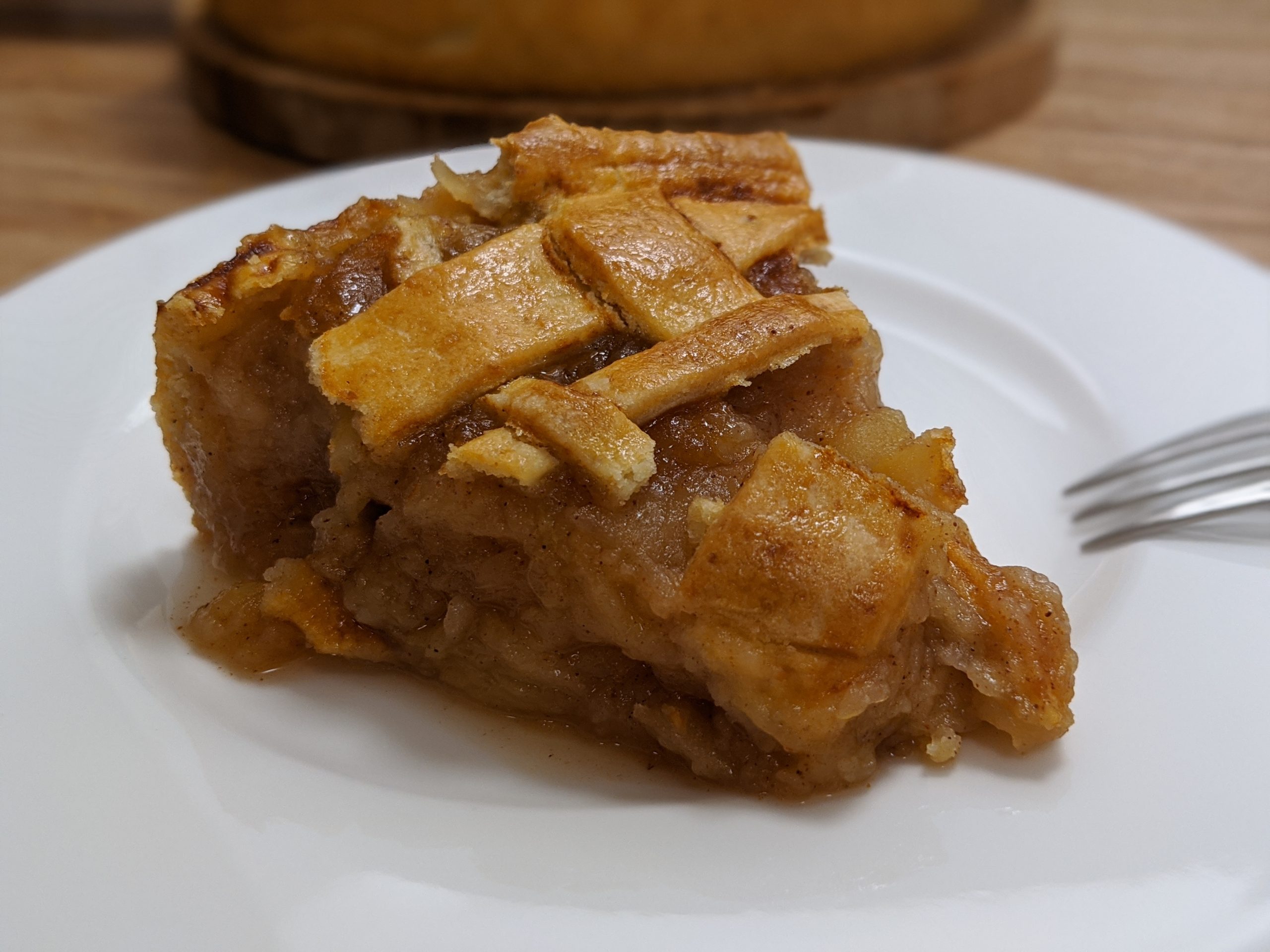
Traditional Irish Apple Tart Recipe: A Bramley Classic From the Irish Kitchen
Few things speak to the Irish kitchen more honestly than an apple tart. Not a pie exactly — the Irish tart is a thing of its own, a generous round of buttery shortcrust pastry encasing a tumbling, fragrant filling of sharp Bramley apples, dusted with sugar and scented with clove. It has been cooling on Irish windowsills and kitchen tables for generations, cut in thick wedges and served with a jug of cream or a spoonful of custard, the pastry shattering gently at the touch of a fork.
The Bramley apple is the heart of this recipe. Grown widely in Ireland and long cherished in the island’s orchards, the Bramley is a cooking apple that collapses into a soft, intensely flavoured filling when baked — tart, sweet, and faintly floral all at once. Irish apple tart was never a formal, patisserie affair. It was farmhouse cooking: practical, deeply satisfying, and made with whatever fruit the orchard gave. The recipe passed between mothers and grandmothers not written down but learned by eye and touch, the pastry rubbed until it looked like rough breadcrumbs, the apples sliced thickly and piled high without ceremony.
In many Irish homes, this tart would appear on a Sunday afternoon or after the dinner plates were cleared on a feast day. It remains one of the most beloved of all Irish bakes — humble in origin, extraordinary in flavour, and still best eaten slightly warm with a proper pour of cream. If you fancy a lighter, sponge-style bake instead of pastry, our Kerry Apple Cake is another good way to put Bramleys to use.
Ingredients
- For the shortcrust pastry:
- 350g (12oz) plain flour, plus extra for dusting
- Pinch of salt
- 85g (3oz) cold butter, cut into small cubes
- 85g (3oz) cold lard or vegetable shortening, cut into small cubes
- 2–3 tablespoons cold water
- For the filling:
- 900g (2lb) Bramley apples (approximately 3 large apples), peeled, cored, and thickly sliced
- 100g (3½oz) caster sugar, plus extra for sprinkling
- ¼ teaspoon ground cloves (or ½ teaspoon ground cinnamon, or a mix of both)
- 1 tablespoon cold water
- A little milk, for brushing
Method
- Begin with the pastry. Sift the flour and salt into a large mixing bowl. Add the cold butter and lard and rub the fat into the flour using your fingertips, lifting the mixture as you go to keep it cool and airy. Work until the mixture resembles coarse breadcrumbs with a few slightly larger pieces remaining — do not overwork it.
- Add the cold water one tablespoon at a time, stirring with a rounded knife after each addition, until the dough just begins to come together. It should not be wet or sticky. Press it gently into a flat disc, wrap in cling film, and rest in the refrigerator for at least 30 minutes.
- Preheat your oven to 200°C (180°C fan) / 400°F / Gas Mark 6. Lightly grease a 23cm (9-inch) round pie plate or enamel tart plate.
- Divide the chilled pastry into two portions, one slightly larger than the other. On a lightly floured surface, roll the larger portion out to a circle approximately 3mm thick and large enough to line the base and sides of the plate with a little overhang. Lay it carefully into the plate, pressing it gently into the edges. Do not stretch the pastry.
- Mix the sliced Bramley apples with the caster sugar, ground cloves, and tablespoon of cold water. Pile the apple mixture into the pastry-lined plate, mounding it slightly in the centre — Bramleys will collapse during baking, so a generous pile is correct and expected.
- Roll out the second portion of pastry to a circle large enough to cover the filling. Brush the edge of the pastry base with a little milk, lay the pastry lid over the top, and press the edges together firmly. Trim away any excess and crimp the edges between your fingers or with a fork to seal well.
- Brush the top of the tart with milk and sprinkle lightly with caster sugar. Cut two or three small slits in the lid to allow steam to escape during baking.
- Bake in the centre of the preheated oven for 35–40 minutes, until the pastry is a deep, golden biscuit colour and the apple filling is tender when tested through a steam vent with a skewer. If the pastry is browning too quickly, lay a piece of foil loosely over the top for the final 10 minutes.
- Allow the tart to cool on the plate for at least 15 minutes before cutting. Serve warm, in generous wedges, with lightly whipped cream, pouring cream, or good vanilla custard.
Tips
- Keep everything cold. Warm hands and warm fat are the enemy of a short, crumbly pastry. Work quickly and return the dough to the fridge if it begins to feel soft.
- Bramleys are essential here — their sharp flavour and collapsing texture cannot be replicated with eating apples, which will stay firm and lack that characteristic sweet-tart depth.
- An enamel pie plate is the traditional choice and conducts heat beautifully, giving the base pastry a lovely crunch. A ceramic or glass plate also works well.
- Taste your apples before adding sugar — very sharp fruit may benefit from an extra tablespoon, while mellow late-season Bramleys may need a touch less.
- The tart is at its very best eaten the day it is made, while the pastry retains its crispness.
- For another classic take on the double-crust bake, see our Traditional Irish Apple Tart: The Classic Comfort Bake.
There is something genuinely comforting about an Irish apple tart — the way it fills the kitchen with the scent of warm fruit and buttery pastry, the satisfying heft of it on the plate, the way a jug of cream finds its way to the table almost automatically alongside it. It is a recipe that asks very little of you and gives back enormously, one of those straightforward, time-tested bakes that reminds you why traditional cooking endures so warmly in the Irish kitchen.
☘️ Join 64,000+ Ireland Lovers
Every Friday, get Ireland’s hidden gems, local secrets, and travel inspiration — the kind you won’t find in any guidebook.
Already subscribed? Download your free Ireland guide (PDF)
Free forever · One email per week · Unsubscribe anytime
Tours & experiences you might love


Powered by Viator. Some links are affiliate links — we may earn a small commission at no extra cost to you.
Secure Your Dream Irish Experience Before It’s Gone!
Planning a trip to Ireland? Don’t let sold-out tours or packed attractions spoil your journey. Iconic experiences like visiting the Cliffs of Moher, exploring the Rock of Cashel, or enjoying a guided walk through Ireland’s ancient past often sell out quickly—especially during peak travel seasons.

Booking in advance guarantees your place and ensures you can fully immerse yourself in the rich culture and breathtaking scenery without stress or disappointment. You’ll also free up time to explore Ireland’s hidden gems and savour those authentic moments that make your trip truly special.
Make the most of your journey—start planning today and secure those must-do experiences before they’re gone!