

A queen ran a race against the king’s horses, and won. Then she cursed an entire army. That queen was Macha, and the hill that carries her name still stands in County Armagh.
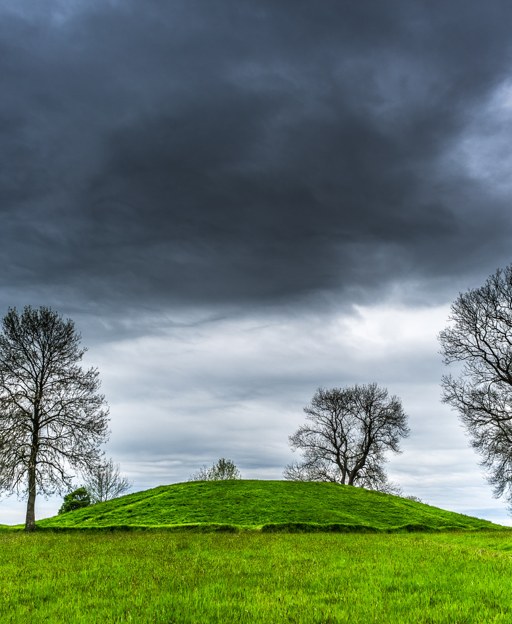
Macha is one of the strangest figures in Irish legend. The old stories give her three different lives. Each one is tied to Emain Macha, the great royal seat of Ulster. You can walk its grassy mound today at Navan Fort, a few miles west of Armagh city.
Who Was Macha in Irish Mythology?
Macha was a goddess or heroine of early Ireland. Medieval Irish writers recorded not one Macha but three. Some scholars think they were three faces of the same sovereignty goddess. Others see three separate stories joined together over time.
- Macha, wife of Nemed. She belonged to the second wave of settlers in the six mythological invasions. She died soon after reaching Ireland, and a hill was named after her.
- Macha Mong Ruad. Her name means “Macha of the Red Hair”. She was a warrior queen who ruled Ulster and, the tale says, founded Emain Macha.
- Macha, wife of Crunnchu. She was the otherworldly woman who raced the king’s horses. Her curse is the best known of the three.
If you read the stories in order, Macha moves from settler to queen to goddess. That is the pattern of Irish tradition. Land, power and women’s names were bound together.
Macha Mong Ruad: The Red-Haired Queen
The queen story starts with a deal. Three rulers agreed to share the high kingship of Ireland. Each would rule for seven years in turn. When Dithorba died, his daughter Macha claimed his turn.
The other two men refused. They said no woman could rule. Macha fought them in battle and won. She then ruled for her seven years.
She then went further. The old tale says she disguised herself as a leper, rubbed her face with bog-stuff, and tricked her enemies. She took the sons of Dithorba prisoner and made them build her a fort. She marked out its outline with the pin of her brooch.
That brooch gives the place its name. In Old Irish, eo means “pin” and muin means “neck”. Emain Macha is “the brooch of Macha’s neck”. The nearby city of Armagh takes its name from Ard Mhacha, “Macha’s height”.
The Race and the Curse of the Ulstermen
The most famous story is a darker one. A rich farmer named Crunnchu lived alone after his wife died. One day a woman walked into his house and began to cook and care for him. Her name was Macha. His luck grew with her.
She gave him one warning. He must never boast of her. Crunnchu broke that rule at the king’s fair. He bragged that his wife could outrun the king’s horses.
The king seized him. He said Macha must race or Crunnchu would die. She was heavily pregnant. She begged for time. The crowd refused.
So Macha ran. She beat the horses to the finish line. Then she fell and gave birth to twins, a boy and a girl. In her pain she cursed every man who had watched.
The curse struck the men of Ulster. In their hour of greatest need, they would be as weak as a woman in labour. It would last five days and four nights. It would pass down for nine generations.
The twins gave the place a second name, Emain, which can mean “twins”. Storytellers loved that detail.
For the full blow-by-blow of the boast, the race and the curse, read our complete telling of how Macha humiliated a king and cursed Ulster’s warriors.
☘️ Enjoying this? 64,000 Ireland lovers get stories like this every week. Subscribe free →
The Curse in the Táin
This is no side story. It drives the plot of Ireland’s great epic, the Táin. When Queen Medb of Connacht invades Ulster for a prized bull, the Ulstermen lie helpless in the grip of Macha’s curse.
Only one man is free of it. That is the young hero Cú Chulainn, who was too young to fall under the curse. He holds the border alone against an army. He fights one champion after another at the fords.
The tale shows how Irish writers thought about power. A cruel act has a price. A king who humiliates a woman is brought low through his own men. It also echoes the sacred rules called the geis, which bound kings and heroes to their fate.
Macha and the Morrigan
Some medieval texts list Macha among a group of war goddesses. In several versions she stands beside the Morrigan and Badb. The three are linked with battle, fate and sovereignty.
Macha also shares a pattern with Banba, Fódla and Ériu, the goddesses who gave Ireland its names. A woman, a place and a kingship are tied together. When the right ruler holds the land, the land thrives. In these tales, the goddess is the land.
The older divine families of Ireland, the Tuatha Dé Danann, lie behind many of these figures. Scholars debate how far each goddess was once worshipped. What we can say is that early Irish writers saw them as part of their deep past.
Navan Fort: The Real Emain Macha
Here the legend meets the ground. Navan Fort sits on a hill about three kilometres west of Armagh city. It is a large earthen enclosure with a mound at its centre. It is a national monument and a major archaeological site.
Excavations in the 1960s and 1970s found layers of human activity going back thousands of years. Some of the most striking evidence comes from the Iron Age.
- A giant timber building. Tree-ring dating places its construction at around 95 BC. It was about 40 metres across, with rings of oak posts around a huge central post.
- A deliberate ending. Soon after it was built, the building was filled with stones and then burned. It was then covered over with a mound of earth.
- A surprising skull. Archaeologists found the skull of a Barbary ape, an animal from North Africa. That suggests the site had far-reaching contacts.
Nobody knows exactly why the great building was burned and buried. Many experts believe it was a ritual act at a place of great importance. The medieval writers did not know the digging results. Yet they chose this very hill as the seat of the Ulster kings.
For a deeper dive into the dig and the mystery of why the timber building was deliberately destroyed, see our full account of Emain Macha, the ancient Ulster capital burned to the ground 2,000 years ago.
Navan Fort is also linked to the Red Branch warriors of the Ulster Cycle. That is the group of heroes around King Conchobar mac Nessa. Compare it with the Hill of Tara, the hill of the high kings in County Meath. Together the two hills show how early Ireland marked places of power.
Visiting Emain Macha Today
You can walk the site and read the stories where they were set. Armagh is a good base. The city has two cathedrals, a planetarium and a fine county museum. Always check the official site for the Navan Centre before you travel. Opening times and facilities change from season to season.
Go in the quiet of the morning if you can. Stand at the top of the mound and look across the Armagh drumlins. It is easy to picture a queen on a hill, drawing her fort with a brooch pin.
The same landscape has appealed to people for thousands of years. Many Irish-American visitors say that standing on ground this old changes how they think of Irish history. This is living culture, not just a museum piece.
Frequently Asked Questions
Who was Macha in Irish mythology?
Macha was a goddess or heroine of Ulster. Medieval texts describe three Machas, including a warrior queen and a woman who raced the king’s horses.
What was the curse of Macha?
Macha cursed the men of Ulster after the king forced her to race while pregnant. In times of danger they would suffer the pains of childbirth for five days and four nights. The curse lasted nine generations.
Where is Emain Macha?
Emain Macha is now called Navan Fort. It stands about three kilometres west of Armagh city, in County Armagh, Northern Ireland.
Is Navan Fort a real archaeological site?
Yes. Digs there uncovered a large Iron Age timber structure dated by tree rings to about 95 BC. It was later filled with stones, burned and covered with a mound.
What does the name Emain Macha mean?
The old stories say it means “the brooch of Macha”. Macha marked out the fort’s boundary with the pin of her brooch.
Is the story of Macha true?
The stories are legend. They were written down by medieval Irish scribes. They show what early Irish people believed about land, kingship and fate.
Macha’s story still has a pull. A woman is wronged. She answers with a curse that outlasts her. And the hill she is said to have marked out is still there, green and quiet, beneath a big Irish sky.
☘️ Join 64,000+ Ireland Lovers
Every Friday, get Ireland’s lesser-known corners, local stories and secrets, straight to your inbox.
Subscribe free — enter your email:
Already subscribed? Download your free Ireland guide (PDF)
📲 Know someone who’d love this? Share on WhatsApp →
Free forever · One email per week · Unsubscribe anytime
Tours & experiences you might love


Powered by Viator. Some links are affiliate links — we may earn a small commission at no extra cost to you.
Secure Your Dream Irish Experience Before It’s Gone!
Planning a trip to Ireland? Don’t let sold-out tours or packed attractions spoil your journey. Iconic experiences like visiting the Cliffs of Moher, exploring the Rock of Cashel, or enjoying a guided walk through Ireland’s ancient past often sell out quickly—especially during peak travel seasons.

Booking in advance guarantees your place and ensures you can fully immerse yourself in the rich culture and breathtaking scenery without stress or disappointment. You’ll also free up time to explore Ireland’s hidden gems and savour those authentic moments that make your trip truly special.
Make the most of your journey—start planning today and secure those must-do experiences before they’re gone!