

There is a county in the north of Ireland where the mountains hide gold beneath their heather, where stone circles older than the pyramids point toward the midsummer sun, and where a whitewashed cottage on a lane outside Strabane helped shape the course of American history. County Tyrone — from the Irish Tír Eoghain, the Land of Eoghan — is the largest county in Northern Ireland, and one of the least explored.
That anonymity is part of its appeal. Tyrone has no single iconic landmark to draw the tour buses. Instead, it offers something rarer — a county that rewards the curious traveller who goes slowly, where each discovery adds depth to the one before it.
Beaghmore Stone Circles — 5,000 Years of Silence
Near Cookstown, hidden beneath a blanket bog until peat cutters uncovered them in the 1930s, lie seven low stone circles, ten stone rows, and twelve cairns dating to roughly 2900 BC. Three of the stone rows align with the midsummer sunrise, suggesting the site once functioned as a Neolithic calendar or observatory.
One circle is unlike anything else in Ireland or Britain. Called the “Dragon’s Teeth” locally, it contains over 800 small stones set upright within the ring, pointing skyward — its purpose entirely unknown. The stones at Beaghmore are low and intimate rather than monumental. You walk among them, not beneath them. The setting — open bogland below the Sperrin Mountains, with nothing but wind and sky — is quietly extraordinary. Free to visit, open year round.
OM Dark Sky Park — Where Bronze Age Meets the Cosmos
In Davagh Forest, one of only two International Dark Sky Parks in Ireland houses an observatory with a 14-inch telescope, VR headsets, and holographic installations. But the most remarkable feature is the Solar Walk — a 3.4-kilometre boardwalk connecting the observatory to Beaghmore Stone Circles, physically linking 21st-century astronomy with a 4,500-year-old monument.
On clear autumn nights, the Andromeda Galaxy is visible to the naked eye. The Northern Lights have occasionally been spotted here. The juxtaposition of Bronze Age star-watchers and modern telescopes, separated by a walking trail through the Sperrins, is one of the most compelling visitor experiences in Northern Ireland.
The O’Neill Dynasty — Gaelic Ireland’s Last Stand
Tyrone was the heartland of the O’Neill clan, the most powerful Gaelic family in Ulster for four centuries. From their seat at Dungannon, Hugh O’Neill led the Nine Years’ War against Elizabeth I — and won the Battle of the Yellow Ford in 1598, the most decisive Irish defeat of an English army in history.
☘️ Enjoying this? 64,000+ Ireland lovers get stories like this every week. Subscribe free →
Love Ireland? Join 64,000+ readers
Every week, the best of Ireland — hidden places, untold stories, real culture, and stunning photography. No spam. No clickbait. Just Ireland, done right.
When O’Neill departed for Spain in 1607 in the Flight of the Earls, it ended Gaelic Ireland and opened the way for the Plantation of Ulster — arguably the most consequential event in Irish history. Today, the Hill of The O’Neill in Dungannon preserves this story through an exhibition in Victorian-era Ranfurly House, with panoramic views over seven of Ulster’s nine counties.
Ulster American Folk Park — Three Centuries of Emigration
Outside Omagh, over thirty exhibit buildings span an Old World Ulster streetscape — thatched cottages, a printing press, a working National School — and a New World American frontier village, connected by a full-scale emigrant ship you can board and walk the decks of. Costumed guides demonstrate spinning, bread-making, and period crafts.
Several buildings are original structures, including an 18th-century stone farmhouse from Lancaster County, Pennsylvania, dismantled and rebuilt here. The park was developed around the Mellon Homestead, birthplace of Judge Thomas Mellon, founder of the Mellon banking dynasty.
The Presidential Connection
A whitewashed thatched cottage at Dergalt, outside Strabane, is where James Wilson grew up before emigrating to Philadelphia in 1807 — grandfather of Woodrow Wilson, 28th US President and Nobel Peace Prize laureate. The original furniture is intact: a curtained bed, a sleeping nook cut into the kitchen wall beside the fire. Members of the Wilson family still live in the farmhouse next door.
James Wilson learned his printing trade at Gray’s Printing Works in Strabane — the same establishment where John Dunlap, printer of the first copies of the American Declaration of Independence, also trained. Two men, one printing shop, and the Declaration of Independence and the White House both trace a thread back to this small town on the Mourne River.
The Sperrin Mountains — Gold Beneath Your Feet
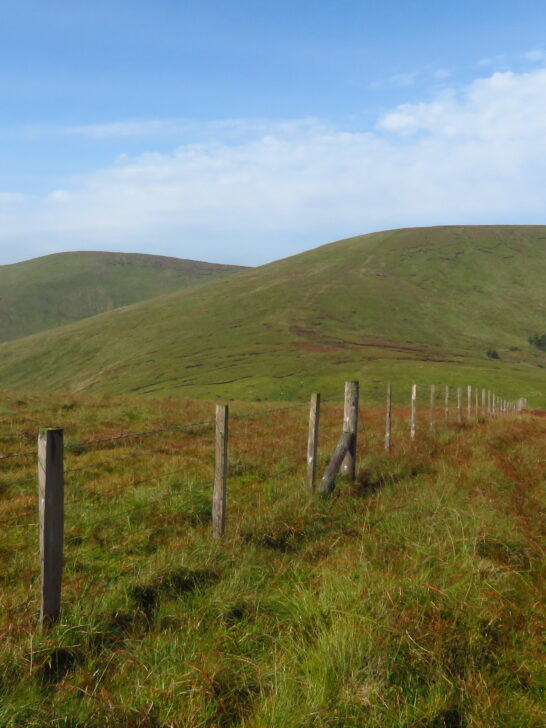
The Sperrins are the largest and least-explored mountain range in Northern Ireland — over forty miles of heather moorland, river valleys, and ancient green roads. The highest point, Sawel Mountain, reaches 2,224 feet. The entire range is an Area of Outstanding Natural Beauty.
What makes the Sperrins unique beyond their scenery: the mountains sit atop one of Europe’s most significant gold deposits, running through Precambrian schist rock over 600 million years old. Gold particles were first noted in the Moyola River in 1652. When mining company Dalradian sought to develop an underground mine at Curraghinalt, the community objected in force — nearly 37,000 objection letters were filed, one of the largest planning objections in Irish history — and in October 2024 the courts quashed a set of prospecting licences on judicial review. The wider battle isn’t over: a public inquiry into the full mine proposal reconvened in 2026 and is still under way, so whether the gold stays in the hills remains an open question.
Gortin Glen and Lough Neagh
Six miles north of Omagh, nearly 400 hectares of conifer woodland stretch up the slopes of Mullaghcarn Mountain. Gortin Glen Forest Park is home to a herd of Japanese Sika deer, thirteen kilometres of mountain bike trails, and connections to the Ulster Way. The forest sits on the western gateway to the Sperrins, and the walk from open bogland to dense conifer to summit views over seven counties is genuinely satisfying.
On Tyrone’s eastern edge, Lough Neagh — the largest freshwater lake in the UK and Ireland, an inland sea of 151 square miles — stretches along the county’s shoreline. Legend says Finn MacCool scooped up the earth to fling at a Scottish rival, creating both Lough Neagh and the Isle of Man. The lake is famous for its eel fishery, one of the largest in Europe, supplying smoked eel to markets across the continent for centuries.
A County That Rewards Patience
Tyrone weaves together three threads that, taken separately, would each justify a visit: deep time (Neolithic stone circles, Bronze Age gold, 600-million-year-old mountains), Gaelic power and loss (the O’Neills, the Flight of the Earls, the Plantation), and the Irish diaspora (the Folk Park, the Wilson home, a Strabane printing shop and the Declaration of Independence). It is not a county of single iconic landmarks but of layered discovery — and that is precisely what makes it worth the journey.
Never Miss a Story from Ireland
Every week, over 64,000 readers open their inbox to find the best of Ireland — hidden places, untold stories, real culture, and stunning photography. No spam. No clickbait. Just Ireland, done right.
☘️ You Might Also Love
☘️ Want More Hidden Ireland?
Join 64,000+ subscribers who discover Ireland’s best-kept secrets every week.
Subscribe Free — Join the Community →
Free forever · Unsubscribe anytime · No spam
📥 Free Download: Ireland Travel Planning Guide
Our most popular resource — itineraries, insider tips, and the 50 places you must not miss.
Tours & experiences you might love


Powered by Viator. Some links are affiliate links — we may earn a small commission at no extra cost to you.
Secure Your Dream Irish Experience Before It’s Gone!
Planning a trip to Ireland? Don’t let sold-out tours or packed attractions spoil your journey. Iconic experiences like visiting the Cliffs of Moher, exploring the Rock of Cashel, or enjoying a guided walk through Ireland’s ancient past often sell out quickly—especially during peak travel seasons.

Booking in advance guarantees your place and ensures you can fully immerse yourself in the rich culture and breathtaking scenery without stress or disappointment. You’ll also free up time to explore Ireland’s hidden gems and savour those authentic moments that make your trip truly special.
Make the most of your journey—start planning today and secure those must-do experiences before they’re gone!