

Have you ever stood in a stone corridor of an Irish castle and felt something you couldn’t explain? A sudden drop in temperature. A shape in a doorway. The sense that you weren’t quite alone. Ireland has over 30,000 castles and ruins, and a remarkable number of them come with ghost stories attached. The question is whether those stories are folklore passed down to entertain tourists — or whether something stranger is going on.
This article looks at some of Ireland’s most famously haunted castles, the history behind the legends, and what visitors have actually reported. Make your own mind up.
Want more Irish history, heritage, and hidden stories like this? Subscribe to our free newsletter and get the best of Ireland delivered to your inbox each week.
Leap Castle, County Offaly: Ireland’s Most Haunted Building
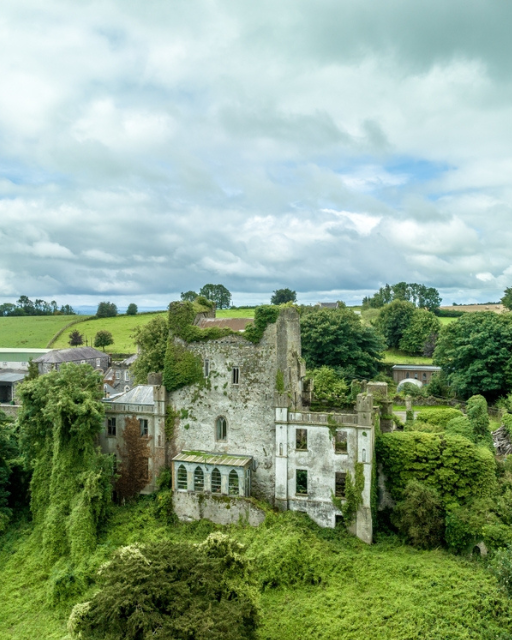
If you ask historians or paranormal researchers which Irish castle carries the darkest history, Leap Castle in County Offaly comes up time and again. Built in the late 15th century by the O’Carroll clan, it has been the site of at least one confirmed massacre and the discovery of a mass grave that shocked those who found it.
In 1922, workers renovating the castle discovered a hidden dungeon beneath one of the floors — an Oubliette, a chamber with a spiked floor designed to kill prisoners slowly. They found human remains stacked three cartloads deep. Historians estimate the bones dated back centuries, likely victims of the O’Carroll clan’s brutal reign and the territorial wars that followed.
The most reported presence at Leap Castle is an entity known locally as the Elemental. Visitors and residents over the years have described it as a hunched, foul-smelling figure, not fully human in appearance. The current owner, musician Sean Ryan, has lived in the castle since 1991 and has spoken openly about the unusual activity he has witnessed. He does not dismiss it.
Other reported phenomena at Leap include the apparition of a young woman in red on the main staircase, unexplained shadows in the upper rooms, and sudden, intense cold spots in areas with no draughts. Whether you believe in the supernatural or not, the physical evidence of mass death here is not in dispute — and that alone makes Leap one of the most sobering places to visit in Ireland. Official info: en.wikipedia.org/wiki/Leap_Castle.
Malahide Castle, County Dublin: The Butler Who Wouldn’t Leave
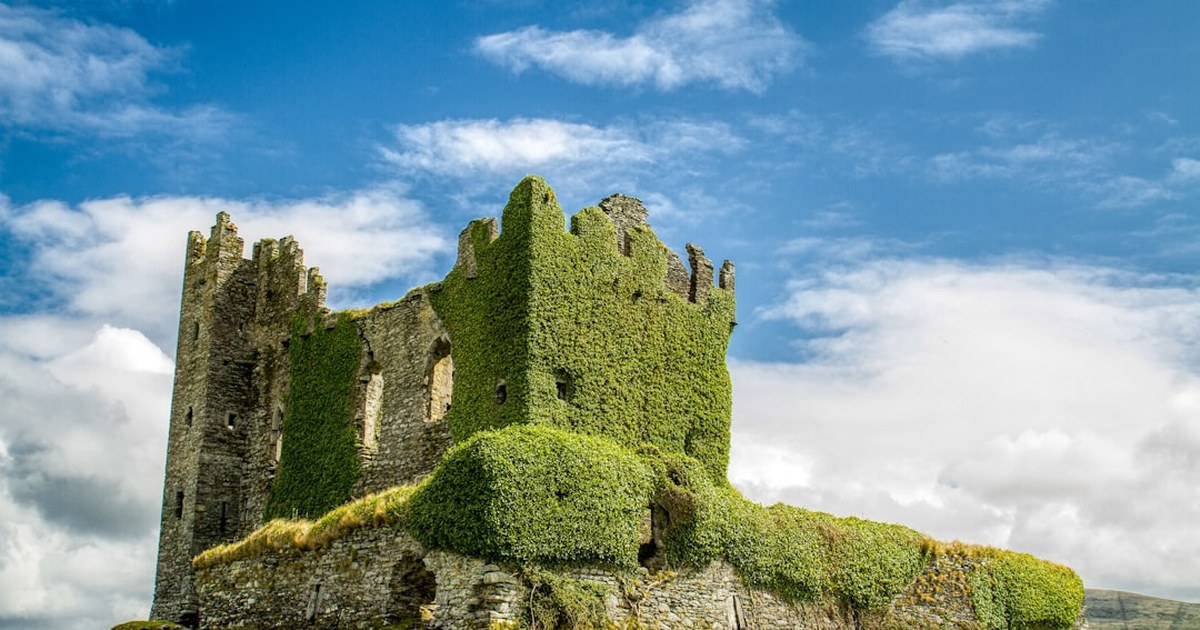
Malahide Castle sits on the north side of Dublin Bay and was home to the Talbot family for nearly 800 years — from 1185 to 1975, with only one interruption during the Cromwellian period. That kind of unbroken occupation over eight centuries tends to leave its mark.
The most frequently reported ghost at Malahide is Puck, said to be the spirit of a jester or servant who lived there in the 15th century. According to the legend, Puck fell in love with a lady of the castle, was rejected, and took his own life. Staff and visitors have reported seeing a small, crouching figure moving through the older rooms, particularly at dusk.
There are also accounts linked to the Battle of the Boyne in 1690. Fourteen members of the Talbot family reportedly sat down to breakfast on the morning of the battle, and by evening all but one of them were dead — only young Richard, the heir, is said to have returned. Some accounts describe their presence still being felt in the great hall, particularly on cold winter mornings.
Malahide is open to the public year-round and the castle grounds are free to walk. The interior tours include sections of the building where the most activity has been reported. Official info: en.wikipedia.org/wiki/Malahide_Castle.
Kilkenny Castle: Power, Betrayal, and the Butler Legacy
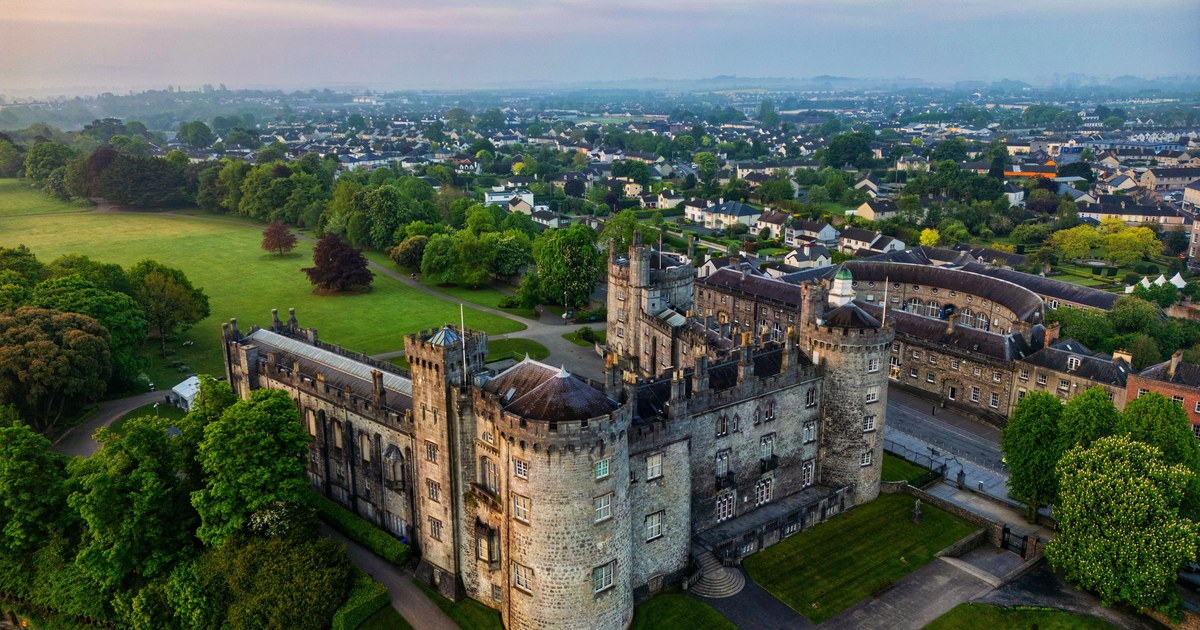
Kilkenny Castle is one of the most visited heritage sites in Ireland and one of the best-preserved Norman castles on the island. The Butler family controlled it for over 500 years, from 1391 to 1935, and their long occupation forms the backdrop to several reported hauntings.
The most documented apparition is that of a woman in a long dress seen near the picture gallery on the upper floors. Witnesses describe her appearing suddenly and then vanishing without sound. Staff who have worked long shifts in the castle during evening events have reported the feeling of being watched in rooms they know to be empty.
The castle’s history provides context. Kilkenny was a seat of Anglo-Norman power during some of the most turbulent periods of Irish history. Sieges, political executions, and family betrayals all took place within its walls. Whether or not you believe those events leave a residual energy, the history alone is worth absorbing on any visit.
Stories like this land in your inbox every week when you subscribe to our free Ireland newsletter. History, heritage, travel guides, and the Ireland most visitors never find.
Charleville Castle, County Offaly: Ireland’s Gothic Landmark
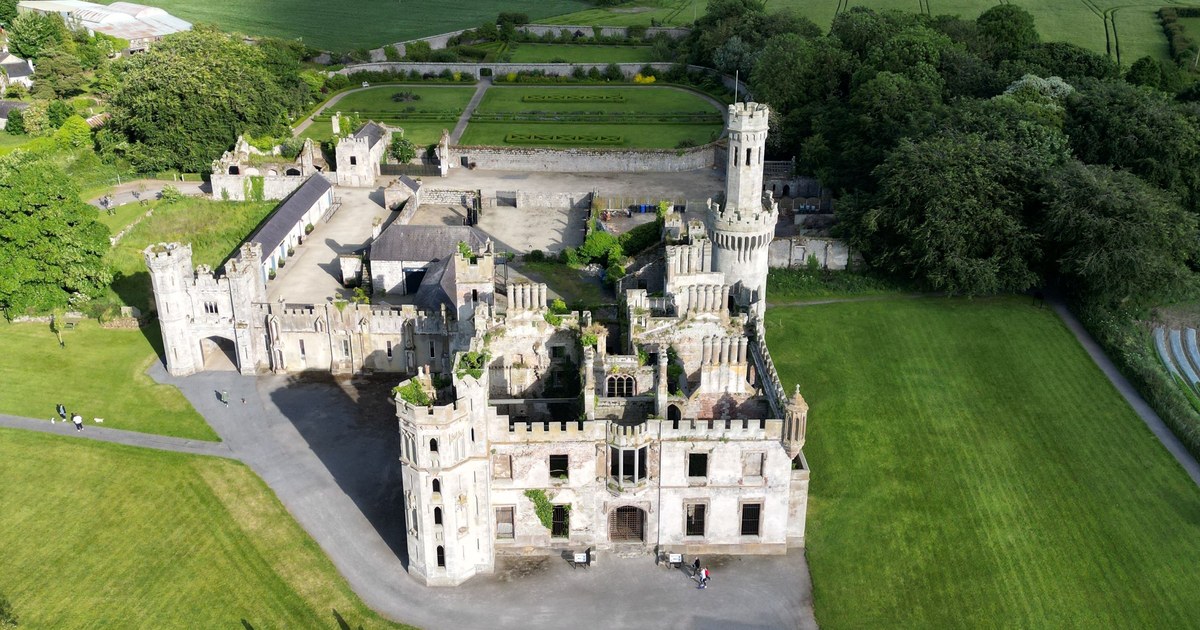
Built in 1798 by Charles William Bury, Charleville Castle near Tullamore is one of Ireland’s finest Gothic revival buildings. It was designed by Francis Johnston, the same architect responsible for the GPO in Dublin. It has also been described by many paranormal investigators as one of the most active locations in the country.
The most frequently reported ghost is that of a young girl named Harriet, who died in the castle in the early 1800s after falling from the main staircase. Visitors report hearing the sound of a child running through the upper corridors, and some have photographed what they describe as an unexplained figure on the staircase where she fell.
The castle has been used for paranormal investigation events and has featured in television programmes on the subject. It is currently being restored by a dedicated trust. Tours run during the warmer months. Overnight ghost-hunting events are occasionally organised for those who want a more direct experience — though the organisers do not guarantee results. Official info: en.wikipedia.org/wiki/Charleville_Castle.
The Dark Hedges, County Antrim: The Grey Lady of the Road
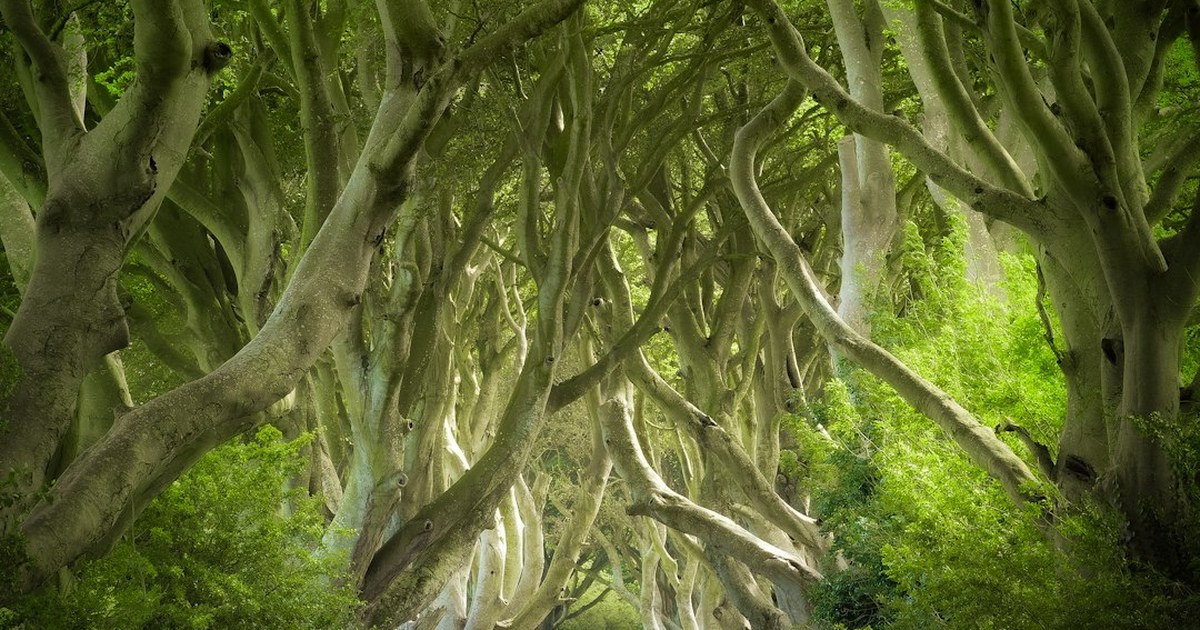
The Dark Hedges in County Antrim is one of Northern Ireland’s most photographed locations — a tunnel of ancient beech trees planted in the 18th century by the Stuart family, and the subject of its own Grey Lady ghost story. It gained international attention after appearing in Game of Thrones. But the ghost stories pre-date the television series by well over a century.
Local legend describes a figure known as the Grey Lady, said to be the spirit of a servant girl who died near the property. She is reported to glide along the road at dusk and vanish at the end of the tree line. The story has been told in the area for generations. Locals treat it as part of the landscape rather than a tourist attraction.
Some who have driven the road at twilight report seeing something in their headlights that does not match a person walking normally. Others say the atmosphere at the Dark Hedges after dark is simply unlike any other road in Ireland. Whether that is suggestion, history, or something else is not easy to determine.
Why Ireland Has So Many Ghost Stories
Ireland’s unusually high density of ghost legends is not an accident. It comes from a specific combination of history and culture. Centuries of invasion, famine, displacement, and violence left a physical mark on the landscape — ruined abbeys, overgrown graveyards, abandoned houses, and fortifications built for brutal purposes. The stories that grew up around them were a way of making sense of loss and suffering at a time when there was no other framework to explain it.
Celtic tradition also treated the boundary between the living and the dead as permeable, particularly at certain times of year. Samhain — the Celtic festival that became Halloween — originated in Ireland as a night when the veil between worlds was at its thinnest. That belief did not vanish when Christianity arrived. It simply adapted. The result is a culture that has always taken the supernatural seriously, not as entertainment, but as a genuine part of how the world works.
This does not mean every ghost story is true. But it does mean the stories carry real historical weight. When you stand in the ruin of a 15th-century tower house and feel something uncomfortable, it is worth asking whether that feeling comes entirely from your own imagination — or whether the place itself has something to do with it.
What Visitors Actually Report
Accounts from visitors to Ireland’s haunted castles share several recurring features. The most common are sudden cold spots in enclosed spaces with no obvious draught source, sounds — footsteps, rustling, doors — in rooms confirmed to be empty, and the strong feeling of being watched or followed. Less common but consistently reported are visual sightings: figures seen briefly at the edge of vision, or caught on photographs taken without any intention of capturing something unusual.
Sceptics will note that old stone buildings naturally produce cold spots due to thermal mass and ventilation, that unfamiliar environments heighten alertness and make ordinary sounds feel significant, and that the power of suggestion in a place promoted as haunted is considerable. These are fair points. They do not explain every account.
The honest position is that nobody knows. What is certain is that Ireland’s castles carry real history — documented events involving real people who lived, fought, and died within those walls. Whether any of that leaves a trace that can be experienced by those who visit centuries later is something each visitor has to decide for themselves.
Planning a Visit
If you want to visit Ireland’s haunted castles, several are accessible without much planning. Kilkenny Castle and Malahide Castle are both well-managed heritage sites with regular opening hours and good transport links. Charleville Castle requires a bit more effort to reach but runs organised tours. Leap Castle is privately owned and access is not always available — check ahead before making a journey.
The Dark Hedges is accessible year-round, but parking is limited and the site gets very busy during peak season. Early morning or evening visits give a better sense of the atmosphere. No matter where you go, talking to local people is always worthwhile. The oral tradition in Ireland is still alive — and locals often know stories that never make it into the guidebooks.
Get our weekly guide to Ireland’s history, heritage sites, and the stories behind them. Subscribe free here — no spam, just Ireland.
☘️ Join 64,000+ Ireland Lovers
Every weekday morning, get Ireland’s hidden gems, local secrets, and travel inspiration — the kind you won’t find in any guidebook.
Subscribe free — enter your email:
📲 Know someone who’d love this? Share on WhatsApp →
Free forever · Unsubscribe anytime
Tours & experiences you might love


Powered by Viator. Some links are affiliate links — we may earn a small commission at no extra cost to you.
Secure Your Dream Irish Experience Before It’s Gone!
Planning a trip to Ireland? Don’t let sold-out tours or packed attractions spoil your journey. Iconic experiences like visiting the Cliffs of Moher, exploring the Rock of Cashel, or enjoying a guided walk through Ireland’s ancient past often sell out quickly—especially during peak travel seasons.

Booking in advance guarantees your place and ensures you can fully immerse yourself in the rich culture and breathtaking scenery without stress or disappointment. You’ll also free up time to explore Ireland’s hidden gems and savour those authentic moments that make your trip truly special.
Make the most of your journey—start planning today and secure those must-do experiences before they’re gone!