

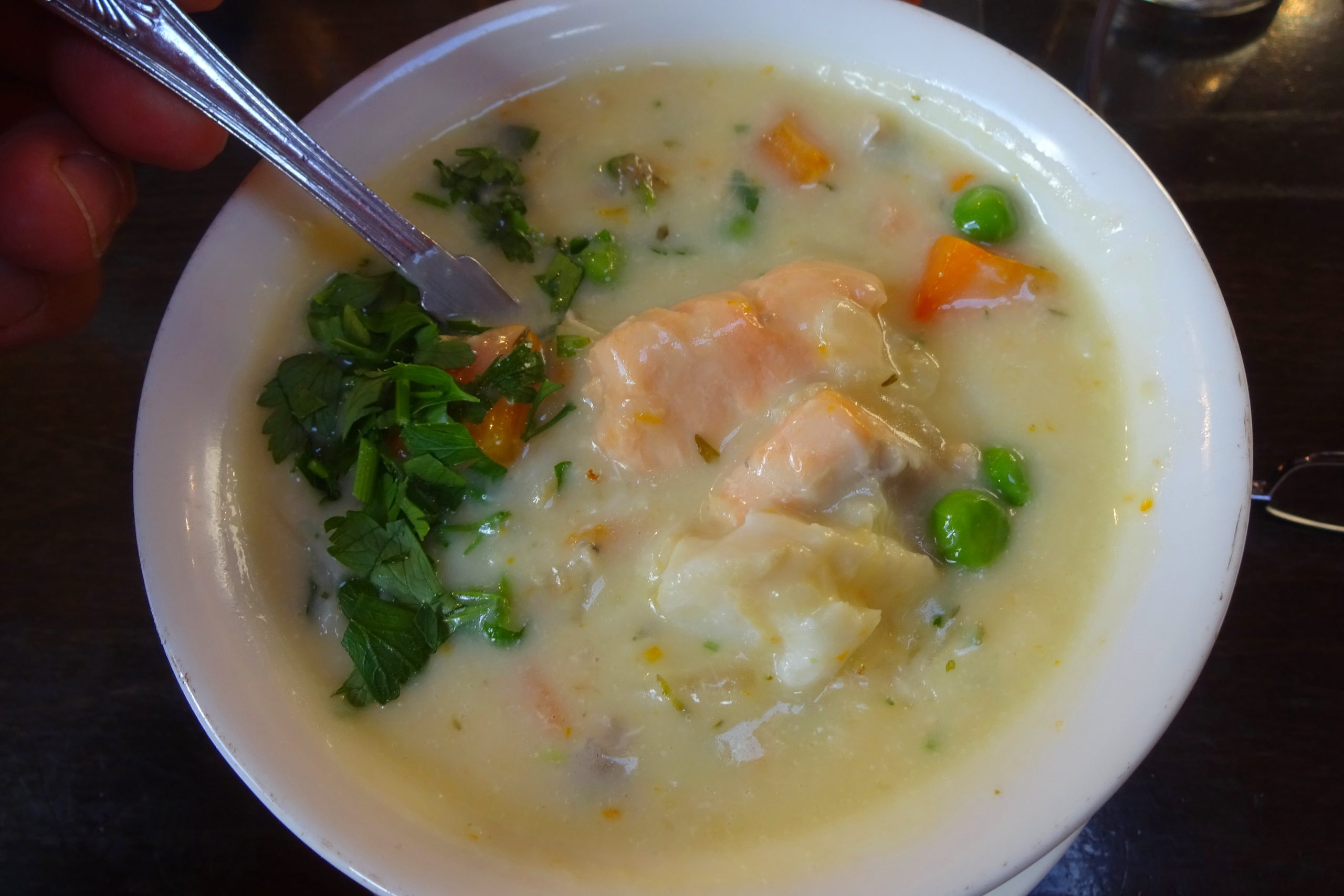
Irish Seafood Chowder Recipe: The Creamy Coastal Classic
Along the wild Atlantic coast of Ireland, from the fishing harbours of Connemara to the pier-side towns of West Cork and Donegal, seafood chowder has long been the meal that warms you from the inside out after a cold morning on the water. This is not a dish born in restaurants — it belongs to fishing communities, to harbour-front pubs and to the kitchens of families who have lived alongside the sea for generations. The word chowder is generally traced to French sources, such as chaudière (a cooking pot) or chaudrée, a fish stew from France’s Atlantic coast. It reached North America through Breton fishermen working off Newfoundland. Ireland, with its extraordinary coastline and deep-sea fishing tradition, has its own fish soups and cooks its own version of the dish.
Traditional Irish seafood chowder is built on simplicity and honesty. The base is a gentle soffritto of onion and leek cooked slowly in butter, enriched with a little flour, then loosened with fish stock and finished with cream. What sets the Irish version apart is its generous combination of ingredients: firm white fish such as cod or haddock, smoked fish — usually smoked haddock or smoked cod — and shellfish, most typically mussels and prawns. The smoked fish is not a garnish or an afterthought; it is the backbone of the flavour, lending a gentle, haunting depth that plain fresh fish alone simply cannot achieve. Potatoes, cut small, are usually added, giving the chowder its body and making it the sustaining, satisfying meal it was always meant to be.
Every coastal village in Ireland has its own version of this recipe, shaped by whatever the boats brought in that morning. Some cooks add a splash of dry white wine; others would consider that pure extravagance and stick faithfully to stock and cream. The recipe below reflects the traditional everyday version — achievable, deeply comforting, and utterly faithful to its origins. It serves four generously, and it is best eaten in large bowls with thick slices of brown soda bread to catch every last drop. For more on the coast, read where to eat fresh oysters and seafood along the Wild Atlantic Way, and try our smoked salmon and brown bread recipe as another coastal dish to serve alongside.
Ingredients
- 40g (1½ oz) unsalted butter
- 1 medium onion, finely diced
- 1 leek, white and pale green parts only, finely sliced
- 2 stalks of celery, finely diced
- 2 cloves of garlic, finely chopped
- 30g (1 oz / 3 tablespoons) plain flour
- 750ml (1¼ pints / 3 cups) good fish stock
- 200ml (7 fl oz / scant 1 cup) full-fat milk
- 200ml (7 fl oz / scant 1 cup) double cream
- 300g (10½ oz) floury potatoes, peeled and cut into 1cm (½ inch) dice
- 250g (9 oz) skinless firm white fish fillet (cod, haddock or pollock), cut into 2cm chunks
- 200g (7 oz) smoked haddock or smoked cod fillet, skinned and cut into 2cm chunks
- 200g (7 oz) cooked peeled prawns
- 200g (7 oz) cooked, shelled mussels
- Small handful of fresh flat-leaf parsley, roughly chopped
- Salt and white pepper, to taste
Method
☘️ Join 64,000+ Ireland Lovers
Every weekday morning, get Ireland’s hidden gems, local secrets, and travel inspiration — the kind you won’t find in any guidebook.
Subscribe free — enter your email:
Already subscribed? Download your free Ireland guide (PDF)
📲 Know someone who’d love this? Share on WhatsApp →
Free forever · Unsubscribe anytime
- Melt the butter in a large, heavy-based saucepan over a medium-low heat. Add the onion, leek, and celery with a small pinch of salt and cook gently for 8–10 minutes, stirring occasionally, until the vegetables are completely soft and translucent but not coloured. Add the garlic and cook for a further minute.
- Sprinkle the flour over the softened vegetables and stir well to combine, cooking for 2 minutes to remove the raw flour taste. The mixture will look quite thick and dry — this is correct.
- Gradually add the fish stock, a ladleful at a time, stirring continuously to prevent lumps. Once all the stock is incorporated and the mixture is smooth, add the milk and stir to combine.
- Add the diced potato to the pot and bring everything to a gentle simmer. Cook, uncovered, for 12–15 minutes, stirring occasionally, until the potato is just tender when pierced with a knife.
- Reduce the heat to low. Add the fresh white fish and smoked fish to the pot and stir gently. Simmer very gently for 5–6 minutes, until the fish is just cooked through and beginning to flake. Do not allow the soup to boil vigorously at this stage or the fish will toughen and break apart.
- Pour in the double cream and stir gently to combine. Add the cooked prawns and shelled mussels, and warm through for 2–3 minutes over a low heat. Taste and season carefully with salt and white pepper, bearing in mind that both the smoked fish and the stock will already carry some saltiness.
- Ladle into warm bowls, scatter generously with fresh parsley, and serve immediately with good brown bread.
Tips
For more on the coast where this dish comes from, see our guide to West Cork’s coastal walks, islands and seafood.
- Use the freshest fish you can find. For a chowder this simple, the quality of the fish is everything. Visit a proper fishmonger if you can — the difference in flavour is remarkable.
- Do not rush the base. Properly softened vegetables, cooked low and slow in butter, are the foundation of a good chowder. Hurrying this step leaves a sharp, raw taste that no amount of cream will fix.
- Keep the heat low once the fish goes in. A rolling boil will break the fish into ragged pieces and make the cream separate. A quiet, gentle simmer is all you need.
- Smoked haddock gives the best depth of flavour, but natural (undyed) smoked haddock is preferable to the bright yellow dyed variety, which can sometimes taste sharp and artificial.
- The chowder will thicken as it sits. If reheating leftovers, add a small splash of milk or stock and warm very gently over a low heat, stirring frequently.
There is something quietly extraordinary about a bowl of proper Irish seafood chowder — the way it manages to taste simultaneously of the sea and of home, of something ancient and something deeply nourishing all at once. Whether you make it on a grey Irish afternoon with rain against the kitchen window, or as a way of bringing a little Atlantic warmth to your own kitchen wherever you are in the world, this is a recipe that rewards you generously for remarkably little effort. It is honest, beautiful food, and Ireland has every right to be proud of it.
Read Next
Serve it with a slice of Irish soda bread to mop up the broth.
For a meat-and-potato supper, try Irish stew, with champ on the side.
Tours & experiences you might love


Powered by Viator. Some links are affiliate links — we may earn a small commission at no extra cost to you.
Secure Your Dream Irish Experience Before It’s Gone!
Planning a trip to Ireland? Don’t let sold-out tours or packed attractions spoil your journey. Iconic experiences like visiting the Cliffs of Moher, exploring the Rock of Cashel, or enjoying a guided walk through Ireland’s ancient past often sell out quickly—especially during peak travel seasons.

Booking in advance guarantees your place and ensures you can fully immerse yourself in the rich culture and breathtaking scenery without stress or disappointment. You’ll also free up time to explore Ireland’s hidden gems and savour those authentic moments that make your trip truly special.
Make the most of your journey—start planning today and secure those must-do experiences before they’re gone!