

Jerpoint Abbey stands in the Kilkenny countryside as one of the most complete medieval monastic ruins in Ireland. Founded in the 12th century by Cistercian monks, it survived the centuries in remarkable condition — its church walls, carved cloister, and sculpted tombs largely intact. If you are planning a trip to County Kilkenny, this is a site worth giving proper time to.
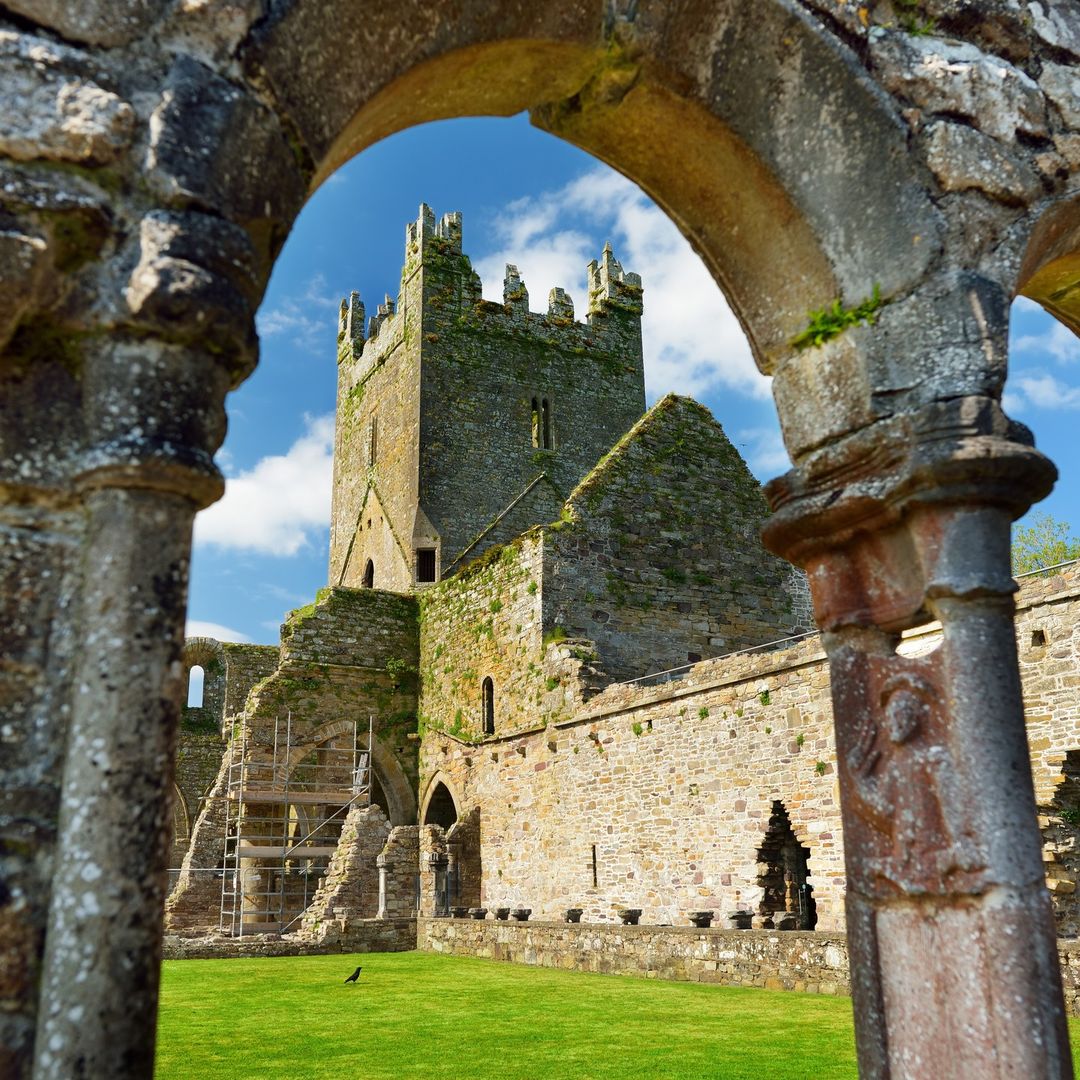
This guide covers the history, what you will actually see on the ground, how to get there, and what to pair it with for a full day out.
Want more hidden gems and practical travel guides for Ireland? Subscribe to our free newsletter — delivered straight to your inbox.
A Brief History of Jerpoint Abbey
Jerpoint Abbey was founded around 1160 by Donal Mac Gilla Mo Cholmoc, King of Ossory. It was established as a Benedictine house before being transferred to the Cistercian order in 1180 under the patronage of the Bishop of Ossory. The Cistercians were a reform movement within the Catholic Church at the time, known for their austere approach to monastic life and their preference for remote, agricultural settings — which made the Kilkenny countryside a natural fit.
The abbey grew into a significant religious and economic centre during the 13th and 14th centuries. The monks farmed extensive land, managed water mills, and maintained strong ties with the local Anglo-Norman nobility. Several prominent families, including the Butlers and the Roches, are buried within its walls.
By the 16th century, the abbey had declined significantly in numbers and influence. It was officially dissolved in 1540 during Henry VIII’s suppression of the monasteries in Ireland. The lands were granted to James Butler, Earl of Ormond. Without active maintenance, the buildings fell into ruin over the following centuries.
Today, Jerpoint Abbey is managed by the Office of Public Works (OPW) as a National Monument. It is one of the most visited heritage sites in County Kilkenny.
What You’ll See at Jerpoint Abbey
The site covers a substantial footprint and takes around 45 to 60 minutes to explore properly. The main elements are the church, the cloister, and the tower.
The Church: The church is the oldest surviving structure, with Romanesque features dating from the late 12th century. The nave is long and largely roofless, but the walls stand to full height in several sections. The transepts contain chapels with stone altar slabs still in place. Throughout the church you will find tomb effigies — carved stone figures of knights, bishops, and noble families laid to rest here over several centuries. These are among the finest examples of medieval funerary sculpture in Ireland.
The Tower: A later addition to the original structure, the square central tower dates from the 15th century and is the most recognisable feature of the site when seen from outside. It remains largely intact and gives the ruin its distinctive silhouette.
The Cloister: The cloister arcade is the highlight for most visitors and deserves its own section below.
The Cloister: Jerpoint’s Finest Feature
The cloister at Jerpoint Abbey is unique in Ireland. Dating from the 15th century, its carved stone columns are decorated with an extraordinary range of figures: knights in armour, bishops, saints, apostles, and various fantastical creatures. The quality and variety of the carving is exceptional given the age and the rural setting.
The figures were carved by craftsmen from the Callan school of sculpture, a regional tradition that flourished in Kilkenny during the late medieval period. Each column pier is different, meaning there is genuine detail to discover as you work your way around the four sides of the arcade.
Most of the original cloister stonework has been reconstructed in its approximate original position, though some damaged sections are now in the care of the National Museum of Ireland. What remains in place is still substantial and gives a strong sense of what the full cloister would have looked like when the monastery was active.
Ireland is full of places like this — ancient, quietly extraordinary, and easy to miss. Join our newsletter for a weekly guide to the Ireland worth finding.
The Visitor Centre and Guided Tours
Jerpoint Abbey has an on-site visitor centre with displays covering the history of the abbey, the Cistercian order in Ireland, and the significance of the carved stonework. It is well-presented and worth spending 15 minutes in before you walk the site — context makes the detail easier to read once you are standing in the ruins.
Guided tours are available during the main visitor season and are led by OPW staff. These are included in the admission price and run at set times throughout the day. If you arrive between tours, the audio guide available at the entrance covers the key points adequately.
Admission prices are in line with other OPW sites: around €5 for adults, with reductions for children, seniors, and families. The OPW Heritage Card (around €40 for an adult annual card) covers entry if you plan to visit multiple national monuments during your trip — at around €5 a site, it pays for itself after seven or eight sites.
How to Get to Jerpoint Abbey
Jerpoint Abbey is located approximately 2 kilometres south-west of Thomastown on the R448 road. Thomastown is a small market town on the River Nore, about 18 kilometres south of Kilkenny city.
By car: From Kilkenny city, take the R700 south toward Thomastown (signposted for New Ross). The drive takes around 20 to 25 minutes. There is a car park at the abbey entrance with space for cars and coaches.
By bus: Bus Éireann operates services between Kilkenny and Waterford that stop in Thomastown. From Thomastown, the abbey is walkable in around 25 minutes along a quiet road, or a short taxi ride. Check current Bus Éireann timetables before travelling, as services vary by day and season.
By train: Thomastown has a train station on the Waterford to Dublin Heuston line. Trains from Dublin take approximately 1 hour 45 minutes; from Waterford around 35 minutes. The walk from Thomastown station to the abbey follows a pleasant route past the town itself.
When to Visit Jerpoint Abbey
Jerpoint Abbey is open from early spring to early winter, broadly March through early December, though hours and exact opening dates are updated annually by the OPW. It is always worth checking the OPW website before you travel, particularly in early and late season when hours may be reduced.
The site is at its most pleasant on a dry day — the cloister and church are partially open to the elements, so wet weather makes the visit less comfortable. Morning visits tend to be quieter than afternoons, especially during the summer months of July and August when coach tours are more frequent.
Autumn is an excellent time to visit. The crowds thin out from September, the light is good for photography, and the surrounding countryside is at its best.
What to See Nearby
Jerpoint Abbey sits in a part of County Kilkenny that is particularly rich in medieval heritage. A day spent in this area can take in several sites without covering too much ground.
Kilkenny City: The county town is only 18 kilometres away and warrants a full half-day at minimum. Kilkenny Castle, St Canice’s Cathedral, and the medieval streetscape of the town centre are all worth your time. The Smithwick’s Experience visitor centre is there for those who want it.
Thomastown: The town itself has the remains of a 13th-century town wall and the ruins of St Mary’s Church, which contains some fine medieval stonework. It is a good place to stop for lunch before or after the abbey. The River Nore runs through town and the walk along the bank is pleasant.
Kells Priory: About 12 kilometres west of Thomastown, Kells Priory is another exceptional medieval ruin — an entire walled priory complex that is far less visited than Jerpoint and arguably just as impressive. It is free to enter and open all year. If you have a car and time, combining the two makes for a strong day of medieval heritage.
Inistioge: The village of Inistioge, about 10 kilometres east of Thomastown along the Nore Valley, is one of the prettiest villages in Kilkenny. The square, the bridge, and the riverside setting have made it a location for film shoots over the years. There are good walking trails in the Woodstock Gardens above the village.
Planning a trip to County Kilkenny or beyond? Subscribe to our newsletter for weekly guides, practical tips, and the best of Ireland straight to your inbox.
Final Thoughts
Jerpoint Abbey is not a dramatic ruin in the way that a clifftop castle might be. It is quiet, contained, and rewards careful attention. The carved cloister alone sets it apart from most medieval sites in Ireland, and the tomb effigies inside the church are genuinely moving once you take the time to look at them properly.
For anyone travelling through County Kilkenny, it is one of the most worthwhile heritage stops you can make. Give it an hour, bring a jacket, and walk the cloister slowly.
☘️ Join 64,000+ Ireland Lovers
Every weekday morning, get Ireland’s hidden gems, local secrets, and travel inspiration — the kind you won’t find in any guidebook.
Subscribe free — enter your email:
📲 Know someone who’d love this? Share on WhatsApp →
Free forever · Unsubscribe anytime
Tours & experiences you might love


Powered by Viator. Some links are affiliate links — we may earn a small commission at no extra cost to you.
Secure Your Dream Irish Experience Before It’s Gone!
Planning a trip to Ireland? Don’t let sold-out tours or packed attractions spoil your journey. Iconic experiences like visiting the Cliffs of Moher, exploring the Rock of Cashel, or enjoying a guided walk through Ireland’s ancient past often sell out quickly—especially during peak travel seasons.

Booking in advance guarantees your place and ensures you can fully immerse yourself in the rich culture and breathtaking scenery without stress or disappointment. You’ll also free up time to explore Ireland’s hidden gems and savour those authentic moments that make your trip truly special.
Make the most of your journey—start planning today and secure those must-do experiences before they’re gone!