

On a clear morning in County Clare, the Atlantic pushes against the Cliffs of Moher with a force that feels like intention. For centuries, the people who lived along Ireland’s western shores understood that the sea was not empty. It had a ruler. His name was Manannán mac Lir, and he is one of the most powerful figures in all of Irish mythology — yet most visitors to Ireland have never heard of him.
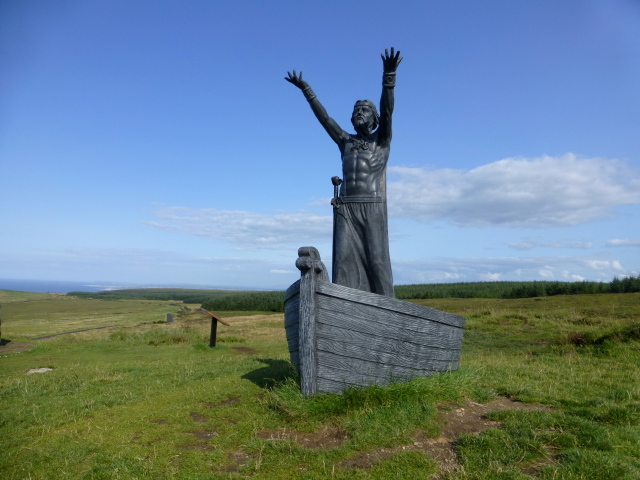
The Son of the Sea
Manannán mac Lir translates simply as “Manannán, Son of the Sea.” His father was Lir — the same ancient god whose children appear in one of Ireland’s most heartbreaking legends. But where Lir represents the sea in its raw, elemental form, Manannán was its keeper and its lord.
He ruled two realms simultaneously. In this world, he commanded the ocean that wrapped around Ireland’s coasts. In the next, he governed Tír Tairngire — the Land of Promise — an Otherworld paradise lying somewhere beyond the western waves.
Irish mythology describes it as a place without sickness, without ageing, and without grief. Entry was not a matter of courage. Only those Manannán permitted could cross to it.
The Cloak, the Horse, and the Sword
Manannán possessed magical objects that appear throughout Irish legend. His most famous possession was the Féth Fíada — his Cloak of Mists. When he drew it across the landscape, fog would roll in off the sea without warning and the Tuatha Dé Danann, Ireland’s ancient gods, would vanish from human sight entirely.
He also owned Enbarr of the Flowing Mane, a horse that could gallop across the surface of the ocean without touching the water. His boat — called Wave Sweeper, or Sguabthairnne — needed no oars or wind. It read the intention of its owner and steered itself accordingly.
His sword was Fragarach, meaning The Answerer. It could pierce any armour. These were not decorative inventions. They expressed a very old belief: that the sea was alive, watchful, and capable of loyalty to those who respected it.
How He Kept the Invisible Ireland Running
When the Tuatha Dé Danann — Ireland’s pre-Christian divine race — were defeated by the Milesian settlers and forced to withdraw from the visible world, it was Manannán who organised their disappearance. He divided Ireland’s supernatural landscape between the different clans, assigning each a síde mound as their underground dwelling.
In doing so, he created what we now think of as the fairy world. Every fairy fort that farmers plough around, every hollow mound in an Irish field that carries a warning — all of it traces back to the division Manannán arranged after that ancient defeat.
He became the great administrator of unseen Ireland. And in the story of Oisín and Tír na nÓg, it is Manannán’s Otherworld that the young warrior enters and from which he can never truly return.
☘️ Enjoying this? 64,000+ Ireland lovers get stories like this every weekday morning. Subscribe free →
The Name Still Written on the Map
What most people miss is this: Manannán mac Lir did not disappear with the old religion. His name survived, pressed into the geography of the British Isles.
The Isle of Man — the small island nation sitting almost exactly between Ireland, Britain, and Scotland in the Irish Sea — takes its name from him. In Manx Gaelic, the island is called Ellan Vannin, which preserves an older form of his name. Ancient Irish texts explicitly place his territory there, describing it as the first land a traveller from Ireland would encounter heading east across the sea.
The Isle of Man still holds its parliament, the Tynwald, on a tiered grass mound at the centre of the island every July. It is one of the oldest continuous parliamentary gatherings in the world. The mound itself — open to the sky in a way that echoes the sacred hills of Irish mythology — carries something of the ancient ritual in its structure.
What the Fishermen Remembered
Along Ireland’s western coast, Manannán’s memory persisted long after the official religion changed. Fishermen who worked the Atlantic understood that the sea answered to its own authority. On certain mornings, before launching into the swell, older men would offer words — not always directed at the saints.
The Aran Islanders paddled out in the same low-framed boats their ancestors had used for generations. The currach itself has barely changed in three millennia — a thin skin over a timber frame, responsive to the sea’s every mood. The men who worked those boats learned to read the Atlantic the way others read a face.
When mist came in off the ocean without warning — the kind of sea fog that arrives in minutes and leaves a boat invisible fifty metres from shore — the old people along the coast had a phrase for it. They said Manannán was pulling his cloak across the world.
Stand at the Cliffs of Moher on a misty morning and watch the horizon disappear, and you begin to understand why the people who lived here for thousands of years thought something powerful lived just beyond what they could see.
They were not wrong to look.
☘️ You Might Also Love
☘️ Join 64,000+ Ireland Lovers
Every Friday, get Ireland’s hidden gems, local secrets, and travel inspiration — the kind you won’t find in any guidebook.
Frequently Asked Questions
What is the historical significance of Forgotten Irish Sea God Whose Name Is Still Carved Into the Map?
This is one of Ireland’s fascinating historical and cultural stories — a reminder of the depth of Irish heritage that extends far beyond the better-known landmarks. These hidden histories are what make exploring Ireland so rewarding for curious visitors.
Where in Ireland can you learn more about this history?
Ireland’s network of local museums, heritage centres, and county archives hold remarkable collections of local history. The National Museum of Ireland (museum.ie) and the National Library of Ireland also maintain extensive records of Irish cultural heritage.
Is this part of Irish culture still visible today?
Many aspects of Ireland’s ancient and folk culture are still visible if you know where to look. Local guides, heritage walks, and community festivals often reveal these hidden layers of Irish life that most tourists never see.
How does this story connect to modern Irish identity?
Irish people have a strong sense of connection to their heritage, and stories like this one are part of the cultural fabric that shapes modern Irish identity. The Irish language, traditional music, and folk customs all carry echoes of this long history.
Free forever · Unsubscribe anytime
Tours & experiences you might love


Powered by Viator. Some links are affiliate links — we may earn a small commission at no extra cost to you.
Secure Your Dream Irish Experience Before It’s Gone!
Planning a trip to Ireland? Don’t let sold-out tours or packed attractions spoil your journey. Iconic experiences like visiting the Cliffs of Moher, exploring the Rock of Cashel, or enjoying a guided walk through Ireland’s ancient past often sell out quickly—especially during peak travel seasons.

Booking in advance guarantees your place and ensures you can fully immerse yourself in the rich culture and breathtaking scenery without stress or disappointment. You’ll also free up time to explore Ireland’s hidden gems and savour those authentic moments that make your trip truly special.
Make the most of your journey—start planning today and secure those must-do experiences before they’re gone!