

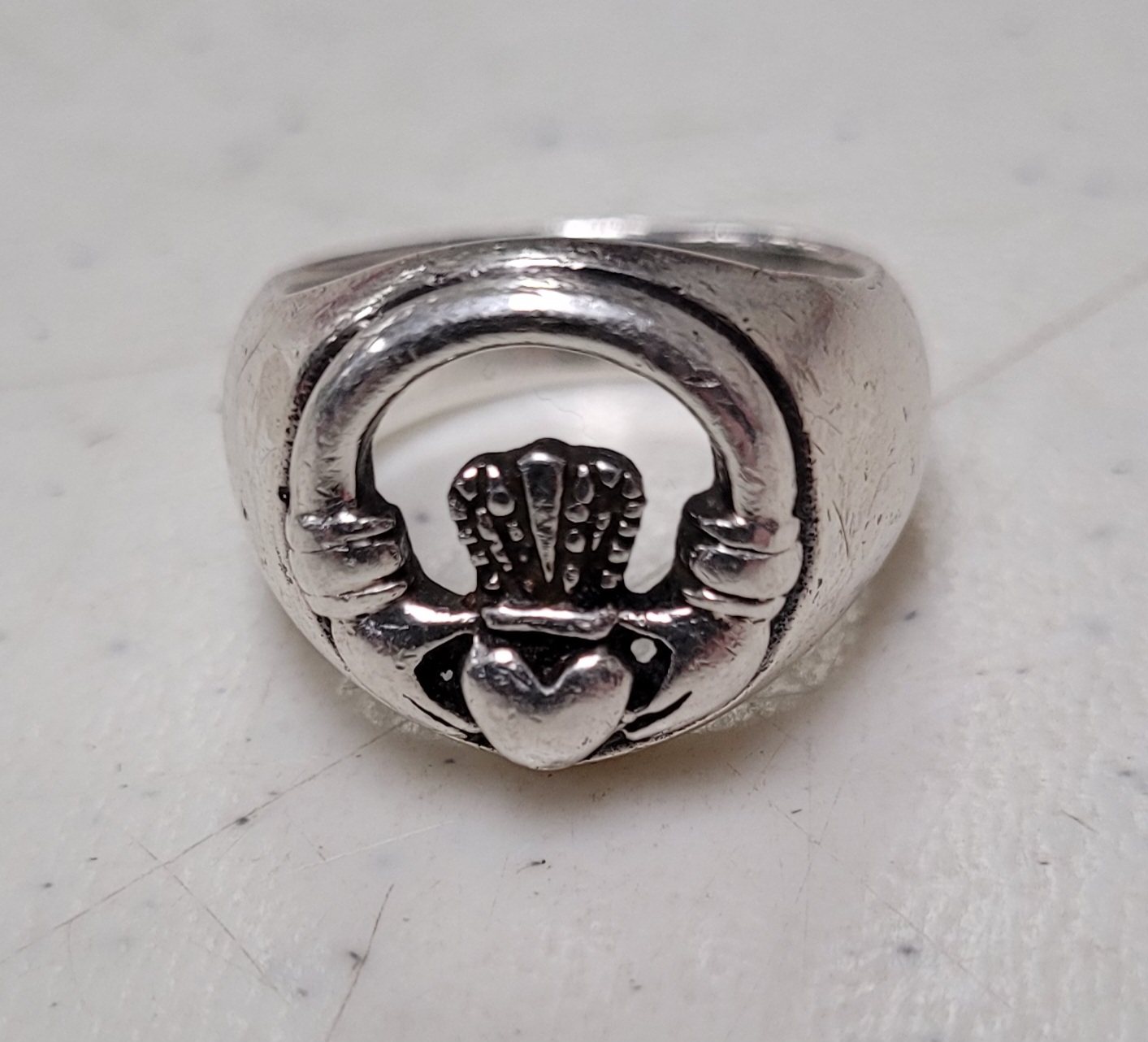
Everyone knows the Claddagh ring. The heart held in two hands, crowned with loyalty — it sits on fingers in Boston, Sydney, and Buenos Aires. It is one of the most recognised Irish symbols in the world. But almost nobody knows the extraordinary community it came from.
The Village Outside the Walls
The Claddagh — from the Irish An Cladach, meaning “the stony shore” — sat just beyond the old city walls of Galway for centuries. It was not part of Galway. It was something entirely separate: an ancient fishing community with its own laws, its own leadership, and a fierce, quiet pride in who they were.
At its height, around 500 thatched cottages crowded the waterfront. Fishing boats filled the small harbour. The smell of salt and turf smoke hung in the air. And the people of the Claddagh kept themselves apart from the city that had grown up beside them.
They spoke Irish. They fished the same waters their grandparents had fished. And for generations, they kept their world exactly as they wanted it.
A King Elected by His Own People
For hundreds of years, the Claddagh had its own elected leader — known simply as the King of the Claddagh. This was not a title passed through blood. The community chose him from among their own.
His role was entirely practical. He organised the fishing fleet, settled disputes between families, and enforced the unwritten rules that governed village life. When a conflict arose, it went to the King before it went anywhere else.
The last King of the Claddagh, Martin Conneely, died in 1954 — just two decades after the village he had governed was demolished. There was nobody left to choose a successor.
The Rule That Set Them Apart
The people of the Claddagh had one rule above all others: they did not marry outsiders.
Generation after generation, families stayed within the community. This was not hostility towards the rest of Galway — it was identity. They knew who they were and intended to stay that way.
The Claddagh ring began as a symbol of this. It was passed between couples within the community as a betrothal token — a promise made between Claddagh people only. The way it was worn told others everything: which finger, and which direction the heart faced, signalled whether the wearer’s heart was taken.
☘️ Enjoying this? 64,000+ Ireland lovers get stories like this every week. Subscribe free →
The Story Behind the Ring
The most famous telling follows a Claddagh man named Richard Joyce, said to have been captured by Algerian pirates in the 1680s and taken to North Africa as a slave. He was put to work for a goldsmith, learned the craft, and when he was eventually freed — following William III’s request for the release of British subjects held in captivity — he returned to Galway.
He made the ring that would carry his village’s name across the world. Historians debate the details, and the story may be partly legend. But by the 18th century, the Claddagh ring was being made and worn across Ireland — and then carried by every emigrant who needed to bring something of home on the ship with them. If you want to understand what leaving Ireland cost, the story of how Irish emigrants said their goodbyes tells you everything.
The Night the Village Was Lost
In 1934, Galway Corporation declared the Claddagh a slum. The old thatched cottages — some of them centuries old — were demolished and replaced with council housing. The tight-knit community was scattered across the city. The fishing fleet that had sustained the village for generations never recovered.
What the bulldozers could not take was the ring. And quietly, neither could they take the spirit of the place. It went out on emigrant ships, lived on in family stories, and now travels the world on the hands of people who carry Ireland wherever they go.
What You Can See Today
The Claddagh today is a quiet residential neighbourhood — modern, unremarkable from the outside. But walk along the Long Walk towards Nimmo’s Pier and look back across the water. You can still see the inlet where the fishing boats once crowded the harbour, and the Dominican church that has stood here since the 17th century.
There is a plaque on the waterfront and a small harbour that still fills with boats in summer. If you are planning a visit to Ireland, Galway is one of those cities where history still lives in the street names and the stones — and in the traditions that outlasted the places that made them.
If the Claddagh ring is part of your own family story — passed down from a grandmother, bought at a market in Galway, worn since your confirmation — it comes from here. From this waterfront. From those 500 thatched cottages, that elected king, and the community that refused, for as long as it could, to let the world change it.
The ring survived everything the 20th century threw at it. So did the story. And now you know both.
Planning a trip to the Claddagh? Our free Ireland travel planner covers Galway, the west coast, and everything in between.
☘️ You Might Also Love
Tours & experiences you might love


Powered by Viator. Some links are affiliate links — we may earn a small commission at no extra cost to you.
Secure Your Dream Irish Experience Before It’s Gone!
Planning a trip to Ireland? Don’t let sold-out tours or packed attractions spoil your journey. Iconic experiences like visiting the Cliffs of Moher, exploring the Rock of Cashel, or enjoying a guided walk through Ireland’s ancient past often sell out quickly—especially during peak travel seasons.

Booking in advance guarantees your place and ensures you can fully immerse yourself in the rich culture and breathtaking scenery without stress or disappointment. You’ll also free up time to explore Ireland’s hidden gems and savour those authentic moments that make your trip truly special.
Make the most of your journey—start planning today and secure those must-do experiences before they’re gone!