

In every part of rural Ireland, there is a family who holds the cure. They have held it for generations. They will never put a price on it. And people still come to them today.
This is not ancient history. It is living tradition.
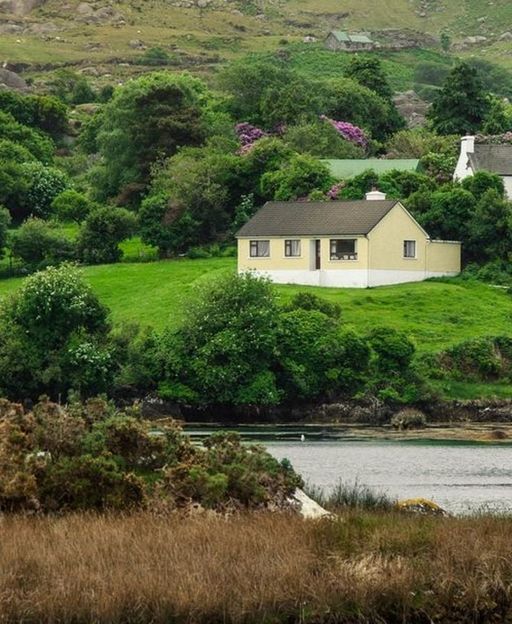
What Is the Irish Cure?
“The cure” — known in Irish as leigheas — is a form of folk healing passed down through specific families. Each family’s cure works only for one ailment. Burns. Ringworm. Shingles. Mumps. Erysipelas, the skin infection once known as St Anthony’s Fire. Whooping cough.
Nobody in the family chooses to have the cure. It chooses them.
Usually it passes from parent to child, sometimes skipping a generation, sometimes moving only through one gender. A woman might hold the burn cure and pass it to her son, who passes it to his daughter. The chain must never break, or the power is lost.
The Rule That Cannot Be Bent
The most important rule is simple: the cure must never be paid for.
Not a coin. Not a note. Not a gift given in expectation of healing. The moment money changes hands, tradition says the power drains away like water from a cracked pot.
Those who come for the cure bring nothing but themselves. Some bring a quiet word of thanks on the way out. That is enough.
This is not charity. It is a covenant. The family holds the cure in trust — not for their benefit, but for the community’s. Breaking the rule does not just end the power. It dishonours every generation that held it before.
Where the Power Comes From
The origin of most cures is tied to a saint’s blessing, a holy well, or an act of faith by an ancestor long dead.
One belief holds that if seven sons are born in a row to one mother — the seventh son of a seventh son — that child carries the power to heal from birth. In parts of Connacht and Ulster, this belief still runs deep.
Other cures trace back to a single moment in a family’s history. A woman who, in desperate hunger, refused to curse a stranger despite her own suffering. A man who pulled a dying friar from a bog and carried him to shelter. The saint’s gratitude, it is said, stayed in the bloodline.
Whether any of this is literally true matters less than what it means. The cure is a story about obligation — about what a family owes to the place that formed them.
☘️ Enjoying this? 64,000+ Ireland lovers get stories like this every weekday morning. Subscribe free →
Named in the Old Records
Some of these family associations were documented by name. The surname Keogh was long credited with the power to cure shingles — according to Irish Times columnist Frank McNally, the ability was said to run in the blood itself, not in any herb or ritual. Patrick Kavanagh’s memoir The Green Fool recalls a neighbour, Harry McElroy of Inniskeen, who could cure erysipelas — known locally as ‘the Rose’ — simply by touch; other families, such as the Mulroys of Dunleer, Co. Louth, held their own version of the same cure using bog water gathered at the full moon.
In County Leitrim, the Donaghy family were renowned hereditary bone-setters, their gift said to trace back to a blessing from St Columcille. And Gaelic Ireland’s professional medical septs — the O’Lees (physicians to the O’Flahertys of Connacht), the O’Shiels (physicians to the MacMahons of Oriel), the O’Hickeys (physicians to the O’Briens of Thomond for centuries), the O’Cassidys (physicians to the Maguires of Fermanagh) and the O’Mearas (physicians and poets to the Earls of Ormond) — served as hereditary doctors for generations, training students and keeping their own manuscripts of medical knowledge. (Sources: The Irish Times, RTÉ Brainstorm.)
What People Actually Came For
The burn cure is among the most widely documented. The healer would place their hand near the burn — sometimes touching it, sometimes not — and whisper a prayer. Those who received it described a cooling sensation that spread through the skin. Within days, the burn would fade with unusual speed.
The ringworm cure often involved specific herbs, though the plant varied by family. Some used dock leaves. Some used a preparation rubbed in a ritual pattern. The specific method was never shared with outsiders.
For whooping cough, one practise in parts of Munster and Connacht involved passing the sick child beneath a donkey three times, or having the child drink water from a hole in a standing stone at a holy well. The parents understood completely, even if the child did not.
These were not desperate acts. They ran alongside conventional medicine, not against it. A family might visit the doctor on Monday and the cure house on Tuesday. The two did not contradict each other.
Still Practised Today
Researchers and folklorists who documented the Irish cure in recent decades found it still very much alive in counties Galway, Mayo, Roscommon, Donegal, and parts of Kerry.
People travel hours for it. They come quietly, often not talking about it to neighbours who might scoff. They knock on an ordinary door, on an ordinary road, and ask for the same thing their grandparents asked for.
In a country where so many old customs have quietly survived, the cure is perhaps the most intimate. It is not performed in public. It does not appear on a festival programme. It is simply there, for those who need it.
If you feel drawn to the quieter, older side of Ireland, start planning your journey here — there is more to discover than any guidebook can hold.
What It Says About Ireland
The cure is not really about healing. It is about trust.
It says: we know things that cannot be proven, but that have never failed us. It says: some families carry gifts that belong to everyone. It says: there are forms of care that money cannot buy.
And in rural Ireland, that has always been enough.
The next time you drive through a small Irish village, look at the houses beside the road. One of them, in all likelihood, belongs to a family who holds something extraordinary.
They will not advertise it. They never have.
☘️ You Might Also Love
Tours & experiences you might love


Powered by Viator. Some links are affiliate links — we may earn a small commission at no extra cost to you.
Secure Your Dream Irish Experience Before It’s Gone!
Planning a trip to Ireland? Don’t let sold-out tours or packed attractions spoil your journey. Iconic experiences like visiting the Cliffs of Moher, exploring the Rock of Cashel, or enjoying a guided walk through Ireland’s ancient past often sell out quickly—especially during peak travel seasons.

Booking in advance guarantees your place and ensures you can fully immerse yourself in the rich culture and breathtaking scenery without stress or disappointment. You’ll also free up time to explore Ireland’s hidden gems and savour those authentic moments that make your trip truly special.
Make the most of your journey—start planning today and secure those must-do experiences before they’re gone!