

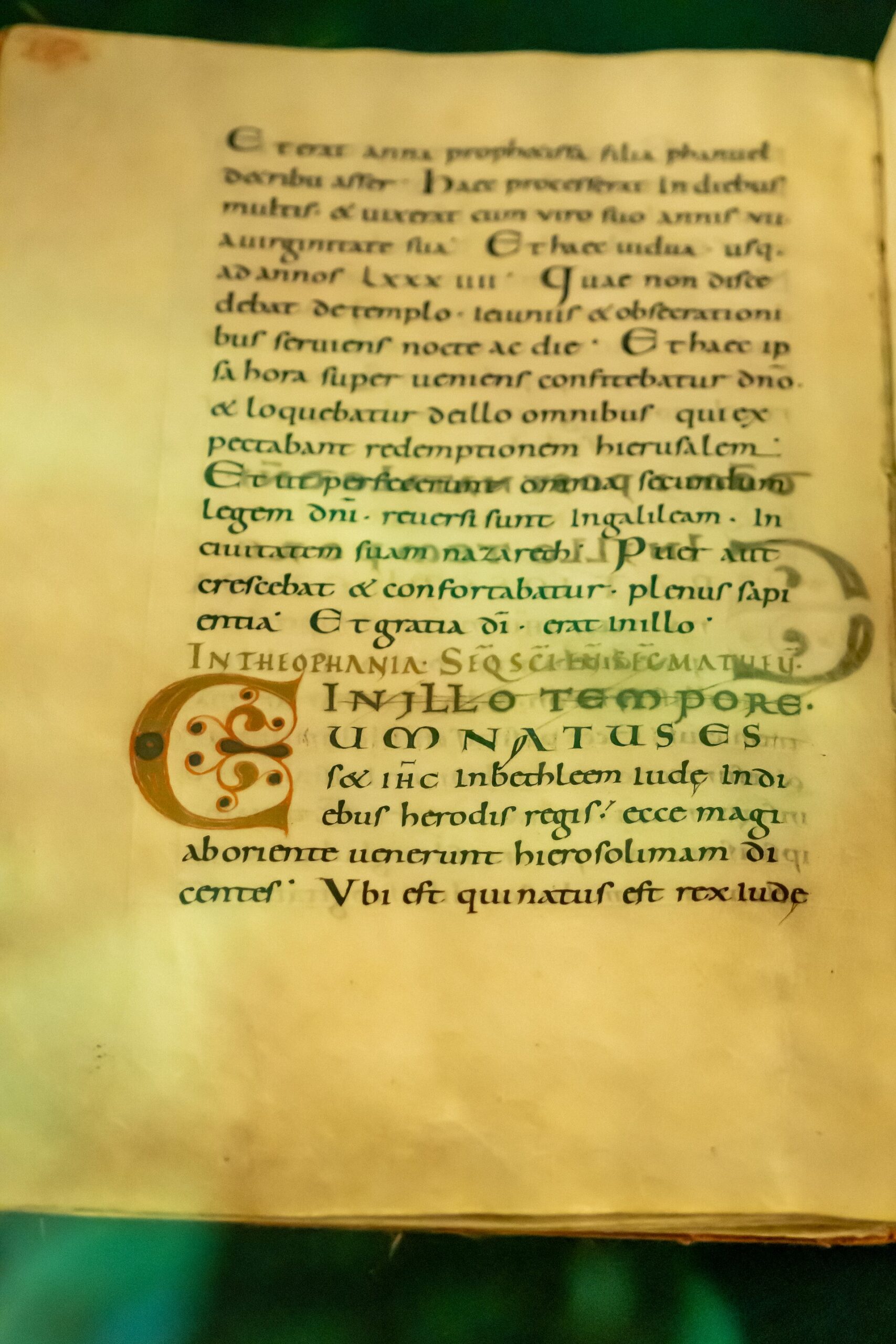
In the city of St Gallen in Switzerland, a library has stood for over 1,200 years. Inside it are manuscripts written entirely by hand — some of them made in Ireland. The monks who carried them there walked for months through forest and mountain to reach a place they had never seen.
The Idea That Changed Everything
Around the 5th and 6th centuries, a new kind of devotion took hold in the monasteries of Ireland. It was called peregrinatio pro Christo — wandering for Christ — and it asked something extraordinary of those who answered it.
To leave Ireland permanently was considered the highest possible sacrifice. Irish monks called it “white martyrdom” — a living death. Unlike red martyrdom (dying for your faith), white martyrdom meant giving up the thing the Irish loved most: home.
Within two generations, Irish monks were walking across Europe — and they were changing it as they went.
What They Carried With Them
Ireland in the 5th century was unusual. While Roman cities crumbled and Germanic tribes divided up western Europe, Ireland — never conquered by Rome — had become an unlikely refuge for Latin learning.
Irish monasteries had spent generations copying manuscripts. Classical texts, early Christian writings, the Psalms, the Gospels — all transcribed by hand onto vellum in the quiet of stone buildings far from any road.
When Irish monks set out for Europe, these books went with them. They were not missionaries in the usual sense. They were scholars, scribes, and builders. They carried something Europe had very nearly lost: the written word.
The Names They Left Behind
The trail they blazed across Europe is still visible today — in place names, in patron saints, and in libraries that still hold their manuscripts.
St Columbanus left Co. Louth around 590 AD and walked to what is now France. He founded monasteries at Luxeuil and Fontaine, then continued south to northern Italy, where he died in Bobbio in 615. His grave is still venerated there by the local community.
His companion Gall stopped walking when Columbanus kept going. He stayed near Lake Constance in what is now Switzerland, built a hermitage, and never returned to Ireland. The settlement that grew around his grave became the city of St Gallen — still bearing the name of an Irish monk today.
St Kilian from Co. Cavan reached Würzburg in Germany around 686 AD. He became the city’s patron saint. Every July, a festival draws hundreds of thousands of people to honour an Irish monk who arrived over 1,300 years ago and never came home.
☘️ Enjoying this? 64,000+ Ireland lovers get stories like this every week. Subscribe free →
The White Martyrdom
The Irish term for this kind of devotion was bánmhartracht — white martyrdom. It placed voluntary exile on a higher spiritual level than death itself.
St Columba, who left Donegal for the island of Iona in Scotland in 563 AD, chose a spot from which he could no longer see the Irish coast. His monks recorded that he wept as Ireland disappeared behind him. He never returned.
The writing these monks left behind is full of longing. For green hills, for familiar voices, for rivers they knew by name. They grieved deeply for what they gave up. And that grief became Europe’s gain.
Where to Feel This History in Ireland
You do not need to travel to Switzerland to feel this story.
At Clonmacnoise in Co. Offaly, the ruins of one of Ireland’s greatest monastic cities stand on a quiet bend of the River Shannon. Founded in 544 AD by St Ciarán — who trained many of the monks who later walked to Europe — it was once a centre of international scholarship and pilgrimage. The abbeys and cathedrals of Ireland preserve this heritage in stone.
On the Kerry coast, the monastery clinging to the cliff at Skellig Michael captures the same spirit. These monks sought the most remote, most challenging places — in Ireland and beyond — and built something lasting in each one.
If you are planning your own journey through Ireland’s ancient places, the Ireland travel planning guide is a practical place to start.
The great irony of the Irish peregrini is this: they left Ireland to find something greater than themselves. What they found instead was that they had carried Ireland with them all along.
Everywhere they went, they built. They wrote. They taught. They carved their names into stone, into vellum, and into the memory of communities that still celebrate them today.
One island on the edge of the Atlantic changed the map of a continent. Not through conquest, but through learning, longing, and the steady scratch of a pen.
☘️ You Might Also Love
Free forever · · Unsubscribe anytime
Tours & experiences you might love


Powered by Viator. Some links are affiliate links — we may earn a small commission at no extra cost to you.
Secure Your Dream Irish Experience Before It’s Gone!
Planning a trip to Ireland? Don’t let sold-out tours or packed attractions spoil your journey. Iconic experiences like visiting the Cliffs of Moher, exploring the Rock of Cashel, or enjoying a guided walk through Ireland’s ancient past often sell out quickly—especially during peak travel seasons.

Booking in advance guarantees your place and ensures you can fully immerse yourself in the rich culture and breathtaking scenery without stress or disappointment. You’ll also free up time to explore Ireland’s hidden gems and savour those authentic moments that make your trip truly special.
Make the most of your journey—start planning today and secure those must-do experiences before they’re gone!
Subscribe Free