

Picture a vertical rock rising out of the Atlantic, twelve kilometres off the Kerry coast. No harbour. No road. No shelter worth the name. Just 600 feet of sheer cliff, beaten by salt wind year-round.
Somebody chose to live here. For six centuries. On purpose.
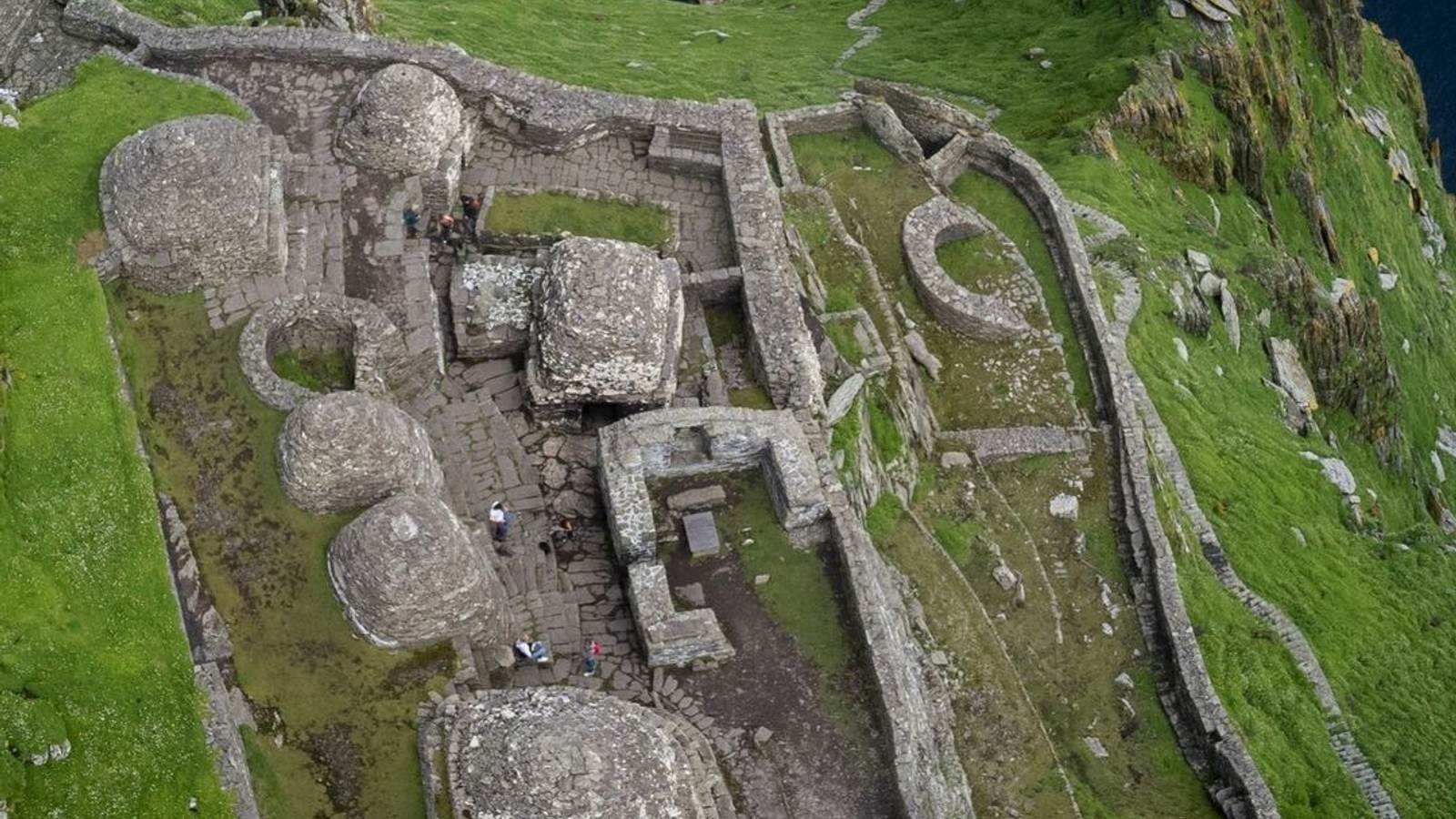
The Monks Who Sought the Edge of the World
Ireland’s early Christian monks had a practise called peregrinatio pro Christo — a self-imposed wandering exile for God. The idea was demanding: give up everything familiar, go where life is hardest, and trust that the hardship itself would become the prayer.
The edge of the known world was considered the closest point to heaven. In 6th-century Ireland, there was no edge more absolute than Skellig Michael — Sceilg Mhichíl in Irish, meaning the Rock of Michael.
A small community of monks landed on this pyramid of stone around the 6th century. They hauled building materials up paths that clung to sheer drops, and began to build. What they built has not fallen down.
What They Constructed With Their Hands
The monks built six beehive-shaped stone huts called clocháin, using dry stone only — no mortar, no metal tools. Each stone was shaped and stacked so that the walls leaned gradually inward, channelling water away through weight and friction alone.
These structures have stood for over 1,000 years against Atlantic storms that still close the island for days at a time.
They also carved 618 steps into the rock by hand, rising from sea level to the monastery terrace near the summit. Every step is different. Some are rough and steep. Others have been worn smooth by centuries of sandalled feet making the same climb, morning after morning.
Inside the huts, monks slept, prayed, and copied manuscripts. The huts were barely large enough to stand in. The doorway looked out over nothing but open ocean.
Life on the Rock: What They Ate and How They Survived
Food on Skellig Michael was whatever the cliff and sea could offer. Monks caught seabirds and gathered eggs — gannets, puffins, fulmars — and fished in waters that could turn deadly within minutes. They grew herbs in tiny terraced plots sheltered from the wind. They caught rainwater in stone basins.
In winter, the rock was effectively cut off. The sea around Skellig Michael does not negotiate. No boat could land, and no supplies could reach the community for weeks at a time.
No records survive of how many monks died there. What survives is the evidence that generations chose to return.
This kind of devotion — this deliberate choosing of difficulty — speaks to what the ancient Irish believed about sacred places at the world’s edge. Skellig Michael was not simply remote. It was chosen precisely because it was impossible.
☘️ Enjoying this? 64,000+ Ireland lovers get stories like this every week. Subscribe free →
Why the Monks Finally Left
By the 12th century, the monks had abandoned the rock. They moved their community to Ballinskelligs on the Kerry mainland, though the exact reasons are not recorded.
Historians point to a combination of factors. Climate across Europe grew harsher during this period, making the already brutal winters on the rock even more severe. Viking raids, which had reached even the most remote corners of Ireland’s coast, made an isolated and undefended community increasingly vulnerable.
The monastery was left empty. The stone huts sat undisturbed for eight centuries. Nobody knocked them down. Nobody moved the stones. They simply waited.
What It Means to Visit Today
Skellig Michael was declared a UNESCO World Heritage Site in 1996. The designation is rare among monastic sites because the monastery is not, in any ordinary sense, a ruin. The beehive huts are complete. The corbelled roofs still shed water exactly as the monks designed them to do.
Boat trips depart from Portmagee and Ballinskelligs between May and October, weather permitting. The crossing takes about 45 minutes and is often rough. The climb to the monastery takes another 45 minutes on foot, up the same 618 steps the monks cut by hand.
Nothing prepares you for arriving at the top.
If you’re planning a wider trip to County Kerry, Skellig Michael is one of the most remarkable stops on the entire Wild Atlantic Way. Boat spaces are limited and weather cancellations are common, so planning ahead is essential. The Ireland travel planning hub has everything you need to get started.
The People Who Left No Names Behind
The monks who lived on Skellig Michael left no diaries. No portraits. Almost no names. What they left was this: a monastery on a cliff above the Atlantic, built without nails, without mortar, and without anyone watching.
It has lasted over a thousand years. Whether you visit for the history, the wonder, or simply to stand somewhere that makes the ordinary world feel very far away, Skellig Michael has a habit of doing exactly that.
☘️ You Might Also Love
Frequently Asked Questions
What is the historical significance of Irish Rock Where Monks Built a Monastery 600 Feet Above the Sea?
This is one of Ireland’s fascinating historical and cultural stories — a reminder of the depth of Irish heritage that extends far beyond the better-known landmarks. These hidden histories are what make exploring Ireland so rewarding for curious visitors.
Where in Ireland can you learn more about this history?
Ireland’s network of local museums, heritage centres, and county archives hold remarkable collections of local history. The National Museum of Ireland (nationalmuseum.ie) and the National Library of Ireland also maintain extensive records of Irish cultural heritage.
Is this part of Irish culture still visible today?
Many aspects of Ireland’s ancient and folk culture are still visible if you know where to look. Local guides, heritage walks, and community festivals often reveal these hidden layers of Irish life that most tourists never see.
How does this story connect to modern Irish identity?
Irish people have a strong sense of connection to their heritage, and stories like this one are part of the cultural fabric that shapes modern Irish identity. The Irish language, traditional music, and folk customs all carry echoes of this long history.
☘️ Join 64,000+ Ireland Lovers
Every Friday, get Ireland’s hidden gems, local secrets, and travel inspiration — the kind you won’t find in any guidebook.
Subscribe free — enter your email:
Free forever · · Unsubscribe anytime
Tours & experiences you might love


Powered by Viator. Some links are affiliate links — we may earn a small commission at no extra cost to you.
Secure Your Dream Irish Experience Before It’s Gone!
Planning a trip to Ireland? Don’t let sold-out tours or packed attractions spoil your journey. Iconic experiences like visiting the Cliffs of Moher, exploring the Rock of Cashel, or enjoying a guided walk through Ireland’s ancient past often sell out quickly—especially during peak travel seasons.

Booking in advance guarantees your place and ensures you can fully immerse yourself in the rich culture and breathtaking scenery without stress or disappointment. You’ll also free up time to explore Ireland’s hidden gems and savour those authentic moments that make your trip truly special.
Make the most of your journey—start planning today and secure those must-do experiences before they’re gone!
Subscribe Free