

For three centuries, making it was a criminal offence. Revenue men tramped through Connacht bogs and Mayo mountains searching for smoke rising from hidden copper stills. They rarely found them. The Irish were too clever, too stubborn — and too thirsty.
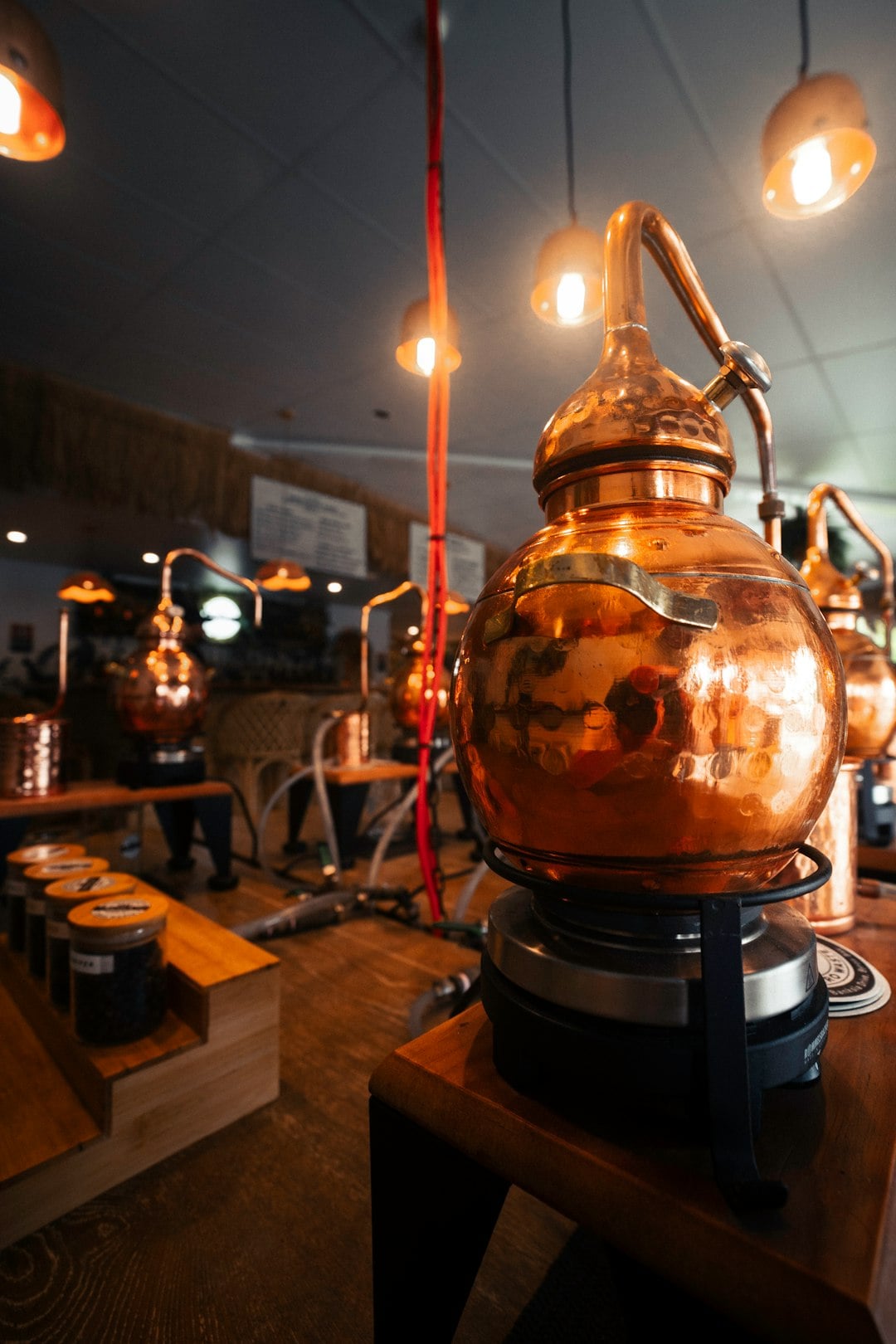
Poitín (pronounced “putcheen”) is Ireland’s original spirit — older than any licensed distillery, older than the laws that tried to stamp it out. And after 300 years underground, it’s very much back.
What Exactly Is Poitín?
Poitín is a clear, unaged spirit distilled from grains, potatoes, or sugar beet. Think of it as Irish moonshine — except the Irish were making it long before anyone else borrowed the idea.
The name comes from the Irish word pota, meaning “little pot” — a nod to the small pot stills hidden in remote countryside. Strength varies wildly, from a genteel 40% up to 90% in the old farmhouse versions. The latter was not for the faint-hearted.
Every rural county had its own recipe and method. In Connacht, oats and barley dominated. Along the western coast, sugar beet became common when grain was scarce. The result was always the same: a fierce, clear liquid that warmed you from the inside out.
The Law That Turned Drinking Into Rebellion
The British Parliament banned poitín in 1661. The reason was blunt: unlicensed distilling cut the Crown’s tax revenue. If you weren’t paying the excise, you were a criminal.
But the ban had the opposite effect. It turned a common rural practice into an act of quiet defiance. Every still hidden behind a waterfall or beneath a cowshed became a small victory against British authority.
For rural families in the west of Ireland, it was also economic survival. Crops could be converted into something far more valuable — and easily hidden in an oil can if the gaugers came knocking.
Folk Heroes and Hidden Stills
☘️ Love Irish Food & Culture?
Every Wednesday, we send our best Irish recipes, food stories, and kitchen traditions straight to your inbox. Join 64,000+ readers who love Ireland.
Poitín makers — poitéirí — became local legends. They built elaborate warning systems: children stationed on hilltops, coded knocks at doors, decoy operations to lead revenue men the wrong way.
The best stills were found in the most remote places. Deep in the Connemara hills. Hidden among the limestone pavements of the Burren. Tucked into the cutaway bogs of Donegal. Smoke from a small peat fire was almost impossible to distinguish from an ordinary hearth.
Revenue men — “gaugers” in local slang — were despised figures. Being caught helping one was social ruin. Being a gauger yourself was worse.
☘️ Enjoying this? 64,000+ Ireland lovers get stories like this every week. Subscribe free →
Three Centuries of Failed Bans
The Irish government tried multiple times to eradicate poitín: the original 1661 ban, stricter enforcement in the 1800s, and again after Irish independence, when the new Free State kept the ban firmly in place.
None of it worked. As late as the 1970s, Garda raids in Connacht were still uncovering active stills. One estimate suggests that in some western counties during the 19th century, as many as one in four households produced poitín at some point during the year.
The tradition never died. It just moved further into the hills and further from official records.
When Ireland Finally Said Yes
In 1997, the Irish government legalised poitín. The EU had pressured Ireland to regulate home distilling, and the commercial opportunity was hard to ignore.
What followed surprised everyone. Rather than killing the romance of the spirit, legalisation sparked a revival. Small distilleries began marketing premium poitín, leaning hard into the rebel heritage. Brands like Knockeen Hills, Glendalough, and Mad March Hare turned a fugitive drink into an export product with global appeal.
Today you can buy poitín in off-licences in Dublin, order it in cocktail bars in Galway, and find it on menus in New York and London. Irish whiskey has its own remarkable comeback story — but poitín never quite disappeared in the first place.
What It Actually Tastes Like
Commercial poitín varies enormously. Some versions are raw and agricultural — a deliberate echo of the illicit original. Others are smooth and almost floral, bearing little resemblance to what came out of a bog still at midnight.
If you’re new to it, start with a pot-still grain version at around 40%. The higher-strength varieties carry a heat that starts in the chest and radiates outward. They are an experience rather than a tipple.
The heartlands of poitín tradition — Connacht, Donegal, the western peninsulas — are among Ireland’s most spectacular landscapes. If you’re planning a visit, start with our Ireland planning guide to make the most of every mile.
The next time someone hands you a small glass of poitín in a rural Irish pub, know what you’re holding. Three centuries of defiance. A drink made in bogs and barns and behind waterfalls. Hidden under floorboards, carried in oil cans, shared in whispers.
It survived every attempt to kill it.
That’s a very Irish story.
☘️ You Might Also Love
☘️ Join 64,000+ Ireland Lovers
Every Friday, get Ireland’s hidden gems, local secrets, and travel inspiration — the kind you won’t find in any guidebook.
Free forever · · Unsubscribe anytime
☘️ Want More Hidden Ireland?
Join 64,000+ subscribers who discover Ireland’s best-kept secrets every week.
Subscribe Free — Join the Community →
Free forever · Unsubscribe anytime · No spam
📥 Free Download: Ireland Travel Planning Guide
Our most popular resource — itineraries, insider tips, and the 50 places you must not miss.
Tours & experiences you might love


Powered by Viator. Some links are affiliate links — we may earn a small commission at no extra cost to you.
Secure Your Dream Irish Experience Before It’s Gone!
Planning a trip to Ireland? Don’t let sold-out tours or packed attractions spoil your journey. Iconic experiences like visiting the Cliffs of Moher, exploring the Rock of Cashel, or enjoying a guided walk through Ireland’s ancient past often sell out quickly—especially during peak travel seasons.

Booking in advance guarantees your place and ensures you can fully immerse yourself in the rich culture and breathtaking scenery without stress or disappointment. You’ll also free up time to explore Ireland’s hidden gems and savour those authentic moments that make your trip truly special.
Make the most of your journey—start planning today and secure those must-do experiences before they’re gone!