

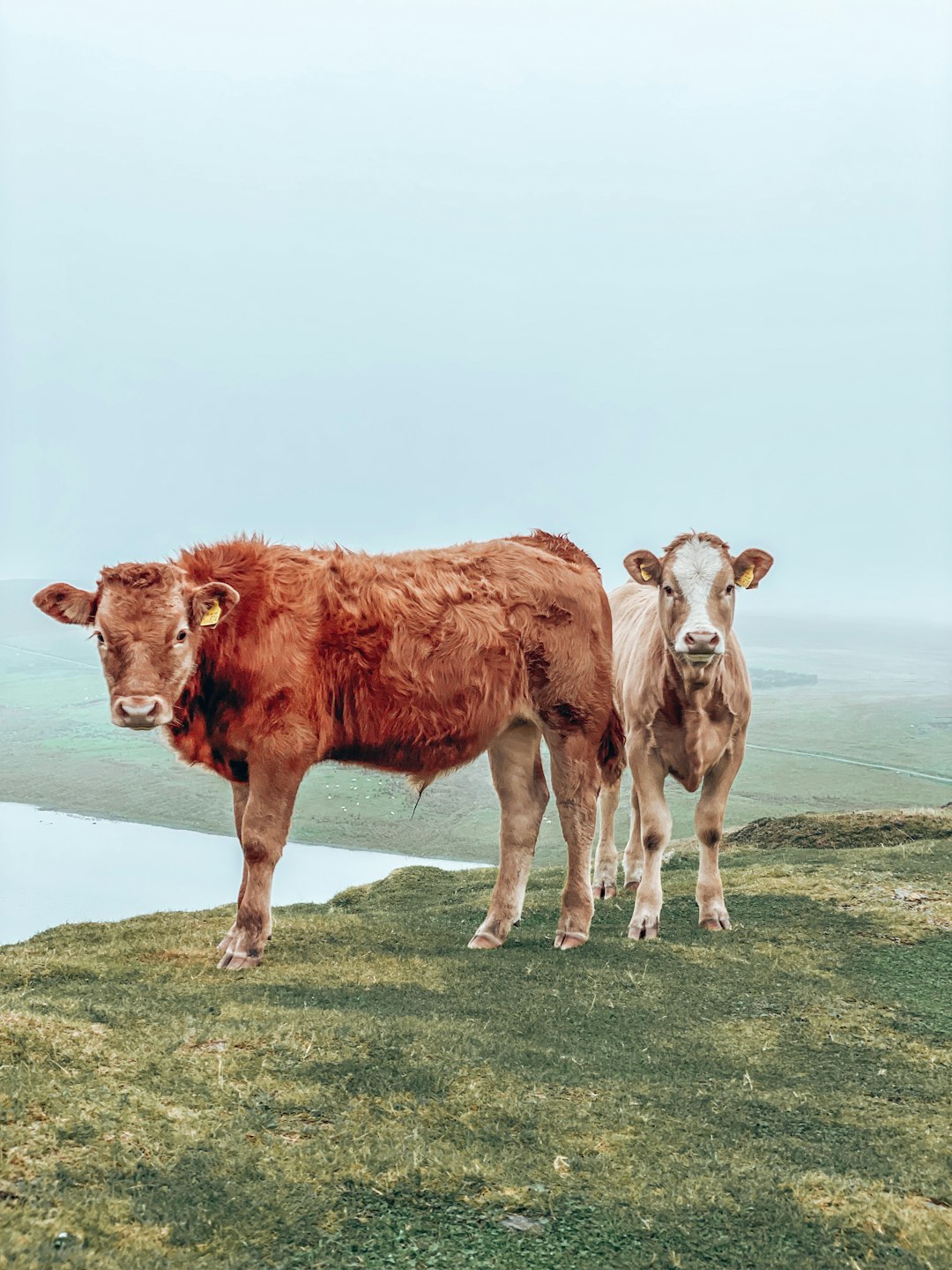
A farmer returns from the fields to find three rotten eggs buried near his gate. His best milking cow is sick by morning. He does not call anyone. He does not accuse anyone. He knows exactly what has happened — someone has laid a piseóg on his land.
What Is a Piseóg?
The word “piseóg” (sometimes spelled “pishogue” and pronounced pish-OHG) is an Irish term for a deliberate act of folk magic — not a general curse, but something one person does intentionally to another.
It is not bad luck. It is not coincidence. A piseóg is an act of ill-wishing, carried out with purpose, usually driven by envy. And in rural Ireland across many generations, people took it with complete seriousness.
The tradition ran deepest in farming communities — the west, the south, the midlands. Wherever neighbours lived close, knew each other’s business, and watched each other’s cattle grow fat or thin, envy had somewhere to go.
What a Piseóg Actually Involved
Most piseógs worked through objects. Rotten eggs, decaying meat, strange bundles of straw, parcels of cloth tied in unusual ways — these were left on another person’s land or hidden where the target would encounter them.
The belief was that the ill-will of the person who made the piseóg attached itself to the object. Once it crossed onto your property, the misfortune transferred. Your cattle might stop giving milk. A calf might sicken for no clear reason. A crop might fail despite good weather.
May Eve was the most dangerous night. Ireland already regarded the eve of the first of May as charged with power — the time when the boundary between the ordinary and unseen worlds grew thin. Some believed that on that single night, a person could steal the very luck of their neighbour’s land.
The Silence Around It
What gave piseógs their particular grip was what surrounded them: silence.
A farmer who discovered a suspicious object did not go to the authorities. He did not accuse anyone publicly. In a tight rural community, the consequences of a false accusation were worse than saying nothing, and the consequences of a true one were not much better.
Instead, he burned the object. Quickly, without touching it with bare hands if he could manage it. Fire was believed to destroy whatever charge the object carried. Then he said nothing. The community often knew anyway — local knowledge ran deep — but the unspoken rule held. You did not name the person. You dealt with it quietly and watched yourself for a long time afterwards.
☘️ Enjoying this? 64,000+ Ireland lovers get stories like this every week. Subscribe free →
How People Defended Themselves
Ireland’s folk tradition always paired danger with protection. For piseógs, the defences were practical and specific.
St Brigid’s crosses were hung above doorways and inside cattle stalls. Rowan branches — long believed to have powerful protective properties — were placed across gates and thresholds. Holy water was sprinkled across fields and livestock at the start of May.
Any strange object found on the farm was treated as a threat. A parcel that didn’t belong, a bundle of straw tucked into a hedge, a piece of meat left where no meat should be. The rule was absolute: burn it, don’t touch it with bare hands, don’t bring it indoors. Many families also made visits to local holy wells as part of this protection — asking for intercession against ill-wishing was woven into pattern day traditions across the country.
Why People Believed So Completely
Piseógs were not the beliefs of the margins. They were taken seriously by ordinary farmers, fishermen, and housewives across many generations.
The reason is not hard to understand. In a world where cattle sickness had no certain diagnosis, where harvests failed for reasons nobody could explain, and where the difference between a good year and ruin was often invisible, folk explanations offered something vital: a cause, and a person responsible.
Blaming a neighbour’s envy was not irrational given what people understood at the time. It made misfortune legible in a community where misfortune was constant. It also carried a warning: prosperity attracts attention, and not all attention is benign. Ireland’s deep tradition of folk superstitions was never simply about fear — it was about navigating a world that felt genuinely uncertain.
A Tradition That Has Not Entirely Gone
The last detailed accounts of active piseóg practise come from the mid-twentieth century. Folklorists documented them carefully. They appear in the archives of the Irish Folklore Commission in extraordinary detail — hundreds of accounts from across every county.
But the word has not disappeared. In rural communities, older people still use it — and not entirely as metaphor. A farmer who finds something unusual near his gate may still burn it first and ask questions later.
That instinct connects back across centuries of Irish rural life. The belief that prosperity can attract malice. That envy is not passive. That you watch what crosses your threshold.
If you’re planning a journey through rural Ireland, you are walking through a landscape shaped by exactly these beliefs. Every lone tree left standing in a field, every rag tied at an ancient holy well, every gate post that has never been moved — each carries the memory of something people once took with complete seriousness. Piseógs belong to that Ireland. And it is closer to the surface than most visitors ever realise.
☘️ You Might Also Love
☘️ Join 64,000+ Ireland Lovers
Every Friday, get Ireland’s hidden gems, local secrets, and travel inspiration — the kind you won’t find in any guidebook.
Subscribe free — enter your email:
Free forever · · Unsubscribe anytime
Tours & experiences you might love


Powered by Viator. Some links are affiliate links — we may earn a small commission at no extra cost to you.
Secure Your Dream Irish Experience Before It’s Gone!
Planning a trip to Ireland? Don’t let sold-out tours or packed attractions spoil your journey. Iconic experiences like visiting the Cliffs of Moher, exploring the Rock of Cashel, or enjoying a guided walk through Ireland’s ancient past often sell out quickly—especially during peak travel seasons.

Booking in advance guarantees your place and ensures you can fully immerse yourself in the rich culture and breathtaking scenery without stress or disappointment. You’ll also free up time to explore Ireland’s hidden gems and savour those authentic moments that make your trip truly special.
Make the most of your journey—start planning today and secure those must-do experiences before they’re gone!
Subscribe Free