

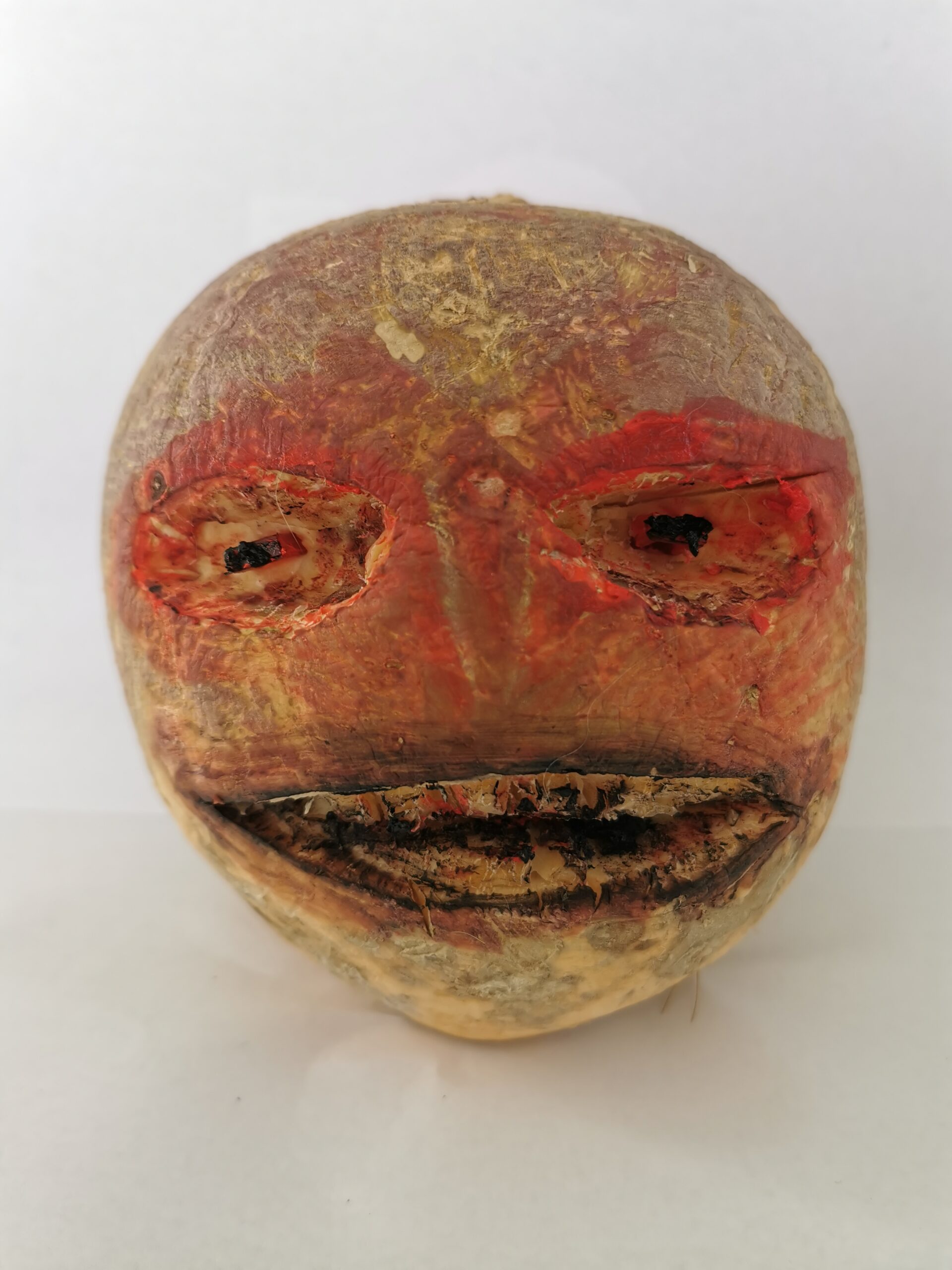
Long before anyone in Ireland carved a pumpkin, the lantern in the window was a turnip or a swede — scooped hollow, cut with a crude face, and lit with an ember so its grin flickered against the dark. The festival behind that glow is Samhain (said roughly “SOW-in”), the old Gaelic marker of summer’s end and the turn into winter, and it is the direct ancestor of the Halloween now kept around the world. This is Guide № 015 in The Love Ireland Guide series.
What Samhain Actually Was
Samhain was one of the four seasonal festivals of the Gaelic year, alongside Imbolc in spring, Bealtaine at the start of summer and Lughnasadh at harvest. Falling around the end of October and the start of November, it marked the close of the harvest and the beginning of the darker half of the year, when cattle were brought down from summer pasture and the farming calendar reset. Early Irish literature sets many of its great assemblies and strange encounters at Samhain, which tells us how significant the date was to the people who told those stories. For a deeper dive into the festival’s origins, see our full guide to Samhain.
The night carried a particular belief: that the boundary between the everyday world and the Otherworld grew thin, and that the aos sí — the fairy folk — and the dead could more easily cross over. That is why so much of the tradition is about protection and welcome at once: a place set at the table, a fire kept burning, a lantern in the window. The folklore gathered in the National Folklore Collection, much of it now searchable through the Dúchas archive, records hundreds of these local customs in people’s own words.
From Turnip to Pumpkin
The carved lantern is genuinely Irish, but it did not start as a pumpkin. Households hollowed out turnips, swedes and mangel-wurzels, cut faces into them and set a light inside to ward off wandering spirits — a far more laborious job than scooping a soft pumpkin. The name is tied to the folk tale of Stingy Jack, a trickster said to have outwitted the Devil and been refused entry to both Heaven and Hell, left to roam with only a burning coal inside a carved turnip to light his way: “Jack of the Lantern.”
When Irish and Scottish emigrants carried the custom to North America in the nineteenth century, they found the native pumpkin larger, softer and far easier to carve — and the pumpkin jack-o’-lantern was born. The pumpkin version then travelled back across the Atlantic in the twentieth century, which is why many people now assume it was always so.
The Food of the Season
The signature bake of the season is barmbrack (from the Irish báirín breac, “speckled loaf”), a lightly sweet bread studded with sultanas and raisins. Traditionally, small objects were baked into it as a fortune-telling game: a ring meant marriage within the year, a coin meant wealth, a pea or a thread meant the opposite, and a stick foretold a quarrelsome match. Shop-bought bracks today often still include a toy ring in the wrapper as a nod to the custom.
The wider table leaned on the harvest. Colcannon — mashed potato with kale or cabbage — was a Samhain staple, sometimes served with charms hidden in it much like the brack. Hazelnuts and apples, both gathered at this time of year, featured heavily in both eating and in the night’s games.
Games, Guising and the Roots of Trick-or-Treat
Many Samhain customs were really forms of divination, especially about love and marriage. Apples were bobbed for in water or hung on strings to be caught by mouth (“snap-apple”); nuts were named for sweethearts and set by the fire to see which burned steadily and which jumped away. These were the entertainments of a long, dark evening when the future felt briefly readable.
The practice we now call trick-or-treating grew from guising or mumming, in which people — often young — went from door to door in disguise, offering a song, a verse or a party piece in return for food or coins. The costume was partly performance and partly a way of passing unnoticed among any spirits abroad that night. Carried to America by emigrants, the custom gradually hardened into the familiar sweets-for-costumes exchange.
Where to Meet Samhain Today
Ireland leans into its claim as the home of Halloween with several major events. The Púca Festival, developed by Fáilte Ireland with Meath County Council, centres on Trim and Athboy in County Meath — close to the Hill of Ward (Tlachtga), long associated in tradition with Samhain fires. See our full guide to the Púca Festival in 2026, or our roundup of where to experience Samhain in Ireland this autumn, for dates and more venues. In the north, Derry Halloween turns the walled city into one of the largest street carnivals of its kind, with a companion programme at Strabane Halloween nearby.
For the older layer of the story, the Rathcroghan Visitor Centre in Tulsk, County Roscommon, runs an “Origins of Samhain” tour to the Oweynagat cave — the “Cave of the Cats,” cast in myth as a doorway to the Otherworld. In Dublin, the Bram Stoker Festival, begun by Dublin City Council in 2012, marks the capital’s gothic literary connection each late October. Year-round, the National Museum of Ireland holds folk material that puts the season in context.
Myths Worth Retiring
Myth: Halloween is an American invention. Its core — the lantern, the guising, the date itself — comes from Samhain and related customs, carried to North America by Irish and Scottish emigrants in the nineteenth century and shaped further there.
Myth: The jack-o’-lantern was always a pumpkin. In Ireland it was a carved turnip or swede. The pumpkin was an American substitution, adopted because it was plentiful and easier to hollow out.
Myth: Samhain was a Celtic “god of the dead.” Samhain is the name of the festival and the season, not a deity. The idea of a god by that name stems from a later misreading and has been repeated ever since.
Frequently Asked Questions
How do you pronounce Samhain?
It is said roughly “SOW-in” — the first part rhyming with “cow,” not “Sam-hain.” In modern Irish, Samhain is also the word for the month of November.
When is Samhain actually celebrated?
Traditionally it runs from sunset on 31 October into 1 November, the same window that became All Hallows’ Eve and All Saints’ Day. Modern festivals spread across the last days of October and the first days of November, so check each event’s own dates before travelling.
Is Ireland really the birthplace of Halloween?
It is commonly described that way, and with reason: Halloween’s oldest roots lie in Samhain and its related island customs. What we recognise today is that tradition reshaped abroad and then brought home again, so “birthplace” is fair for the origins rather than for every modern detail.
More The Love Ireland Guides
The Love Ireland Guide is a numbered series — one tightly focused subject at a time, each with its own downloadable collectible edition. Guide № 001 is Irish Soda Bread, Guide № 002 is St. Patrick’s Day, Guide № 003 is The Claddagh Ring, Guide № 004 is Guinness — The Pour, The Pint, The Ritual, Guide № 005 is Irish Pub Etiquette, Guide № 006 is Irish Slang & Hiberno-English, Guide № 007 is The Irish Wake, Guide № 008 is Irish Whiskey, Guide № 009 is The Irish Trad Session, Guide № 010 is St. Brigid’s Cross, Guide № 011 is The Aran Sweater, Guide № 012 is Fairy Forts, Guide № 013 is Irish Blessings & Sayings, Guide № 014 is The Full Irish Breakfast, This is Guide № 015. More editions are on the way.
☘️ Join 64,000+ Ireland Lovers
Every week, get hidden stories, local secrets, and travel inspiration from people who live and love it.
Subscribe free — enter your email:
Tours & experiences you might love


Powered by Viator. Some links are affiliate links — we may earn a small commission at no extra cost to you.
Secure Your Dream Irish Experience Before It’s Gone!
Planning a trip to Ireland? Don’t let sold-out tours or packed attractions spoil your journey. Iconic experiences like visiting the Cliffs of Moher, exploring the Rock of Cashel, or enjoying a guided walk through Ireland’s ancient past often sell out quickly—especially during peak travel seasons.

Booking in advance guarantees your place and ensures you can fully immerse yourself in the rich culture and breathtaking scenery without stress or disappointment. You’ll also free up time to explore Ireland’s hidden gems and savour those authentic moments that make your trip truly special.
Make the most of your journey—start planning today and secure those must-do experiences before they’re gone!