

In the world of legally protected foods, Ireland sits alongside France and Italy. Champagne. Parmigiano-Reggiano. Prosciutto di Parma. And the Waterford blaa. If you’ve never heard of it, you’re not alone — but ask anyone raised in Waterford city and they’ll look at you the way a Parisian looks at someone who puts ketchup on a croissant.
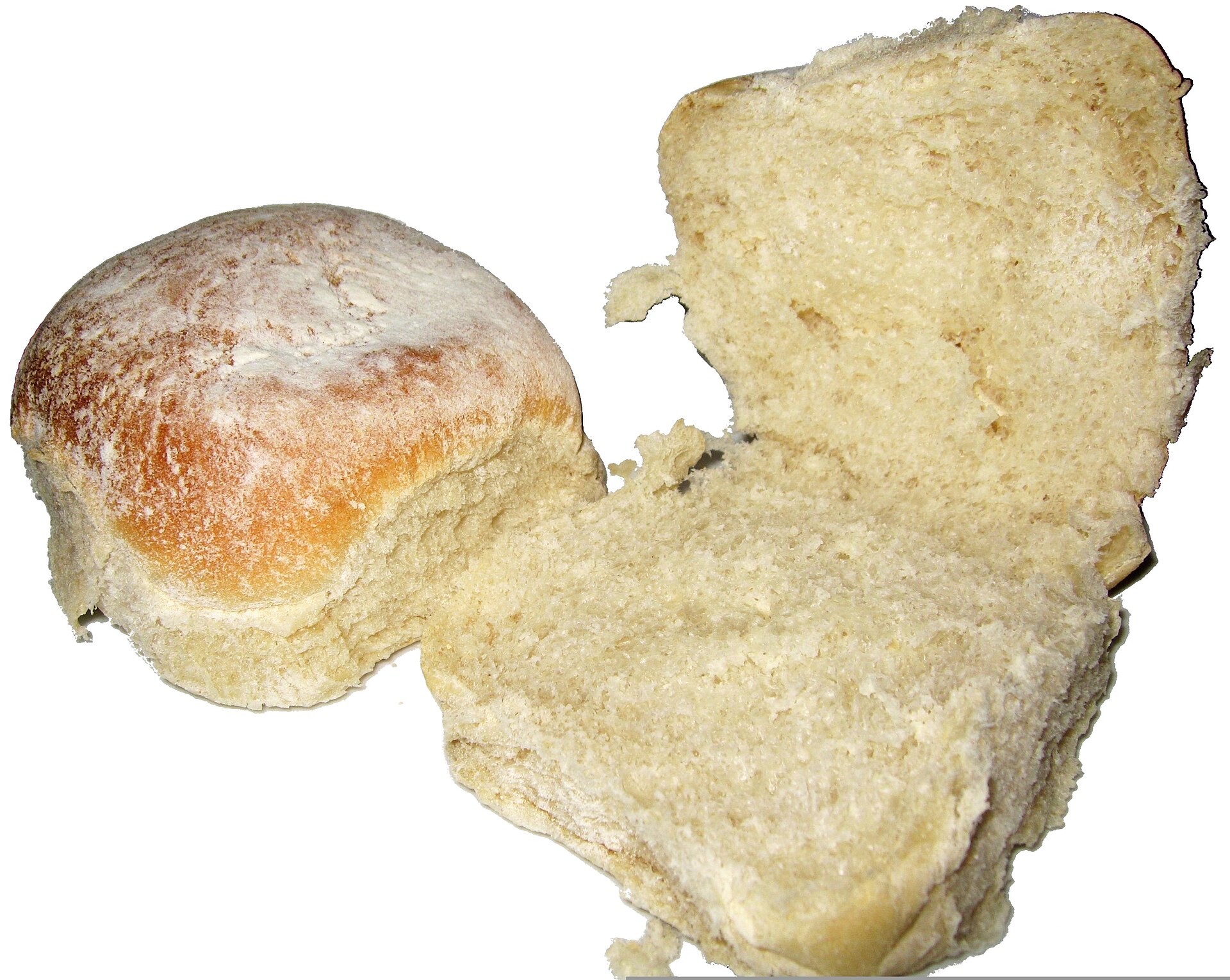
The blaa (pronounced to rhyme with “lah”) is a soft, floury white bread roll — about the size of a fist, doughy all the way through, dusted heavily with white flour and gloriously unassuming. Beneath its humble surface lies eight centuries of history, a fierce civic pride, and one of the most quietly extraordinary food protection battles in modern European law.
What Exactly Is a Blaa?
The blaa is not crusty. It is not chewy. It does not have a crackling exterior or a glossy top. It is soft, yielding, and pillowy in a way that no other bread quite manages — and that texture is entirely the point.
Eaten almost exclusively at breakfast or lunch, the ideal blaa is stuffed with butter and a rasher of crispy back bacon. Or butter and sausage. Or butter and egg. The filling is secondary. The bread is the thing.
Waterford people have eaten these rolls every morning for generations. For many, a blaa from the local bakery is as essential to the start of the day as the kettle going on.
The Norman Legacy in Every Bite
The blaa’s origins trace back to the 14th and 15th centuries. Huguenot refugees — French Protestant artisans, including bakers — settled in Waterford after fleeing religious persecution in France. They brought their baking traditions with them, and the local population absorbed them into daily life.
The word “blaa” is believed to derive from the French blé, meaning wheat. Over the following centuries, the soft floury roll became Waterford’s own. The recipe evolved in isolation, passed from baker to apprentice, generation after generation, until it became something entirely distinct to the city.
No other Irish town developed the same tradition. The blaa belongs to Waterford alone — and Waterford has always known it.
The Battle for European Protection
☘️ Love Irish Food & Culture?
Every Wednesday, we send our best Irish recipes, food stories, and kitchen traditions straight to your inbox. Join 64,000+ readers who love Ireland.
In 2013, Waterford’s remaining certified blaa bakeries did something remarkable. They applied to the European Union for Protected Geographical Indication (PGI) status — the same legal designation that protects Champagne, Scotch Whisky, and Gorgonzola cheese.
Their argument was simple: a genuine Waterford blaa can only be produced in the Waterford city area, using a traditional recipe with specific characteristics. Bakers elsewhere in Ireland could make a soft white roll. They could not call it a blaa.
The EU agreed. The blaa became one of Ireland’s first foods to receive PGI status — joining Irish Whiskey, which carries its own remarkable protected origin story, in the ranks of foods that Europe considers irreplaceable.
Today, just a handful of certified bakeries — all located within Waterford city — are legally authorised to produce the genuine article.
Why Waterford Takes It So Seriously
Ask a Waterford native to describe a blaa and something shifts in their expression. There is a pride there that is difficult to explain to outsiders — the kind of quiet, bedrock certainty that a place feels about the things that truly belong to it.
Food identity in Ireland runs deep. The traditions built around the Irish kitchen — the bread, the table, the act of feeding people — have always carried an emotional weight that goes far beyond nutrition. The blaa is no different.
Waterford people bring boxes of blaas home when they travel. They appear at wakes and christenings and Sunday breakfasts. GAA fans pack them for matches. Students returning to college carry them in their bags. For a city that already claims Europe’s oldest urban street, the world’s most famous crystal, and a Viking heritage stretching back over a thousand years, the blaa is perhaps the most Waterford thing of all: unassuming, quietly brilliant, and impossible to replicate elsewhere.
☘ Enjoying this? 64,000+ Ireland lovers get stories like this every week. Subscribe free →
How to Eat One Properly
There is an etiquette to eating a blaa, though Waterford people will not always volunteer this unless you ask.
First: it must be fresh. A morning blaa from a certified bakery is what you want — ideally still slightly warm, the flour coating pale and powdery. A blaa from the previous day is considered a very different proposition.
Second: the filling should be simple. Too many toppings distracts from the bread itself, and in Waterford, that is considered something close to an insult.
Third: you eat it with your hands. No plates. No ceremony. This is morning food — honest, unpretentious, and entirely satisfying. The flour will end up on your jumper. That is not a problem. That is part of it.
Where to Find a Real Blaa
The certified bakeries are based in Waterford city. Hickey’s Bakery is the most well-known; several other traditional local bakers also produce genuine blaas to the protected standard. Some Waterford supermarkets now stock them, but the bakery-fresh version — still warm from the oven — is the only version worth the journey.
If you’re travelling through Ireland’s south-east, Waterford deserves a morning stop. Collect a bag of blaas, walk the medieval Viking Triangle along the quays, and you have one of the most quietly satisfying starts to any Irish travel day available anywhere on the island.
Ireland has castles and coastlines and craic. But it also has this: a humble white bread roll, protected by European law, beloved by an entire city, and impossible to find anywhere else in the world.
Some foods nourish a body. Some foods nourish a place.
The blaa does both.
☘️ You Might Also Love
Love Ireland? So do 65,000 of us.
Every week, our free newsletter delivers hidden gems, seasonal guides, local stories, and practical travel tips — straight to your inbox. Join the community that loves Ireland as much as you do.
☘️ Get More Irish Recipes & Stories
Join 64,000+ readers for weekly Irish recipes, food traditions, travel guides, and hidden gems. Free every morning.
📥 Free Download: Ireland Travel Planning Guide
Our most popular resource — itineraries, insider tips, and the 50 places you must not miss.
Tours & experiences you might love


Powered by Viator. Some links are affiliate links — we may earn a small commission at no extra cost to you.
Secure Your Dream Irish Experience Before It’s Gone!
Planning a trip to Ireland? Don’t let sold-out tours or packed attractions spoil your journey. Iconic experiences like visiting the Cliffs of Moher, exploring the Rock of Cashel, or enjoying a guided walk through Ireland’s ancient past often sell out quickly—especially during peak travel seasons.

Booking in advance guarantees your place and ensures you can fully immerse yourself in the rich culture and breathtaking scenery without stress or disappointment. You’ll also free up time to explore Ireland’s hidden gems and savour those authentic moments that make your trip truly special.
Make the most of your journey—start planning today and secure those must-do experiences before they’re gone!
Colleen Hawkins
Wednesday 25th of March 2026
Love your newsletter❣️