

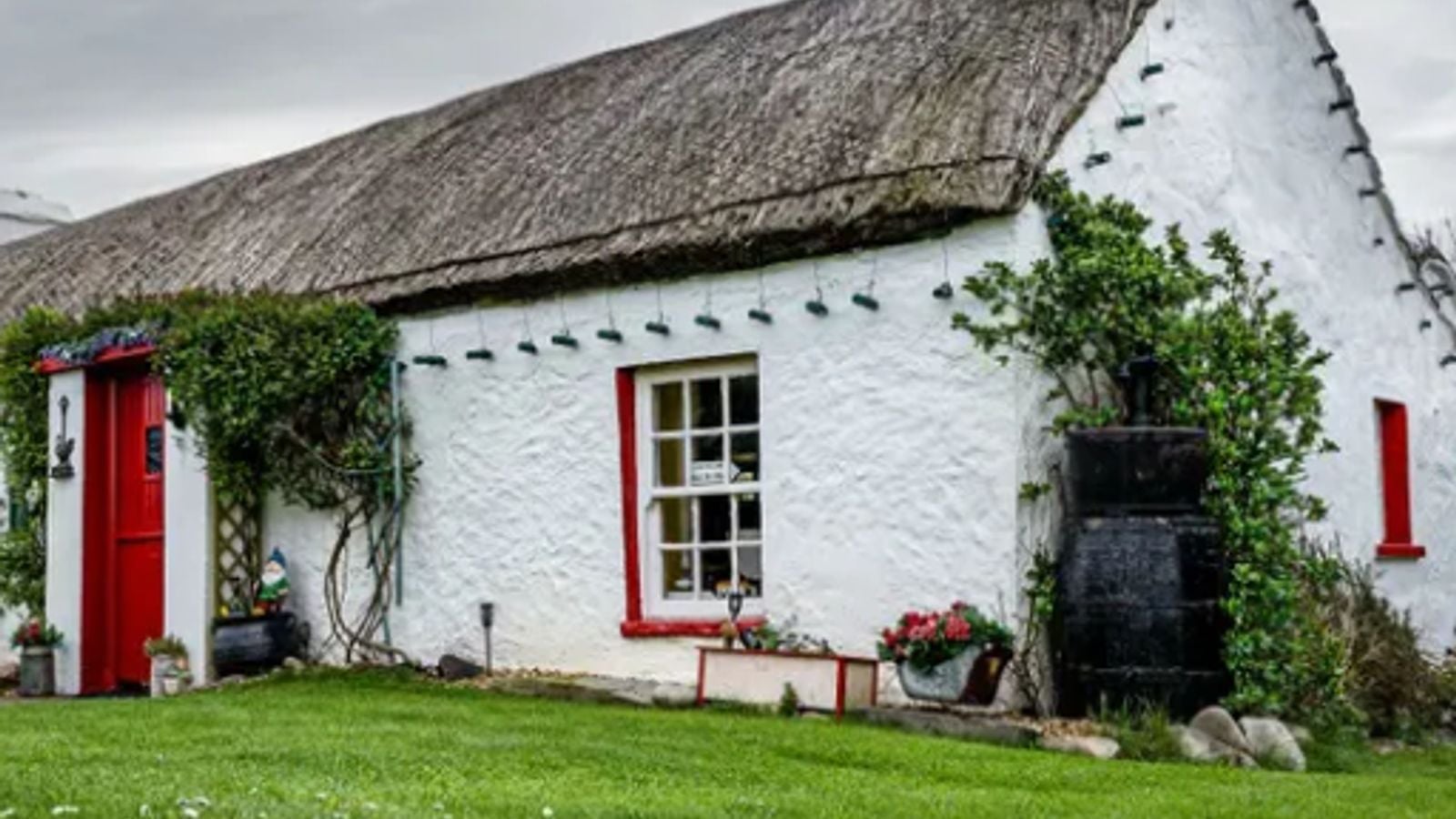
Walk past almost any old Irish farmhouse and look up at the door frame. There, nailed above the entrance, often rusted and weather-worn, you will almost certainly find a horseshoe. Most Irish families have done this for as long as anyone can remember, without being able to say exactly why. The real reason goes back to something far older than luck.
Iron Was the Original Protection
Long before Christianity took hold in Ireland, the people of this island believed deeply in the Good People — the fairies. And fairies, according to the old lore, had one great weakness: iron.
Cold iron could not be crossed, touched, or enchanted. A piece of iron in your hand meant the Good People could not take you. Iron nails hammered into a baby’s cradle kept a newborn from being swapped for a changeling. And iron above the door meant your threshold was closed to anything that meant you harm.
The horseshoe was the perfect object for this. Every household had horses. Every parish knew the blacksmith. And the blacksmith himself was considered something close to magical — a man who worked with fire and iron, the two elements believed to hold the greatest power over the unseen world.
The Blacksmith and the Sacred Trade
The smith held a peculiar place in Irish rural life. He was respected, relied upon, and a little feared. He could bend iron to his will, and that made him different from the farmer, the priest, even the schoolmaster.
When a horseshoe came loose from a horse, it was never simply discarded. It was kept — nailed to a door, placed under a doorstep, or hidden inside a chimney breast. The iron retained its power long after the horse was gone. A horseshoe found by chance in the road was considered especially lucky, an unexpected gift from the world just out of sight.
Some families buried horseshoes under the foundations of new houses. Others worked them into the walls during construction, invisible and permanent, protecting the home before a single person had slept under its roof.
Points Up or Points Down? The Great Irish Debate
Ask twenty Irish people which way to hang a horseshoe and you will receive twenty different answers, each delivered with absolute certainty.
The points-up camp says the luck pours in from above and collects inside the curve. The horseshoe acts as a vessel, holding good fortune within the home. Let the points face down and every drop of luck slides straight out onto the doorstep, lost to whoever passes by next.
The points-down camp disagrees entirely. They say the luck showers down on all who enter, raining blessing on visitors rather than hoarding it for the household alone. A generous tradition for a generous people.
Both traditions are deeply held. Neither has ever entirely won. In a good many old Irish homes, you will find one horseshoe hung each way — points up on the outer door, points down inside. Belt and braces, as the Irish say. Why choose when you can have both?
☘️ Enjoying this? 64,000+ Ireland lovers get stories like this every week. Subscribe free →
Why the Tradition Never Really Left
Ireland modernised faster than almost anywhere in the 20th century, yet the horseshoe stayed. Walk through any rural county — Clare, Galway, Tipperary, Donegal — and you will still find them above doorways on houses old and new alike.
Part of this is a conscious pride in old customs. But part of it is harder to explain. The Irish have always been comfortable holding two things at once: full modernity and an older, quieter knowledge underneath. You may not believe the fairies are listening. But why take the risk?
The magpie still gets saluted on the road. Salt still goes over the left shoulder. A new baby might be called an ugly thing, lest any spirit overhead hear it praised and grow envious. These Irish superstitions form a whole interlocking system of everyday protection, and the horseshoe above the door has always been its most visible sign.
Spotting Horseshoes on Your Visit to Ireland
If you are travelling through rural Ireland, keep your eyes up at doorways. Horseshoes are still common above the entrances of old farmhouses in every county. Some are painted in black gloss. Some are looped with twine or holly at Christmas. In many homes, no one can tell you when the horseshoe was first hung — only that it has always been there.
Blacksmiths still work across Ireland, and many sell old horseshoes to visitors wanting to take the tradition home. Craft markets in Galway and Kerry regularly stock them alongside other pieces of hand-worked iron.
To understand the deeper belief system behind this custom, Ireland’s fairy forts tell the rest of the story — earthwork mounds still left unploughed in fields across the island, respected out of a caution that centuries of modernity have not quite erased.
If you are planning a trip to discover Ireland’s living traditions, start with the Ireland trip planning guide — there is more to find here than any standard tourist itinerary will show you.
The horseshoe above the door is a small, quiet thing. It costs almost nothing and asks nothing of you except that you notice it. But it connects every Irish home to a world of belief stretching back beyond any written record. Some would call it superstition. The Irish might simply call it being careful.
☘️ You Might Also Love
Tours & experiences you might love


Powered by Viator. Some links are affiliate links — we may earn a small commission at no extra cost to you.
Secure Your Dream Irish Experience Before It’s Gone!
Planning a trip to Ireland? Don’t let sold-out tours or packed attractions spoil your journey. Iconic experiences like visiting the Cliffs of Moher, exploring the Rock of Cashel, or enjoying a guided walk through Ireland’s ancient past often sell out quickly—especially during peak travel seasons.

Booking in advance guarantees your place and ensures you can fully immerse yourself in the rich culture and breathtaking scenery without stress or disappointment. You’ll also free up time to explore Ireland’s hidden gems and savour those authentic moments that make your trip truly special.
Make the most of your journey—start planning today and secure those must-do experiences before they’re gone!