

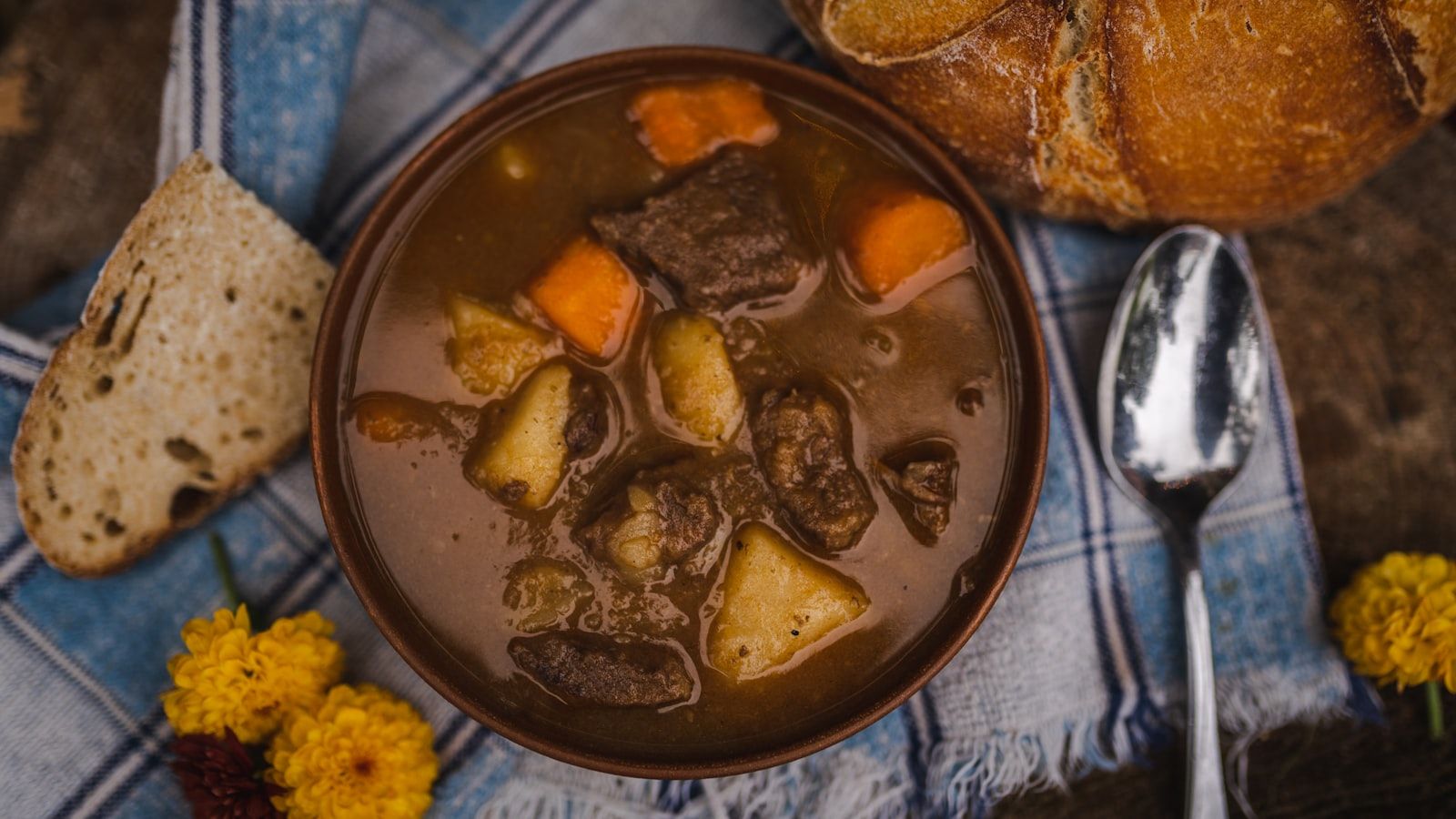
There is no dish on an Irish pub menu that has earned its place quite like the stew. It didn’t arrive from France or Italy. It didn’t come with a chef’s name attached. It came from a pot on an open fire, built from whatever was available, made by hands that had very little else to offer.
That story is still in the bowl.
What’s the best Irish dish of all time? ☘️
Vote in our Best Irish Food poll — recipes nominated by the community.
What’s your Irish county’s signature dish? ☘️
Different counties claim different dishes — Your County’s Signature Food tells you which one your county is known for, with a short story behind it.
What Goes Into It — and Why
The original Irish stew was mutton, potatoes, onions, and water. Nothing more.
Not because cooks lacked imagination. Because those were the four things most Irish families could reliably have in the 19th century.
Potatoes were the staple crop. Onions grew well in the damp climate. Mutton — from older sheep no longer producing wool — was the affordable protein of rural life. Beef was raised here in vast quantities. But most of it was exported. The people who raised the cattle rarely ate it.
That gap between what Ireland produced and what its people could afford sits quietly at the bottom of every bowl of stew.
A Dish Built for Stretching
Irish stew was never a dish for one. It was a dish for the pot.
Add more water. Put in another potato. A handful of barley if you had it. That was how a meal for four became a meal for six when a neighbour knocked at the door.
In rural Ireland, this kind of improvised generosity wasn’t remarkable — it was expected. Families across Connaught, Munster, and Ulster each had their own variation. Some used lamb. Some added pearl barley or carrots. Some didn’t. But the instinct was always the same: make enough to share.
The dish also crossed class lines. In big houses, the kitchen prepared a richer version with more meat. In the cottage beside the same field, the same broth stretched thinner. But it was recognisably the same dish — cooked the same way, eaten for the same reason.
How It Arrived in the Pub
The move from the kitchen hearth to the pub menu wasn’t complicated. It was practical.
When Ireland’s pubs became the gathering place for working men and rural communities, they needed food that could sit on a stove all day without spoiling. Stew was the answer. It improved with time. The flavours deepened. The meat softened. A pot started in the morning was better by noon.
Guinness found its way into the broth in Dublin, where the brewery was a constant presence in daily life. Lamb held its ground in the west, where sheep farming remained dominant. The dish adapted — but the heart of it stayed the same.
☘️ Enjoying this? 64,000+ Ireland lovers get stories like this every week.
Thinking about it for retirement? If you’ve started thinking seriously about retiring there, our complete our full Retire in Ireland guide covers the visa, healthcare, cost-of-living, and the regions worth shortlisting.
What Visitors Come to Find
Ireland’s food heritage has become a real draw for travellers. And Irish stew — slow-cooked, served with a thick slice of brown bread — is near the top of the list.
You’ll find versions of it across the world, in Irish-American bars in Boston and Chicago, in pubs in Melbourne and Sydney. But most people who seek it out know there is a difference between that version and the one you find in a small pub off a Connemara road on a wet afternoon.
The best pub stew in Ireland isn’t fancy. There’s no foam or garnish. It comes in a wide bowl, bread on the side, and it tastes like someone’s grandmother made it. In a sense, she did.
For more on Ireland’s food culture, our guide to traditional food and drink in Ireland covers the full picture — from smoked salmon to fresh seafood chowder and everything in between.
Where to Find the Real Thing
The west of Ireland remains the heartland of traditional stew. Connemara, the Aran Islands, and the towns along the Wild Atlantic Way serve it in pubs that have been doing so for generations.
But you don’t need to travel deep into the countryside. Any genuine Irish pub — not a tourist-themed bar, but the kind with worn stools and a local dog under a table — will have a version worth trying.
Our guide to the best pubs in Ireland covers the places worth seeking out, county by county. And if you’re planning a first trip, our Ireland travel planning guide covers all the essentials before you land.
A bowl of Irish stew is many things at once. It is the ingenuity of a people who turned very little into something memorable. It is the instinct of a culture that always made room at the table for one more. And it is, still today, the most unassuming welcome a country can offer: sit down, the stew is on.
☘️ Join 64,000+ Ireland Lovers
Every Friday, get Ireland’s hidden gems, local secrets, and travel inspiration — the kind you won’t find in any guidebook.
Subscribe free — enter your email:
Love more? Join 43,000 Scotland lovers → · Join 30,000 Italy lovers → · Join 7,000 France lovers →
Free forever · · Unsubscribe anytime
Tours & experiences you might love


Powered by Viator. Some links are affiliate links — we may earn a small commission at no extra cost to you.
Secure Your Dream Irish Experience Before It’s Gone!
Planning a trip to Ireland? Don’t let sold-out tours or packed attractions spoil your journey. Iconic experiences like visiting the Cliffs of Moher, exploring the Rock of Cashel, or enjoying a guided walk through Ireland’s ancient past often sell out quickly—especially during peak travel seasons.

Booking in advance guarantees your place and ensures you can fully immerse yourself in the rich culture and breathtaking scenery without stress or disappointment. You’ll also free up time to explore Ireland’s hidden gems and savour those authentic moments that make your trip truly special.
Make the most of your journey—start planning today and secure those must-do experiences before they’re gone!
Subscribe Free