

In the days before printing presses, before schools, before written records — Ireland had the seanchaí.
One person. One voice. An entire people’s history carried inside their head.
When they walked into a room, conversation stopped. When they sat down, children pressed close and fires burned low. Ireland trusted its memory, its legends, and its very identity to these wandering storytellers. And for a thousand years, they didn’t let it down.
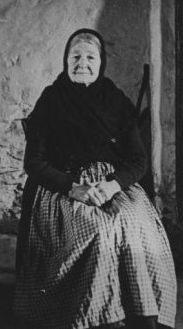
Who Was the Seanchaí?
The word seanchaí (pronounced SHAN-a-khee) comes from the Irish sean, meaning old, and a suffix meaning keeper or possessor.
They were professional rememberers. Part historian, part entertainer, part keeper of the law.
In early Irish society, the seanchaí held an official rank. They sat alongside kings at feasts and councils. They were paid, protected, and given safe passage through territories at war.
What the Brehon Laws Guaranteed Them
Under Ireland’s ancient Brehon Laws — the legal code that governed Irish life for over a thousand years — the seanchaí had a defined status. Their knowledge was treated as property.
A trained seanchaí was expected to memorise a repertoire of 350 tales — 250 “primary” stories and 100 “secondary” ones, graded by importance and complexity rather than by season.
If you harmed a seanchaí, you didn’t just injure a person. You damaged the community’s living archive. The law recognised the difference.
What They Carried in Their Memory
The seanchaí’s repertoire was enormous. They knew the genealogy of every important family in the region — who married whom, which disputes were settled, which promises had been made.
They carried the mythological cycles: tales of Cú Chulainn, the Fianna, and the Tuatha Dé Danann. But also the ordinary stories — why a particular well was sacred, why two families hadn’t spoken in three generations, why certain fields were never ploughed.
Their memory was the community’s legal record, its moral compass, and its entertainment — all at once.
The Night Visiting Tradition
Seanchaí didn’t perform on stages. They moved from house to house through the winter months — a tradition called the céilí in its broadest sense.
A family would clear space and bring neighbours. The seanchaí arrived like a gift. They might stay a night, or several. Food and shelter were the payment.
Children grew up hearing these stories before they could read. The tales shaped how they understood Ireland, their family, their place in the world.
☘️ Enjoying this? 64,000+ Ireland lovers get stories like this every week. Subscribe free →
How They Survived Everything
The Norman invasion came. The Plantations followed. The Penal Laws arrived, closing schools and crushing Irish culture. The seanchaí survived all of it.
When it became dangerous to speak Irish in public, stories moved underground — to the kitchen table, the barn, the hedgerow. Knowing the old tales became an act of quiet resistance.
The seanchaí adapted. They began telling stories in English when necessary, but kept the Irish rhythms, the Irish structure, the Irish heart.
The Last Bearers of the Tradition
By the nineteenth century, the seanchaí was fading. Emigration hollowed out rural communities. Schools taught reading. Newspapers replaced oral news.
But not entirely. The Irish Folklore Commission, founded in 1935, sent scholars across the country to record seanchaí before their knowledge was lost. What they collected fills an archive of over two million pages — one of the largest collections of oral folklore in the world.
In parts of Connemara and the Aran Islands, the tradition still flickers. There are still people who know the old stories the way their grandparents knew them — not from a book, but from sitting in the dark and listening.
Why It Still Matters
Modern Ireland is full of storytellers — novelists, playwrights, songwriters, comedians. The Irish literary tradition is world-famous. It didn’t come from nowhere.
It came from a thousand years of a people who believed stories were too important to be written down, because written things can be burned.
There are concepts in Irish that English simply doesn’t have — whole ways of seeing the world that exist only in the language. The seanchaí was their guardian. The person who made sure they were never forgotten.
The next time you sit in an Irish pub and someone begins a story that seems to have no end — that wanders and circles and gathers detail until suddenly, somehow, it arrives exactly where it was always going — you’re hearing something ancient.
You’re hearing the seanchaí in the DNA of the Irish voice.
☘️ You Might Also Love
☘️ Join 64,000+ Ireland Lovers
Every Friday, get Ireland’s hidden gems, local secrets, and travel inspiration — the kind you won’t find in any guidebook.
Free forever · Unsubscribe anytime
Tours & experiences you might love


Powered by Viator. Some links are affiliate links — we may earn a small commission at no extra cost to you.
Secure Your Dream Irish Experience Before It’s Gone!
Planning a trip to Ireland? Don’t let sold-out tours or packed attractions spoil your journey. Iconic experiences like visiting the Cliffs of Moher, exploring the Rock of Cashel, or enjoying a guided walk through Ireland’s ancient past often sell out quickly—especially during peak travel seasons.

Booking in advance guarantees your place and ensures you can fully immerse yourself in the rich culture and breathtaking scenery without stress or disappointment. You’ll also free up time to explore Ireland’s hidden gems and savour those authentic moments that make your trip truly special.
Make the most of your journey—start planning today and secure those must-do experiences before they’re gone!