

Walk into almost any traditional music session in Ireland and you might spot someone sitting quietly in the corner, a leather bag tucked under one arm, a set of wooden pipes balanced across their lap. They are not standing. They are not marching. They are barely moving.
This is the uilleann piper — and what they are doing is one of the most extraordinary things in the world of music.
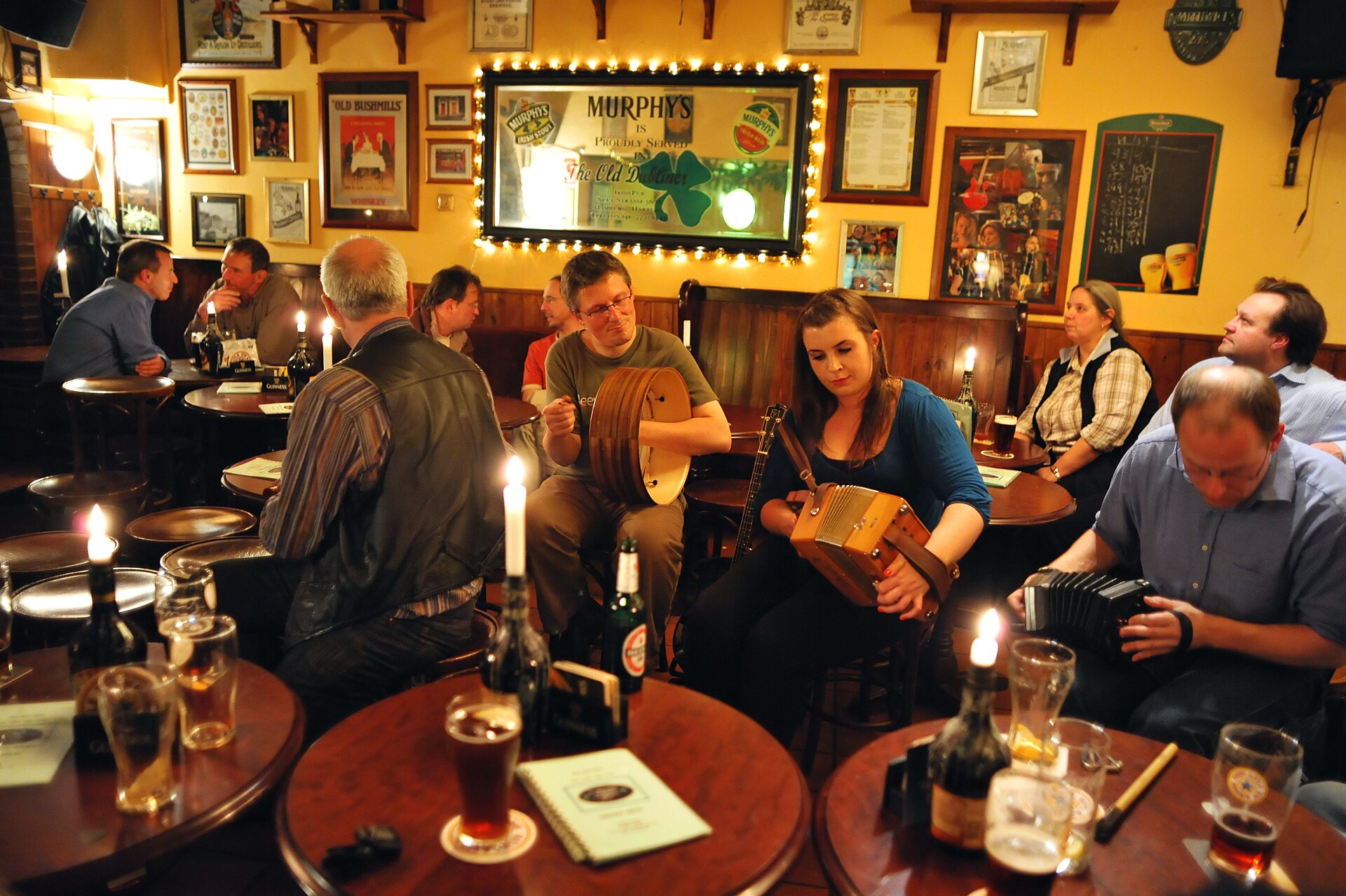
A Bagpipe Built for the Indoors
Most people picture bagpipes as an outdoor instrument — a kilted figure striding across a windswept hillside, filling the bag with each breath. The uilleann pipes work nothing like that.
The player sits. A leather bellows, tucked under the right elbow, pumps air into the bag. No breath enters the instrument at all. This means the piper can sing while playing — something impossible on any other bagpipe in the world.
It also means the uilleann pipes are quieter. They were designed for intimate spaces: a warm kitchen, a parlour, a crowded pub on a winter evening. The sound is reedy, layered, and achingly beautiful.
The Instrument That Grew Its Own Voice
The uilleann pipes reached their current form in the 18th century, developed by Irish instrument makers who wanted something suited to the house céilí and the long winter night.
Unlike Scottish Highland pipes, which produce a single octave, the uilleann chanter can reach two full octaves. Three drone pipes hum a continuous chord beneath the melody. Then there are the regulators — keyed pipes lying across the player’s knee that can sound chords on demand.
No other nation has produced an instrument quite like it. Uilleann means elbow in Irish. The name says everything about how it works.
How the Famine Nearly Silenced Them
The tradition of uilleann piping almost did not survive the 19th century.
The Great Famine of the 1840s devastated Irish cultural life. Pipemakers died. Masters had no students. The tradition passed from teacher to pupil in an unbroken chain — and when that chain broke, entire regional styles were lost for ever.
By the early 20th century, only a handful of players were keeping the instrument alive. Séamus Ennis, Willie Clancy, and Finbarr Furey became near-mythical figures — quiet keepers of a flame that could easily have gone out.
In 1968, a group of musicians and enthusiasts founded Na Píobairí Uilleann — the Uilleann Pipers’ association — in Dublin. Today it has members in more than 30 countries and holds a dedicated piping centre on Henrietta Street in the city.
☘️ Enjoying this? 64,000+ Ireland lovers get stories like this every week. Subscribe free →
The Hardest Instrument in Irish Music
Ask any uilleann piper how long it takes to master and they will say: years. A decade at minimum. Two decades if you want to play with real authority.
The chanter is learned first. Then the drones. Then the regulators. Each element demands a separate skill, and pulling all three together into coherent music is considered one of the most demanding achievements in any folk tradition anywhere in the world.
Some musicologists compare the complexity of the uilleann pipes to a classical pipe organ. Beginners can sound painful for years. But when a master plays — when everything locks into place — the sound fills a room in a way that is difficult to describe and impossible to forget.
Where to Hear Them Today
County Clare is the heartland of uilleann piping. Every July, Miltown Malbay hosts the Willie Clancy Summer School — a week-long gathering of traditional musicians that draws players from across the world. The pipes are everywhere: in sessions, workshops, and late-night kitchens. It is one of the most extraordinary music events in Europe, and almost unknown outside Ireland.
In Dublin, the Na Píobairí Uilleann centre on Henrietta Street is open to visitors, with regular sessions and an archive of recordings stretching back decades. If you want to understand what really happens at an Irish trad session, hearing the pipes in a live setting is where it starts.
For anyone planning a trip to Ireland, checking the session schedule in Clare or Cork in advance is well worth the effort. You may walk into a small pub and hear something that stays with you for the rest of your life.
A Sound That Belongs Only to Ireland
Ireland has given the world many musical gifts — the regional fiddle styles, sean-nós singing, the driving beat of the bodhrán. But nothing is quite as distinctly, unmistakably Irish as the uilleann pipes.
They were built to fit inside a room. They were built so the player could breathe, and sing, and be part of the gathering. They were built for the music that happens when people sit close together and the night stretches long ahead of them.
When you hear them in a small pub in Clare or a festival hall in Dublin, you understand something about Ireland that no guidebook can quite put into words.
The piper is sitting down. But the music goes everywhere.
☘️ You Might Also Love
☘️ Join 64,000+ Ireland Lovers
Every Friday, get Ireland’s hidden gems, local secrets, and travel inspiration — the kind you won’t find in any guidebook.
Free forever · · Unsubscribe anytime
Tours & experiences you might love


Powered by Viator. Some links are affiliate links — we may earn a small commission at no extra cost to you.
Secure Your Dream Irish Experience Before It’s Gone!
Planning a trip to Ireland? Don’t let sold-out tours or packed attractions spoil your journey. Iconic experiences like visiting the Cliffs of Moher, exploring the Rock of Cashel, or enjoying a guided walk through Ireland’s ancient past often sell out quickly—especially during peak travel seasons.

Booking in advance guarantees your place and ensures you can fully immerse yourself in the rich culture and breathtaking scenery without stress or disappointment. You’ll also free up time to explore Ireland’s hidden gems and savour those authentic moments that make your trip truly special.
Make the most of your journey—start planning today and secure those must-do experiences before they’re gone!