

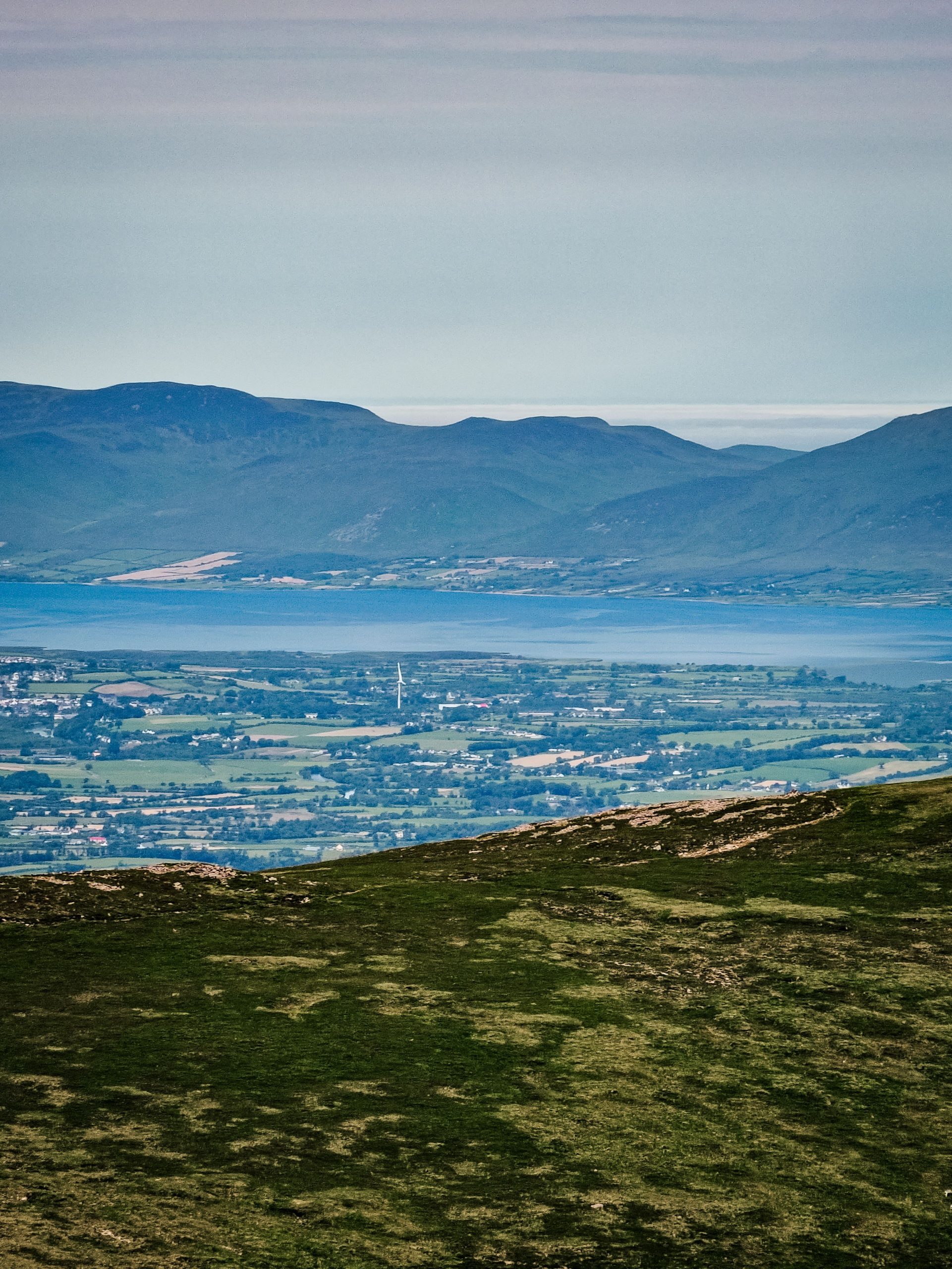
On the morning of August 16, 1858, the most important telegram in human history began its journey from a small cable station on Valentia Island, off the southwest coast of County Kerry. It was composed of 98 words. It was addressed to the President of the United States. And it was sent by Queen Victoria.
The message would take nearly sixteen hours to cross the Atlantic. Not because the distance was so great, though it was — more than two thousand nautical miles of undersea cable stretched between Kerry and Newfoundland. Not because the technology was primitive, though by our standards it absolutely was. It took sixteen hours because the cable itself, the most celebrated engineering achievement of the Victorian age, was already dying.
Nobody knew that yet. What they knew, on both sides of the ocean, was that the impossible had been done. Continents had been wired together. The world had shrunk. And somewhere beneath the grey Atlantic, running over the underwater plateau that connects the Old World to the New, lay the proof: three thousand kilometres of copper and gutta-percha, the result of a decade of obsession, failed experiments, and one American’s refusal to accept that nature could not be negotiated with.
The Man Who Couldn’t Take No for an Answer
Cyrus West Field was not an engineer. He was a paper merchant. Born in 1819 in Stockbridge, Massachusetts, one of ten children of a Congregationalist minister, Field had made himself wealthy in the New York dry-goods and paper trade. By his early thirties he had retired to a house in Gramercy Park, with $250,000 in the bank and nothing obvious left to prove.
Then, in January 1854, his brother Matthew introduced him to a man named Frederick Gisborne, who was trying to fund a telegraph cable between Newfoundland and Nova Scotia. Field listened to Gisborne’s proposal, then looked at a globe on his study floor. He traced the logic outward: if you could wire Nova Scotia to Newfoundland, why not wire Newfoundland to Ireland? Ireland to England was already done. England to everywhere was nearly done. The whole world, connected.
Within weeks, Field was raising money. He secured $1.5 million from wealthy New York associates. He crossed the Atlantic — he would do so more than thirty times in pursuit of this project — to lobby British officials and find technical partners. When British Foreign Secretary Lord Clarendon asked what he would do if the cable failed, Field replied without hesitation: “Charge it to profit and loss, and go to work to lay another.”
In 1856, Field and his partners — including engineer Charles Tilston Bright and telegraph entrepreneur John Watkins Brett — incorporated the Atlantic Telegraph Company. They had ships, funding, and ambition. What they needed now was Ireland.
Why Kerry?
The choice of Valentia Island was determined by geography and nothing else. At the western extreme of County Kerry, Valentia juts further into the Atlantic than almost anywhere else in Ireland, and it offered a harbour and a shoreline from which the cable could be run directly into open Atlantic water. The underwater plateau between Ireland and Newfoundland, far shallower than the deep ocean trenches to either side, gave the cable a relatively stable resting place. Valentia was simply the closest point of the Old World to the New — its American cable partner, Heart’s Content in Newfoundland, actually lies some four degrees of latitude further south.
In 1857, the first attempt failed. The cable snapped after more than three hundred miles had been paid out. In 1858, Field reorganised. Two ships — the British naval vessel HMS Agamemnon and the American USS Niagara — would each carry half the cable from their respective continents, meet in the middle of the Atlantic, splice the two ends together, and then sail in opposite directions. Agamemnon toward Kerry. Niagara toward Newfoundland.
On August 5, 1858, both ships reached their destinations simultaneously. The cable had been laid. Field stood on the shore at Valentia Bay and, by one account, could find no words adequate to the moment. He managed only: “I have no words to express the feelings which fill my heart tonight.”
Sixteen Hours to Cross the Atlantic
Eleven days after the cable was completed, the first official exchange occurred. The Directors of the Atlantic Telegraph Company sent the first message: “Europe and America are united by telegraphic communication. Glory to God in the highest; on earth peace, good will towards men.”
Then Queen Victoria wrote to President James Buchanan.
Her message was precise and warm, as royal communications tend to be when the occasion genuinely warrants it. “The Queen desires to congratulate the President upon the successful completion of this great international work, in which The Queen has taken the deepest interest.” She described the cable as a link between nations and expressed hope that it would prove an additional bond between them. Buchanan replied that the transatlantic cable represented “a triumph more glorious, because far more useful to mankind than was ever won by conqueror on the field of battle.”
Before the cable, those words would have taken at minimum twelve days to cross the ocean by ship. They arrived in hours — slowly, haltingly, with the needle of the receiving instrument trembling across the page — but they arrived. The two most powerful nations on earth had conducted a conversation across the floor of the Atlantic Ocean.
In New York, the city briefly lost its mind. On September 1, 1858, a parade moved up Broadway. Newspapers ran the story in grandiloquent terms. A commemorative fireworks display was staged — and in an outcome that feels almost too on-the-nose, the fireworks accidentally set New York’s City Hall on fire. Tiffany & Company acquired surplus cable and sold off pieces as souvenirs. Cyrus Field was a hero. The age of instantaneous global communication had arrived.
The age lasted twenty-seven days.
The Surgeon and the Voltage
This is where the story turns, and where a remarkable figure steps into the light: Edward Orange Wildman Whitehouse, Chief Electrician of the Atlantic Telegraph Company, and the man who killed the cable.
Whitehouse was not, strictly speaking, an engineer. He had trained as a surgeon through the Royal College of Surgeons and built a successful medical practice in Brighton before developing an interest in electricity. He was self-taught in electrical theory, possessed of firm opinions, and constitutionally unsuited to being told he was wrong. From the moment the cable was laid, he had a problem: the signals coming through were weak and deteriorating.
His solution was to push harder. Whitehouse deployed a five-foot induction coil and sent what investigators would later estimate at roughly two thousand volts down the cable — trying, in essence, to shout louder across two thousand miles of wire. The cable’s insulation was a material called gutta-percha, a natural rubber tapped from Malaysian trees. Gutta-percha can handle a great deal, but not that. When the post-mortem examination was conducted on recovered sections of cable, investigators found holes burned clean through the insulation.
The cable had been electrocuted from within.
William Thomson — the Belfast-born physicist who would later become Lord Kelvin — had argued from the beginning that Whitehouse’s approach was wrong. Rather than blasting more voltage at the problem, Thomson proposed the opposite: use a far more sensitive receiving instrument, the mirror galvanometer he had developed, to detect even the faint signals that the cable was capable of carrying. Thomson’s approach was quiet, precise, and correct. Whitehouse dismissed it.
The last clear message was received through the cable on September 1, 1858 — the same day New York was holding its parade. The cable carried 271 messages in its twenty-seven days of operation. By October 20, it had gone completely silent. The Atlantic Telegraph Company’s board dismissed Whitehouse. An inquiry in 1861 concluded that he bore the majority of the responsibility for the failure.
Whitehouse, for his part, published a vigorous public defence, blamed everyone else, and eventually faded from history. Thomson, meanwhile, went on to help lay the successful cable of 1866. He was later elevated to the peerage as Lord Kelvin.
The Eight Years in Between
For Field, the failure was not the end. It was, characteristically, a data point. The Civil War intervened and put transatlantic cable work on hold. When Field returned to the project in the mid-1860s, the technology had been refined. The copper wire was better. The insulation was better. The ships were bigger — the team used the SS Great Eastern, Brunel’s iron leviathan, the largest ship then afloat, its cargo hold large enough to carry the entire cable in a single load without splicing.
An 1865 attempt broke the cable in deep water. Field funded a recovery operation, which found the lost end and spliced in a new section. On July 27, 1866, the cable from Foilhommerum Bay on Valentia reached Heart’s Content in Newfoundland and held. Two working transatlantic cables were eventually operating. The era of the electrical telegraph across the Atlantic had genuinely begun.
Cyrus Field received a Congressional gold medal. His epitaph would note his “courage, energy and perseverance” — a fair summary of a career that included more than thirty Atlantic crossings, multiple ruinous failures, and the kind of stubbornness that turns out, occasionally, to be the most useful quality a person can possess.
What’s Still There
Valentia Island today is a different kind of place to find yourself in than the bustling Victorian cable terminus of 1858. The island sits off the Iveragh Peninsula, connected to the mainland at Portmagee and reachable via the Ring of Kerry driving route, with a population measured in the hundreds. The Atlantic rolls in from the west with the same indifference it showed when the Agamemnon was paying out cable from her stern.
The original Telegraph Field — where the cable first came ashore in 1858 — is still there, a modest patch of land that carries the weight of what was once the world’s most ambitious piece of infrastructure. In Knightstown, the island’s main village, the Valentia Transatlantic Cable Station has been opened as an exhibition space. Called “The Eighth Wonder” — a name that tracks directly back to the Victorian press coverage — it offers an immersive account of the cable’s history, including a working Morse code installation where visitors can transmit their own messages. The site is on the UNESCO World Heritage tentative list, alongside Heart’s Content in Newfoundland: the two ends of a wire that briefly, imperfectly, and magnificently joined two worlds.
The cable station building is on The Promenade in Knightstown. There is no parking at the station itself; visitors leave their cars a couple of hundred metres away, by the Church of the Immaculate Conception, and walk. It is a small and unhurried approach to what was once the nerve centre of the most technologically ambitious project the nineteenth century had attempted.
That feels about right. Some achievements are best approached slowly, with a little silence to think about what was done here — and what nearly wasn’t.
The Irish connection to global communications technology is older, and stranger, and more consequential than most people realise. It began in a field in Kerry, with a surgeon’s poor judgment and a paper merchant’s refusal to quit, and a queen’s 98-word message that crept across two thousand miles of ocean floor and arrived, eventually, in the New World.
Related reading: our companion feature, The Wire Beneath the Water: How a Kerry Island Became the Birthplace of Global Telecommunications, covers the same story in more depth, including the 1866 cable’s commercial impact.
☘️ Join 64,000+ Ireland Lovers
Every weekday morning, get Ireland’s hidden gems, local secrets, and travel inspiration — the kind you won’t find in any guidebook.
Subscribe free — enter your email:
Already subscribed? Download your free Ireland guide (PDF)
📲 Know someone who’d love this? Share on WhatsApp →
Love more? Join 43,000 Scotland lovers → · Join 29,000 Italy lovers → · Join 7,000 France lovers →
Free forever · Unsubscribe anytime
Tours & experiences you might love


Powered by Viator. Some links are affiliate links — we may earn a small commission at no extra cost to you.
Secure Your Dream Irish Experience Before It’s Gone!
Planning a trip to Ireland? Don’t let sold-out tours or packed attractions spoil your journey. Iconic experiences like visiting the Cliffs of Moher, exploring the Rock of Cashel, or enjoying a guided walk through Ireland’s ancient past often sell out quickly—especially during peak travel seasons.

Booking in advance guarantees your place and ensures you can fully immerse yourself in the rich culture and breathtaking scenery without stress or disappointment. You’ll also free up time to explore Ireland’s hidden gems and savour those authentic moments that make your trip truly special.
Make the most of your journey—start planning today and secure those must-do experiences before they’re gone!