

Ask any Dubliner what they want on a cold winter’s night, and they won’t say a steak or a gourmet risotto. They’ll say coddle. It’s a dish as tied to Dublin as the Liffey itself — yet you’ll barely find it on a restaurant menu in the entire city.
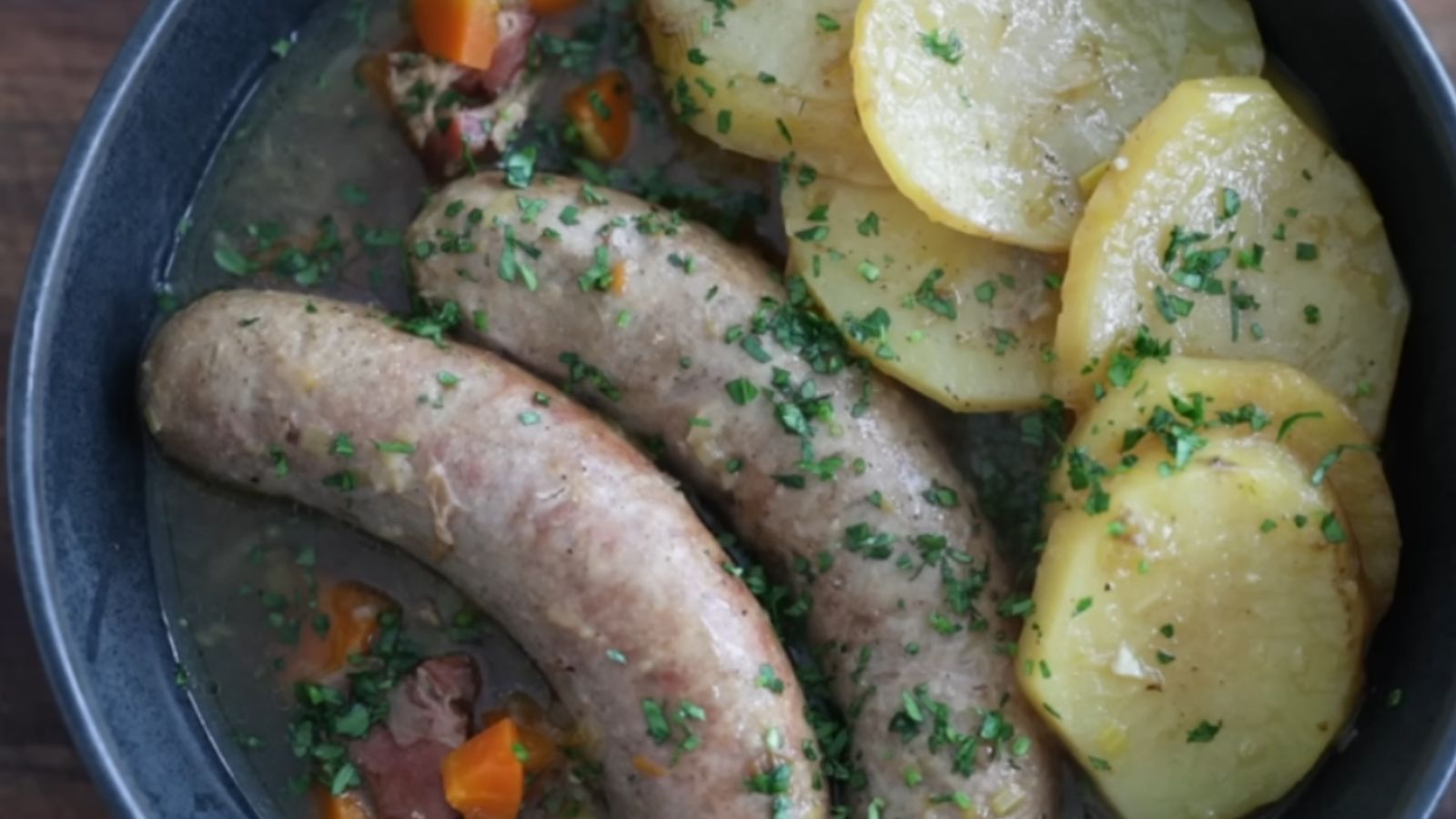
What Is Dublin Coddle?
Coddle is simplicity given a name. Sausages, rashers, potatoes, and onions — layered and slow-cooked in water until they become something altogether more comforting than the sum of their parts.
The word itself likely comes from the old English caudle, meaning to warm gently. And that warmth is exactly what the dish delivers. No two families make it the same way. Some add barley. Some swear by a splash of Guinness. Others insist the only true coddle is made with whatever is left in the fridge on a Saturday night.
A Dish Born From Poverty
Coddle has its roots in necessity. In Dublin’s old Liberties quarter and the tenements of the north inner city, families stretched what they had. Leftover sausages and rashers found their way into the pot, simmering low and slow until the flavours surrendered to each other completely.
It wasn’t considered a recipe — it was just what you did. Food historians trace it back at least to the 18th century, with literary references appearing in Jonathan Swift’s writing. James Joyce name-checked it in Dubliners. Brendan Behan reportedly requested it on his deathbed. It is, in short, woven into Dublin’s DNA.
Why Restaurants Don’t Serve It
☘️ Love Irish Food & Culture?
Every Wednesday, we send our best Irish recipes, food stories, and kitchen traditions straight to your inbox. Join 64,000+ readers who love Ireland.
Here’s the curious thing. A dish beloved enough to survive centuries somehow never made the leap to professional kitchens. Ask a Dublin chef and you’ll likely get a grin and a shrug.
Part of it is the look. Coddle doesn’t photograph particularly well — it’s a pale, steaming pool of comfort rather than something you’d put on a magazine cover. In an age of food photography, that’s a real obstacle.
Part of it is the ambiguity. There’s no fixed recipe, no canonical version, no culinary authority to validate it. Every family’s version is the version, and any restaurant brave enough to serve it would face instant comparison to every grandmother who ever made it properly. It exists in a space beyond critique — and perhaps that’s exactly where it belongs.
How Dubliners Actually Eat It
Coddle is home food, full stop. It’s what a parent makes when someone comes home drenched from a November downpour. It’s the meal that appears on Saturday nights, assembled from the tail end of the weekly shop.
It’s typically served with thick slices of soda bread to mop up the broth — because the broth is, arguably, the best part. You eat it from a deep bowl, with a mug of tea close at hand, and you don’t hurry. There’s nothing hurried about coddle. It demands that you sit down, exhale, and stay a while.
If you want to experience it, your best chance is a Dubliner who invites you in. Failing that, a handful of community cafés in the city’s older residential neighbourhoods occasionally serve it — not as a heritage item, but simply because it’s what the regulars want.
Finding the Real Dublin on a Plate
Coddle is a reminder that the most authentic food cultures rarely make it onto tourist menus. The dishes people actually eat — the ones passed down without a recipe card — live in kitchens, not restaurants.
If you’re visiting Dublin, look beyond the obvious. Explore the city’s traditional Irish foods that most visitors overlook, and leave room for the unexpected. Some of the most memorable food moments in Ireland happen not at a Michelin table but at someone’s kitchen table.
For those planning a first trip, our Ireland travel planning hub covers everything from where to stay to what to eat. And for a deeper Dublin experience woven into a wider adventure, the 10-day Ireland itinerary for American travellers is a good place to start.
The Irish Way With Comfort
There’s a reason coddle has survived this long. It doesn’t ask for expensive ingredients or complex technique. It asks only for patience and a low flame.
In that sense, it says something true about Irish cooking more broadly — that the best food here was never about showing off. It was about feeding people well, warming them through, and making them feel they were exactly where they should be.
If you’d like more of Ireland’s hidden culture delivered to your inbox, the Love Ireland newsletter is a weekly dose of stories, places, and moments that don’t always make the guidebooks.
A Dish That Belongs to Dublin Alone
Every city has food that belongs only to it — dishes the locals claim with quiet pride and rarely bother to explain. Dublin’s is coddle. Not because it’s refined or impressive, but because it is entirely, authentically theirs.
If you ever find yourself sitting in a Dublin kitchen on a cold evening with a bowl of it in front of you, you’ll understand immediately. The broth, the soft sausages, the yielding potatoes — it’s not a dish you taste so much as one you feel.
And you’ll understand, too, why they never put it on a menu.
☘️ You Might Also Love
64,000 Ireland lovers can’t be wrong.
Every week, our free newsletter delivers hidden gems, seasonal guides, local stories, and practical travel tips — straight to your inbox. Join the community that loves Ireland as much as you do.
☘️ Get More Irish Recipes & Stories
Join 64,000+ readers for weekly Irish recipes, food traditions, travel guides, and hidden gems. Free every morning.
📥 Free Download: Ireland Travel Planning Guide
Our most popular resource — itineraries, insider tips, and the 50 places you must not miss.
Tours & experiences you might love


Powered by Viator. Some links are affiliate links — we may earn a small commission at no extra cost to you.
Secure Your Dream Irish Experience Before It’s Gone!
Planning a trip to Ireland? Don’t let sold-out tours or packed attractions spoil your journey. Iconic experiences like visiting the Cliffs of Moher, exploring the Rock of Cashel, or enjoying a guided walk through Ireland’s ancient past often sell out quickly—especially during peak travel seasons.

Booking in advance guarantees your place and ensures you can fully immerse yourself in the rich culture and breathtaking scenery without stress or disappointment. You’ll also free up time to explore Ireland’s hidden gems and savour those authentic moments that make your trip truly special.
Make the most of your journey—start planning today and secure those must-do experiences before they’re gone!