

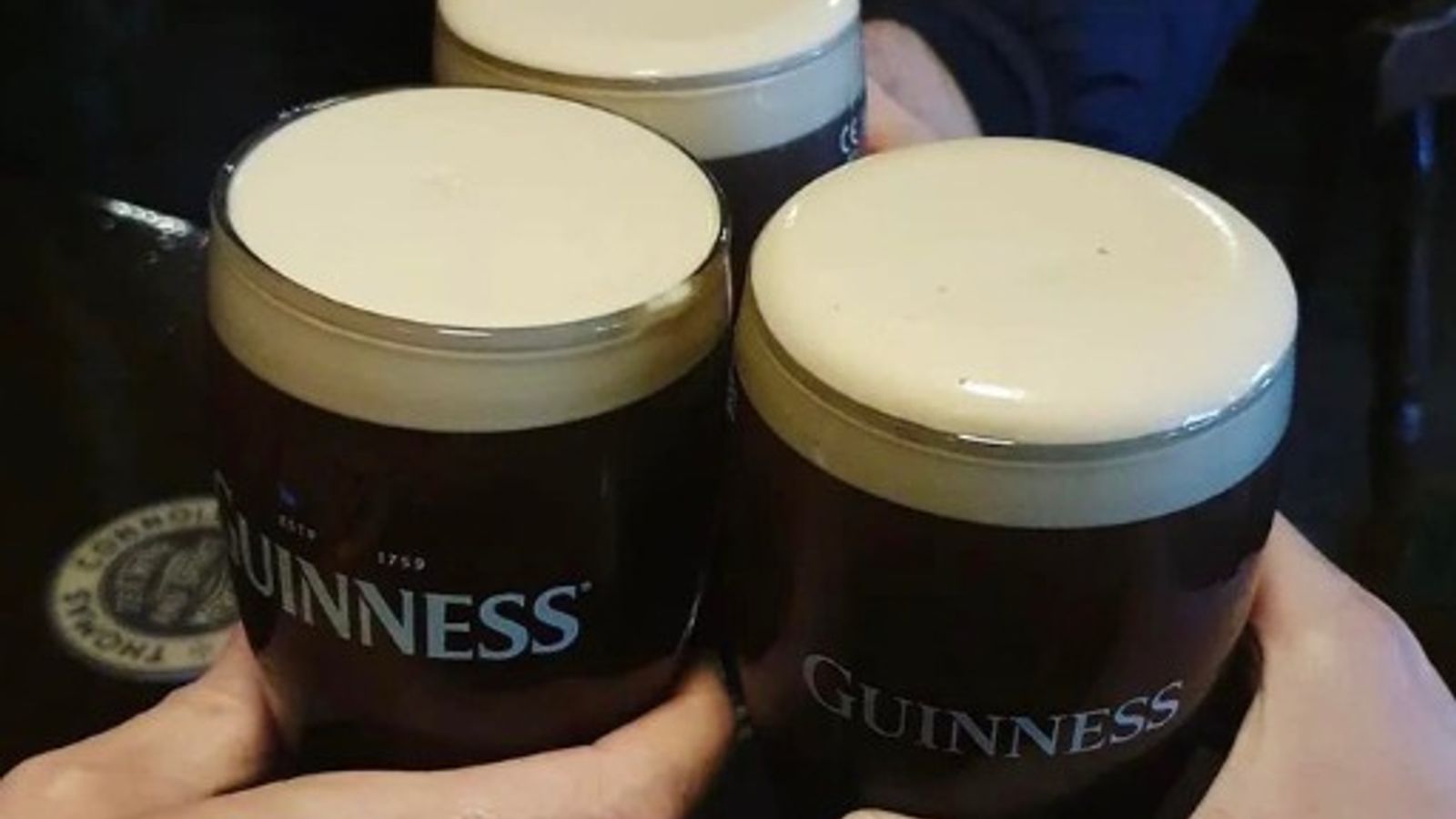
Walk into any pub in Dublin and order a Guinness. The barman tilts the glass at an angle, fills it three-quarters of the way, then sets it down on the bar and walks away.
Try the Guinness Timer ⏱️
A perfect pour takes 119.5 seconds — the rest, two minutes, gives the stout time to settle. Time your own pint and see if you wait long enough.
You wait. The dark liquid surges and separates, the creamy white head building slowly above the black body. Nobody hurries this. Nobody apologises for the delay.
That pause has a precise duration: 119.5 seconds. And there is a very specific reason behind it.
The Two-Stage Pour Is About Science, Not Show
Guinness is brewed using a blend of nitrogen and carbon dioxide — a combination almost unique in the world of draught beer. Most beers use CO₂ alone, which produces large, fast-rising bubbles. Nitrogen creates much smaller bubbles that behave very differently under pressure.
Those nitrogen bubbles travel downward along the sides of the glass before rising through the centre. This is the surge you are watching as the pint settles. It is not theatre. It is physics.
The first pour fills the glass to roughly 75 per cent, allowing that initial nitrogen surge to complete and the layers to fully separate. The second pour tops it up and creates the compact, dense head that distinguishes a properly poured Guinness from a rushed one.
Skip the wait and the nitrogen has not finished working. The head will be loose and airy rather than firm and creamy. The texture of the drink itself changes noticeably.
Where the 119.5-Second Rule Came From
Guinness began formalising its pouring guidelines for pub staff in the mid-twentieth century. The precise timing — 119.5 seconds — is cited in their official bartender training materials as the recommended rest period between the first and second pour.
In practice, experienced barmen rarely count. They watch. The surge completes, the liquid darkens to its full depth, and the boundary between head and body becomes sharp and clean. That is the signal.
Rush the pour before that point and the visual clarity disappears. The nitrogen has not had time to fully settle, and what you receive is technically a Guinness but not the thing the barman was trained to produce.
Any regular in an Irish pub will notice the difference immediately. Understanding the unwritten rules that govern Irish pub culture starts here — with the pour.
☘️ Enjoying this? 64,000+ Ireland lovers get stories like this every weekday morning. Subscribe free →
The Glass That Was Engineered for the Pour
The familiar tulip shape of the Guinness pint glass was introduced in 1992. The gentle outward curve near the top was specifically designed to guide the nitrogen bubbles during the surge and direct the formation of the head into a tight, domed finish.
Before the tulip glass, Guinness was served in straight-sided glasses — the same process, but without the visual drama the curved glass creates. The tulip turned a functional pour into a ritual worth watching.
In Ireland, a bar that serves Guinness in the wrong glass is considered, without much discussion, to be doing things wrong. The glass is not decoration. It is part of the drink.
Does Guinness Really Taste Better in Ireland?
This argument runs in every Irish pub in every city in the world. Irish emigrants in London, New York, and Sydney all claim that what they drink at home is a pale substitute for what they drank in Dublin.
They are probably right. The reasons are practical. A bar with high Guinness turnover serves pints from a fresher keg — the drink has spent less time in the barrel before reaching the glass. The temperature of the line running from keg to tap makes a measurable difference. And the willingness to wait the full two minutes separates a careful pour from an indifferent one.
In Ireland, Guinness turnover is simply higher than almost anywhere else in the world. The barrels move quickly, the lines stay cold, and bar staff are trained to care about the result. All of it adds up.
The Irish drinking dens of previous centuries — the illicit spots where no rules applied — had their own rough charms. But the patience of a proper pub pour is something else entirely: a world away from where Irish drinking culture once had to hide.
The Pause That Still Means Something
There is a reason the Guinness pour has become something people travel to Ireland specifically to experience. In a world where almost everything is delivered instantly, the deliberate wait carries weight.
It signals something about how the Irish relate to time and hospitality. A rushed pint is a sign that a pub does not take its trade seriously. A properly poured one is a small act of respect — for the drink, for the person drinking it, and for the tradition behind both.
If you are planning a trip to Ireland, add a proper local pub to your list — not a tourist bar, but a neighbourhood one. Sit down. Order a pint. Watch it settle.
Two minutes. No faster. That is where the real Ireland lives.
☘️ You Might Also Love
☘️ Join 64,000+ Ireland Lovers
Every Friday, get Ireland’s hidden gems, local secrets, and travel inspiration — the kind you won’t find in any guidebook.
Free forever · Unsubscribe anytime
Tours & experiences you might love


Powered by Viator. Some links are affiliate links — we may earn a small commission at no extra cost to you.
Secure Your Dream Irish Experience Before It’s Gone!
Planning a trip to Ireland? Don’t let sold-out tours or packed attractions spoil your journey. Iconic experiences like visiting the Cliffs of Moher, exploring the Rock of Cashel, or enjoying a guided walk through Ireland’s ancient past often sell out quickly—especially during peak travel seasons.

Booking in advance guarantees your place and ensures you can fully immerse yourself in the rich culture and breathtaking scenery without stress or disappointment. You’ll also free up time to explore Ireland’s hidden gems and savour those authentic moments that make your trip truly special.
Make the most of your journey—start planning today and secure those must-do experiences before they’re gone!