

There are roughly five million people living in Ireland. Together, they get through around four cups of tea per person, per day. That puts Ireland among the very highest tea-drinking nations on earth — ahead of Britain, well ahead of China, and beaten only by Turkey in per-capita terms.
But for anyone who grew up in an Irish home, those numbers tell only half the story.
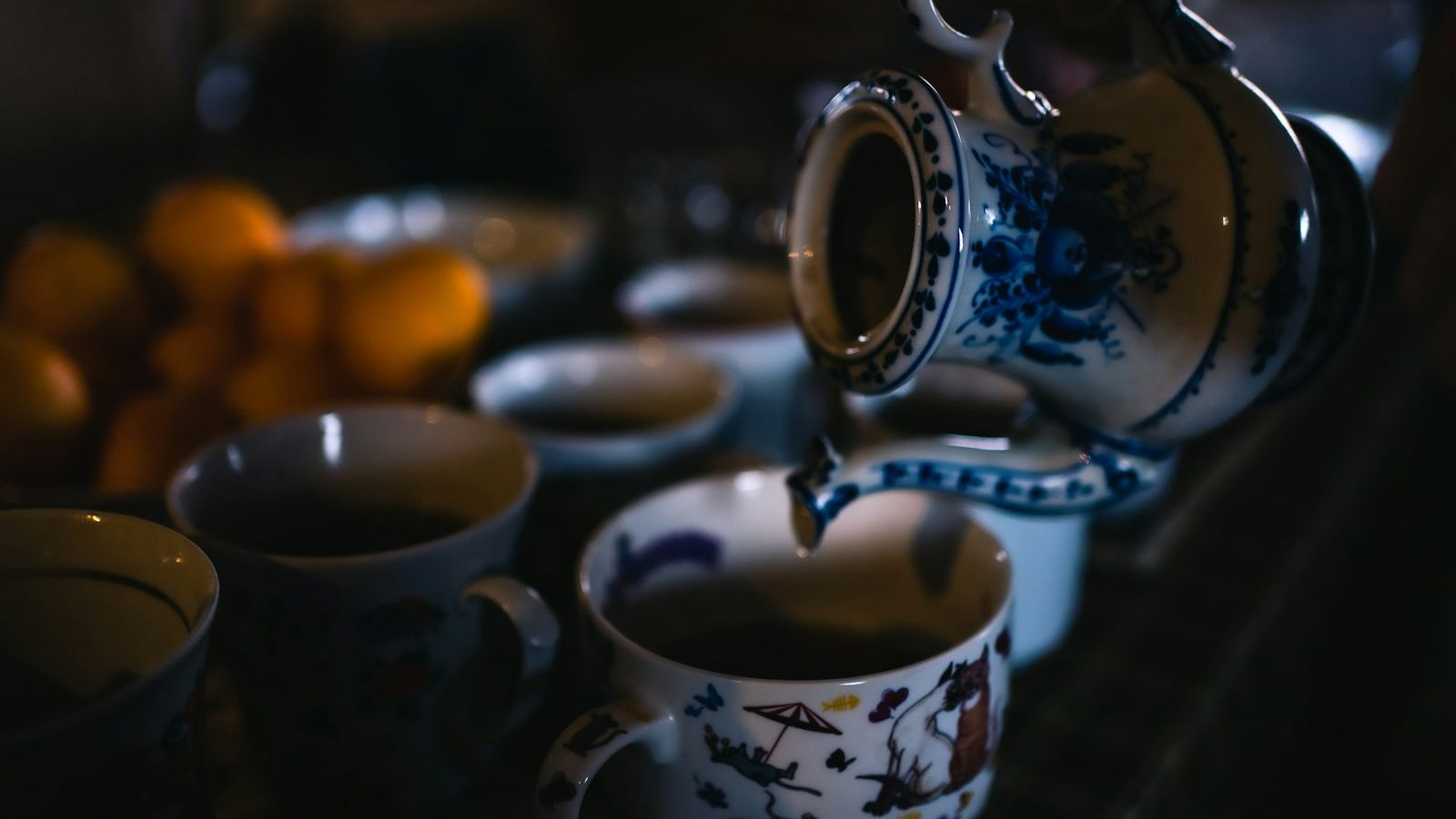
How Ireland Became the World’s Greatest Tea Nation
Tea reached Ireland in the mid-18th century, carried by British merchants from the East India trade routes. At first it was expensive and exotic — something the gentry kept in locked caddy boxes far from the kitchen.
By the 19th century, it had filtered down to everyone else. The Famine years accelerated the shift. Tea was hot, it was affordable, and it could warm a body when little else could.
By the turn of the 20th century, tea had quietly become essential. Not just a drink — but warmth, routine, and something to offer when there was nothing else left to give. The Irish had taken a foreign luxury and made it entirely their own.
The Cup That Speaks a Thousand Words
Walk into any Irish home — invited or entirely unexpected — and a kettle will be switched on before you have had time to sit down. This is not a small thing.
The offer of tea carries meaning. It says: you are welcome here. You can stay as long as the cups keep coming. Whatever brought you to the door, we can sit with it together.
In Irish culture, tea holds a weight that coffee simply does not. Coffee is what you grab on the go. Tea is what you sit down for. Every Irish person understands the difference without ever needing to be told — and visitors who understand it too find themselves treated differently. Warmer. More like family.
What You Never Say When Someone Offers You Tea
The rule is unwritten but absolute: you do not refuse.
You might not be thirsty. You might have just had three cups at the last house. It does not matter. Refusing tea in an Irish home carries a faint but unmistakable sting — as if you are saying you cannot stay, or do not want to be there.
The correct response to “will you have a cup?” is always some version of yes. Even if you let it go cold and barely touched — the accepting is what counts.
This extends to grief, arguments, and difficult news. An Irish person’s first response to almost any emotional situation — bereavement, a shock, a long silence — is to put the kettle on. Tea is not a solution. But in Ireland, it is always a beginning. You can read more about these kinds of living traditions in our guide to what was always in an Irish granny’s kitchen — a world that still echoes in homes across the country today.
☘️ Enjoying this? 64,000+ Ireland lovers get stories like this every week. Subscribe free →
The Great Milk Debate
Ask any Irish household whether milk goes in before or after the tea, and you may start an argument that lasts a full hour.
The traditional working-class habit was milk in first — a practical measure from the days of earthenware cups, when pouring boiling water straight in could crack the clay. Fine china handled the heat better. So “milk first” became associated with simpler homes, and “milk after” with grander kitchens.
Today, neither side has won. Both are considered correct. Both sides quietly insist the other is wrong. What everyone agrees on: the tea must be strong. A “good cup of tea” in Ireland means one that could stand a spoon in it. Anything pale or watery is noted, judged, and remembered.
Barry’s or Lyons — The Quiet War
The two great Irish tea brands have divided households for generations. Barry’s is from Cork. Lyons is from Dublin. Allegiance tends to follow geography, family habit, and a loyalty that feels oddly fierce for something that comes in a cardboard box.
Visitors often encounter this in supermarkets. Ask for help choosing and the nearest Irish person will have a very firm opinion — offered freely, whether you asked for it or not.
In truth, both are blends of African and Asian teas, chosen specifically to produce a strong, reliable cup. Neither is subtle. Both are exactly what Irish people want. If you are planning your first trip to Ireland, picking up a box of the right brand is one of the easiest ways to feel at home — and if you want to understand the broader world of Irish food culture, start with the comfort dishes tourists rarely order.
The Cup at the End of Everything
An Irish wake ends with tea. A family disagreement ends with tea. A long journey home ends with tea. Difficult news, a first visit, a last goodbye — all of these end, in Ireland, with the kettle going on.
There is no ceremony to it. No particular ritual. Just the sound of water beginning to boil, the clink of cups being set out, and the quiet understanding that whatever needs to be faced is better faced sitting down, together, with something warm in your hands.
Some countries run on coffee. Some on wine. Ireland runs on tea — and on everything that a simple, unremarkable cup has always meant here. Come and see for yourself.
☘️ You Might Also Love
☘️ Join 64,000+ Ireland Lovers
Every Friday, get Ireland’s hidden gems, local secrets, and travel inspiration — the kind you won’t find in any guidebook.
Free forever · · Unsubscribe anytime
Tours & experiences you might love


Powered by Viator. Some links are affiliate links — we may earn a small commission at no extra cost to you.
Secure Your Dream Irish Experience Before It’s Gone!
Planning a trip to Ireland? Don’t let sold-out tours or packed attractions spoil your journey. Iconic experiences like visiting the Cliffs of Moher, exploring the Rock of Cashel, or enjoying a guided walk through Ireland’s ancient past often sell out quickly—especially during peak travel seasons.

Booking in advance guarantees your place and ensures you can fully immerse yourself in the rich culture and breathtaking scenery without stress or disappointment. You’ll also free up time to explore Ireland’s hidden gems and savour those authentic moments that make your trip truly special.
Make the most of your journey—start planning today and secure those must-do experiences before they’re gone!
Subscribe Free